




Two sisters take on Lebanon’s broken economy in Rami Kodeih’s messy but hugely enjoyable Venice Spotlight title

Dir: Rami Kodeih. Lebanon/Brazil. 2026. 133 mins
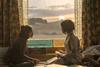
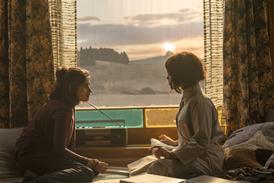
Beirut, spring 2020. It’s a year after the Lebanese economy collapsed, following decades of rampant government corruption. Since then, the banks have severely restricted people’s access to their savings. Tempers are frayed, and the population resorts to increasingly desperate measures. Among them are two sisters – Maro (Rym Mroue), a feisty divorced single mum, and Dalia (Maria Nakouzi), a wild child whose cancer diagnosis doesn’t get in the way of her partying. But time is running out for Dalia. Without money, she can’t get the surgery she needs. The sisters formulate a reckless plan in Rami Kodeih’s breathlessly propulsive stoner-chick heist movie.
The off-the-scale chemistry between Nakouzi and Mroue is the glue which holds the crackling chaos together
This is the feature film debut of Beirut-born, LA-based Kodeih, who also has links to Brazil. Propelled by the considerable awards success of his short films (which include A Sheherazade Tale, The Mill, Maki & Zorro and Alina) and by the presence of George Clooney and Grant Heslov as executive producers, this vividly full-blooded crime thriller should generate plenty of buzz following its premiere in Venice’s Spotlight strand and subsequent screening in TIFF’s Centrepiece programme. It’s a messy but enjoyable watch and, while the nuts and bolts of the plotting might not be as tight as they could be, the off-the-scale chemistry between Nakouzi and Mroue is the glue which holds the crackling chaos together.
The pressure-cooker tension in Beirut is magnified by the oppressive, sweltering heat that sits on the city like a dead weight. The weather would be a challenge at the best of times, but the rolling blackouts that accompany the financial crisis mean that air-conditioning is a rare luxury and food rots in powerless fridges. Meanwhile, divorce and custody laws in Lebanon favour the father, and Maro has lost both her hairdressing business and most of her access to her son to an ex-husband who chides her for daring to be independent. But independence is key to these forthright female protagonists who fight incessantly but would take a bullet – literally – for one another. Both Nakouzi and Mroue are fiercely charismatic on their own, but together they are formidable.
There’s an erratic energy to the filmmaking that evokes a sense of a society with very little left to lose. A wildly unpredictable score veers between Arabic club tracks and highly-strung classical music from the likes of Vivaldi and Purcell. A hyper and hectic handheld camera barely finds time to rest as the editing briskly rattles through shots. The whole of Beirut is hustling to survive.
The film is tense even before the sisters devise their plan to forcibly extract their savings from the bank vault overnight. Dalia fake-vomits half-masticated biscuits on a bank teller in order to get into the staff bathrooms; Maro uses the intel gleaned to build a floor plan of the building from her son’s Lego. But they need a distraction to drown out the sound of the sledgehammers and masonry drills. And that’s where the plan starts to unravel. The two men they recruit to help them are hardly the most reliable; Sunshine (Issam Bou Khaled) is an older man carrying the guilt of his Christian militia affiliation during the Civil War, and Hamza (Hasan Akil) is an unpredictable hothead who is in debt to the kind of people who don’t tend to extend credit.
The cancer device is perhaps the most questionable element in the film’s barrelling storytelling. It’s the kind of disease that tends to be symptomatic only at dramatically convenient moments. That said, Dalia’s diagnosis adds ticking-clock urgency to an already desperate situation. And, like the looming rubbish dump in Mounia Akl’s Costa Brava, Lebanon, the cancer does double duty, serving both as a plot device and a metaphor for an ailing society.
Production companies: RT Features, Nausika Films, Qatar Film Committee
International sales: Le Pacte, festivals@le-pacte.com
Producers: Rodrigo Teixeira, Berta Marchiori, Nora Mariana, Rami Kodeih
Screenplay: Rami Kodeih, Nora Mariana
Cinematography: Tony Kopec
Production design: Sabine Sabbagh
Editing: Rami Kodeih
Music: Arthur Joly
Main cast: Maria Nakouzi, Rym Mroue, Hasan Akil, Issam Bou Khaled