











Oscar-nominated director Richard Rowley follows Katya Hakim as she tracks Russia’s Wagner mercenary force
Dir/scr. Richard Rowley. Ukraine/Syria/Central African Republic/Lithuania/United States. 2026. 92mins
The world is changing at an unprecedented pace – and so is war. Former war correspondent and investigative journalist-turned-Oscar-nominated filmmaker Richard Rowley is better placed than most to observe the sea-changes in combat. Together with fearless Russian reporter Katya Hakim and eminent investigative journalist Denis Korotkov, Rowley’s continent-hopping film unearths alarming details about the formidable mercenary army, Wagner, and its late leader, Yevgeny Prigozhin.
Doesn’t reveal much about Wagner that isn’t already known
It’s a slick production – at times a little too obviously stage managed – that shares some of the polished urgency of Navalny, with which, in Odessa Rae, it shares a producer. But there’s no question that the film illuminates key aspects of a looming new world order. This is filmmaking that sounds the gravest of warnings.
Hell’s Army marks a return to the field of conflict for Rowley, whose Oscar-nominated debut feature Dirty Wars (2013) was an exposé of America’s covert wars and an investigation into the under-the-radar activities of the Joint Special Operations Command (JSOC). Subsequently, Rowley turned to the subject of police violence (16 Shots) and the murder of Washington Post journalist Jamal Khashoggi (Kingdom Of Silence), both of which won Emmys. Rowley’s reputation should help the film on a journey that may lead to involvement in the awards conversation.
Hakim and Korotkov both work for Dossier Center, an investigative project founded in 2017 by Mikhail Khodorkovsky, a Russian opposition activist and thorn in the side of the Putin regime. They are the public face of a film which has a deeply personal resonance for both – three of their colleagues, Orkhan Dzhemal, Alexander Rastorguyev, Kirill Radchenko, were killed in 2018 in the Central African Republic while investigating the same story. There are other members of the Dossier team, the film acknowledges, who were instrumental in the film’s investigation but who, for reasons of security, must remain anonymous.
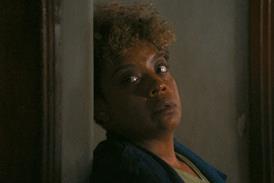
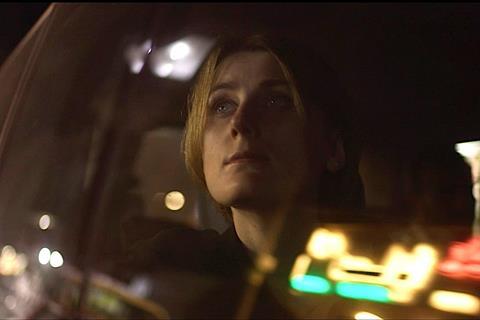
Threats to the lives of journalists are a grim reality. Veteran journalist Korotkov (who started out as a St Petersburg detective and whose interviewing skills are truly something to behold) recalls that seven of his former colleagues have been killed. A severed sheep’s head delivered to his office and a tracking device on his car suggests that powerful people might be keeping their eye on his journalistic activities. The steely and unflappable Hakim, meanwhile, is on the blacklist for travel to numerous countries, but doesn’t let that get in the way of her dogged pursuit of a story. The film leans a little heavily on shots of Hakim looking pissed off while smoking cigarettes, but she’s a terrific central character and guide to the investigations into the murky world of mercenary combat.
This is a story that Hakim first traces to Syria, and the battle for the Conoco oilfields in 2018. Reports of Russian casualties began to filter out but, as there was no official Russian military presence on the ground, the evidence suggested that mercenary forces were involved. Soon, it became clear that ‘Wagner’, a mercenary army formed by petty criminal-turned-fearsome military commander Prigozhin, was also active in other regions, ranging from multiple African countries to Ukraine.
The film digs into Prigozhin, who was killed in a plane crash in 2023, as a character and discovers a man who desperately wanted to be part of Putin’s inner circle. Initially at least, he had to make do with serving drinks to Putin and his cronies (he owned restaurants and catering businesses that provided services to the Kremlin). There are several interviews with former Wagner members, of varying degrees of chillingness. One man, a defector with a price on his head, laughs compulsively and mirthlessly. Another, a shady individual with the cold eyes of a lizard, gives answers that reveal very little while even his presence in front of the camera feels like a tacit threat.
Ultimately, the film doesn’t reveal much about Wagner that isn’t already known, but it does provide expert commentary from people who understand the story better than most (Korotkov co-authored a book on the subject). And it gives an ominous assessment of the future, and of political conditions in which private armies like Wagner thrive. The famous quote from Antonio Gramsci – “The old world is dying, and the new world struggles to be born: now is the time of monsters” – never seemed as chillingly pertinent.
Production company: Evergreen Productions
International sales: Midnight Films
Producers: Richard Butler, Atanas Georgiev, Odessa Rae, Rebecca Teitel, Caitlin McNally, Richard Rowley
Cinematography: James Butler, Tim Grucza, Scott Munro, Richard Rowley, Denis Sinyakov
Editing: Atanas Georgiev
Music: Brian McOmber
Main cast: Katya Hakim, Denis Korotkov


