






Auteuil also stars in the drama, which premieres in Cannes Premiere
Dir: Daniel Auteuil. France. 2026. 95mins
Three long dark nights of the soul frame this noir-leaning, tightly-focused period retelling of one distressing episode in the French Vichy government’s complicity with Nazi policy towards Jews. In August 1942, 108 non-French Jewish children were rescued from deportation at Lyon’s Vénissieux concentration camp by a charity run by Catholic priest Alexandre Glasberg (Auteuil). Writer-director Daniel Auteuil and co-writer Camille Lugan bring to these events a detailed, shadowy exploration of the steps, both logical and emotional, which led to their rescue. They also show how the language of law and reason was weaponised against resistance – and ultimately turned back on the oppressors. The result is a robust moral thriller, both intellectually chewy and emotionally finely-calibrated.
A sombre and involving drama
The recent theatrical success in France of the Jean Dujardin-starring Les Rayons Et Les Ombres (The Rays And The Shadows) shows that French audiences have a strong appetite for frank retellings of the realities of high-level collaboration in Vichy France. The French-language film has also sold to several territories ahead of its launch in Cannes Premiere including Italy (Rai Cinema) and Australia and New Zealand (Palace Film). Further distributors and audiences should be attracted by the historical setting, punchy pace, artful atmospherics and the involvement of Auteuil, whose sixth film this is as a director. The heroism and resistance on display here should prove additional draws, as should issues around contemporary anti-semitism and the complexity of the conundrum at the film’s core: success meant children were saved but separated from their parents, many of whom were later murdered.
In summer 1942, the impending arrest and deportation, via Paris, of foreign Jews from 12 départements near Lyon is more or less a done deal. The Lyon préfecture, run by prefect Jean Angeli (Grégoire Colin), appoints a small commission to check the names of those earmarked for deportation. Their job is to remove from the list those who meet any of 11 exemptions (for example, being pregnant, or doing a job essential for the war effort). On this commission is Glasberg, from the charity Amitié Chrétienne (Catholic Friendship), Lili Tager (Luàna Bajrami) of Jewish humanitarian group Oeuvre de Secours aux Enfants (Children’s Aid Society), police superintendent Lucien Marchais (Grégory Gadebois) and Gilbert Lesage (Antoine Reinartz), the head of Social Services for Foreigners at the préfecture. They travel to the cavernous Block 16 at Vénissieux, where they are to lodge and do their work.
It’s an awful task, and it becomes apparent through the group’s deliberations and side-room conversations that while Lesage, Tager and Glasberg are motivated by saving lives, others feel differently. They talk of ‘efficiency’, ‘the public good’ or ‘the well-being of the French people’. The pressure from the préfecture increases: rules change; the whole exercise is a sham.
More personal conversations take place at night, or on the margins. Glasberg talks to Tager of why he left Ukraine for France and converted from Judaism to Catholicism. Tager recalls the three months she spent in prison after sticking her tongue out at a German soldier. Most complex is Lesage, caught between his Quaker beliefs and activist past within Germany and his current role as a civil servant; he’s the embodiment of faith versus reason, conviction versus duty.
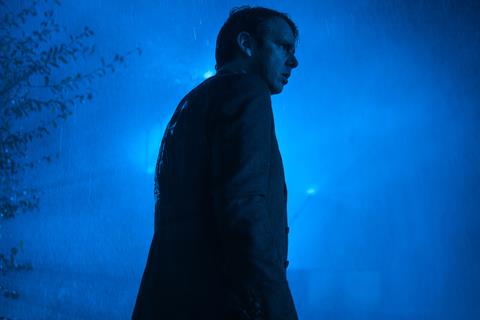
The filmmakers keep most of the suffering of Jewish detainees off screen. We are not party to the round-ups that have brought these prisoners to Vénissieux. Nor are we shown inside the ominous World War One brick barrack buildings that have become their home – although the power of suggestion is strong, not least during one long shot from inside a car as Auteuil’s character arrives at the desolate-looking camp. Perspective is limited to what our main characters witness, while repeated shots of torches and searchlights add to the oppressive air, as does Olivier Goinard’s ominous score. Mood and suggestion are mostly enough, until a devastating sequence towards the end of the film which brings home the reality of deportation and separation.
Conspicuous by their absence are any actual Nazis. There are references to the Gestapo and the occupation, but not one German character. There’s no blame-shifting here onto the Nazi occupiers. The portrait of Marshal Pétain sitting close to Prefect Angeli’s desk is pointed enough, as is a plaintive shot of the French flag flying at Vénissieux. This might be a story of lives saved, but the overwhelming feeling is of the parents and other relatives lost alongside a nation’s dignity. It’s a sombre and involving drama, and it’s provocative in the way it sketches a fine line between complicity and resistance.
Production companies: Les Films Velvet, Palatio Films, La Smala Productions, SND, Auvergne-Rhône-Alpes Cinema
International sales: SND-Groupe M6, clara.flageollet@snd-films.fr
Producers: Adrien Nussenbaum, Frédéric Jouve and Nelly Auteuil
Screenplay: Daniel Auteuil, Camille Lugan
Cinematography: Jean-François Hensgens
Production design: Christian Marti
Editing: Valérie Deseine
Music: Olivier Goinard
Main cast: Antoine Reinartz, Daniel Auteuil, Luàna Bajrami, Grégory Gadebois