








Cotillard and Canet’s latest collaboration premieres Out Of Competition in Cannes
Dir: Guillaume Canet. France. 2026. 149mins
Marion Cotillard is deliriously committed in Karma, a conventionally twisty religious psychological thriller about the disappearance of a Spanish child that ends with a search for him at a cultish French commune. The Guillaume Canet film does offer some immersive world building of a secretive community, along with a keen ability to provide its actors space to embrace volatile topics. Unfortunately, it hesitates to dive into the psychological poison of religious zealotry and false idols, relying on cliches to build out an overlong plot that lacks the propulsion necessary to give its broken characters life.
The film falters on a character level
Karma premieres Out Of Competition at Cannes, where it’s looking for an international buyer to go along with its French distributor Pathé. The film represents the latest collaboration of director Canet and star Cotillard, following titles including Little White Lies (2010) and Blood Ties (2013), and this pairing, along with the actress’s sterling reputation among arthouse audiences, should make it an attractive bet. The salacious topic of the genre picture should also offer some potential for wider appeal.
The film begins with Jeanne (Cotillard) and her Spanish husband Daniel (Leonardo Sbaraglia) slow-dancing in their picturesque villa. By the next day, that idyllic portrait is somewhat smudged – Jeanne is an alcoholic battling anxiety attacks, who can barely balance her fishery job with having daily adventures with her six-year-old godson Mateo (Aron Ramo). Jeanne is closer to Mateo than you would expect of most godmothers. But when a drunken Jeanne takes Mateo to the riverside to play, she passes out and, when she awakens, discovers the boy is missing. She immediately becomes the prime suspect; not only because she was the last person to see Mateo, but also because she holds a surprising secret.
So Jeanne bolts, venturing across the border into France where her former commune resides. She ran away seven years ago, leaving her family behind. The leader of the community, a sadistic Marc (Denis Ménochet), isn’t thrilled to see her. He punishes Jeanne for the betrayal of leaving, and demands that she earn her way back into the flock. Jeanne believes Mateo might have been kidnapped and taken to the commune, but finds few traces of him. Conversely, a confused Daniel goes on a road trip to find her.
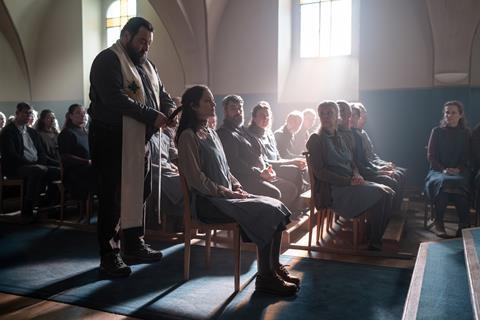
Screenwriters Canet and Simon Jacquet strongly imagine the regulatory and physical components of this religious world. Marc’s commune was founded in 1963 by three families who have married one another’s cousins for decades. Their children, many of whom live with physical or psychological challenges, only see their parents for 15 minutes a day for strictly planned visitations overseen by Marc. The commune’s grounds, which includes stables, dormitories, and factory spaces, are spartan yet claustrophobic, further instilling the psychological dread Jeanne feels amongst these restrictive people.
The film falters, however, on a character level. Marc is your prototypical Svengali: abusive and wholly evil. But he isn’t particularly charismatic and appears devoid of any internal complexity, causing one to lose interest in exploring the brand of religion he’s selling — a major detail we never quite learn about — which devolves the scenes on the commune into provocative cliches about trauma and abuse.
Jeanne and Daniel also lack definition. How did they meet? What do they love about each other? What are their best and worst memories together? Those questions are barely touched upon. Instead, we have to believe that Daniel is willing to evade the police, cross the border and confront Marc’s ire without much emotional grounding to lead the way. That flatness heaps a greater burden onto the shoulders of both Sbaraglia and Cotillard. The former provides workmanlike quality, puffing his underworked character with some semblance of gravitas. Cotillard, meanwhile, precariously oscillates between twitchy intensity and charged exasperation, providing Jeanne with the kind of sincere pathos that exceeds the film’s many genre conventions.
Cotillard keeps one engaged during the overbloated runtime, adding drama to conclusions that seem quite obvious and one-note. Even the banal organ score can’t wholly undermine her raw presence. It’s unfortunate, then, that the combined forces of a dopey script and basic interpersonal relationships do her sharpened performance irreparable harm.
Production companies: Iconoclast, Netflix, Caneo France, M6 Films, Mid March Media, Logical Content Ventures
International sales: Pathe Films sales@patheinternational.com
Producers: Gregory Jankilevitsch, Geneviève Lemal, Klaudia Smieja
Screenplay: Guillaume Canet, Simon Jacquet
Cinematography: Benoît Debie
Production design: Mathieu Junot
Editing: Laure Gardette
Music: Yodelice
Main cast: Marion Cotillard, Leonardo Sbaraglia, Denis Ménochet, Luis Zahera