












Dani Sancho’s handsome biopic follows Ghanian activist Ousman Umar as he makes a new life in Barcelona
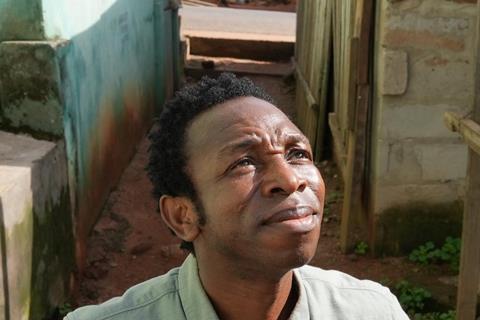
Dir: Dani Sancho. Spain/France. 2026. 110mins
“When you see immigrants sleeping in the street or queueing outside a soup kitchen,” asks Ghanian social entrepreneur Ousman Umar in North to Paradise, “do you wonder how they got there? No you don’t, because the answer is too upsetting.” Umar is one of the lucky ones who, back in the 1990s, survived the nightmare journey from Africa to Spain. Dani Sancho’s accomplished biopic does a good job of shaking viewers out of their complacency and inevitably stirs up the same mix of despair, anger and hope as Umar’s memoir, on which it’s based.
Plays as a work of social activism
Its message may feel somewhat sugar-coated, but the good-looking, slick North to Paradise looks as though it’s going for audiences who only want to be upset just the right amount – and in this regard, it’s perfectly fine. It opens BCN Film Festival after its Malaga premiere, and should attract domestic audiences when it releases in Spain on June 26. There may also be enough in its message and craft to merit wider attention.
Ousman (Victor Sey) grows up in a slightly picture postcard village in Ghana: his mother having died in childbirth, he’s saved from being drowned – the standard fate of other babies from the village. Raised by his father, the village shaman, and by his aunt, Ousman is curious about the big metal birds which fly overhead and the white construction workers who he and his friend Musa (John Amissah Borkey) watch from a safe distance. Aged 14, and apparently driven by little more than curiosity at the wider world, he sets off for Libya on his journey ’north to paradise’: perhaps strangely, his family seem not to care much either way.
The script daringly leaps right over Ousman’s journe, and we next meet him four years later (now played by Benjamin Kakraba) as he emerges spluttering and frantic from the sea in the Canary Islands. He enters the Spanish bureaucratic system, spending time in an institution for immigrants. Though Ousman is unaware of his own age, knowing only that he was born on a Tuesday, it’s decided that he is not old enough to be sent home and is free to leave. Ousman heads for Barcelona, where he discovers that life there is far from a paradise – sleeping on the streets, fruitlessly seeking work and, in one troubling sequence, being offered a place to live by another lonely individual (David Climent) looking for sex and perhaps companionship.
Ousman has the good fortune to introduce himself to the kindly Montse (Emma Vilarasau), who points him in the direction of the Red Cross: Montse is presented as one of the millions for whom the issue of immigration has until now been too easy to ignore. Months later, Ousman is selling trinkets off blankets in the street and working for an illegal Chinese sweatshop when it’s raided by the police: out of sheer desperation, it’s Montse he calls.
As if that wasn’t enough drama for one young man’s life, the final act of North to Paradise – with the frankly multi-talented Umar now playing himself – delivers a huge and well-handled twist, while finally tackling head-on the issue of Ousman’s journey four-year, 13,000-mile journey from Ghana to Spain, which took him across eight countries.
One of the virtues of the film is in its simplicity – apart from its massive ellipsis, it is told very straightforwardly. Ousman’s youth, inexperience and an apparently boundless capacity for hope mean that he normalises his often awful experiences, and the tight focus on his point of view largely avoids the twin threats of miserabilism and melodrama. Occasionally, Ousman will cry quietly to himself at night, and there are little flashbacks to a happier life in the village.
Underlying the film is a pointed and urgent critique of the ways that that immigrants are treated in the west. But though North to Paradise wishes to stir the consciences of its viewers, it is calculated primarily to inspire sympathy rather than to attack hyprocrisy. Kakraba in particular is key to this, delivering an entirely credible and winsome performance, emerging heroically from his horrors with his hopes for the future intact – the kind of life-affirming, againt-all-odds worldview that, to be fair, the real-life Ousman seems to possess in spades.
This is a very good-looking film, bringing each of its multiple milieus – a jungle lagoon, a Barcelona sweatshop, the Sahara desert – to persuasive life, though there’s the suspicion that Ousman’s real-life suffering may have been less beautific. Laetitia Pansanel-Garric’s attractive score is line with the film’s generally restrained tone, but is overused.
Stark, on-screen figures at the end tell us that each year 5,500 would-be immigrants lose their lives at sea trying to reach Spain, and that many more die crossing the Sahara. Umar has spent much of his life working to help people back in Ghana avoid this fate, and North to Paradise plays as a work of social activism, bringin backup support to this noble project.
Production companies: Atresmedia Cine, Mundo Cero, A Contracorriente Films, Arcadia Motion Pictures, Noodles Production
International sales: Latido Films juan@latidofilms.com
Producers: Ibon Cormenzana, Jaime Ortiz de Artinano
Screenplay: Guillem Clua
Cinematography: Lluis Ferrer, Marcel Pascual
Production design: Marta Bazaco
Editing: David Gallart
Music: Laetitia Pansanel-Garric
Main cast: Ousman Umar, Benjamin Kakraba, Victor Sey, Emma Vilarasau, Jordi Bosch, Justino Mendes, John Amissah Borkey, David Climent.