













With a gross of almost $1m at the US box office, The Voice Of Hind Rajab has broken new ground for New York-based producer-distributor Willa as its most successful film to date.
But for Willa founder and CEO Elizabeth Woodward, the numbers are just one metric of the film’s success. Instead, Woodward wants “to create social and cultural resonance for the film”, helping to deliver for the philanthropic organisations that supported the film’s production and US release.
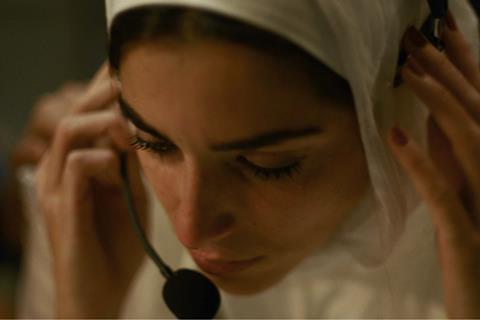
With a focus on social impact filmmaking, Woodward boarded Kaouther Ben Hania’s film as an executive producer in the summer of 2024, when her friend, the film’s producer Odessa Rae, sent her the first draft of the script. The Voice Of Hind Rajab is based on an actual incident in January 2024 centring on a young Palestinian girl in Gaza trapped in a car under fire from Israeli forces, and the efforts of Palestinian Red Crescent volunteers to rescue her.
“I was supporting where I could across production, helping with fundraising, planning,” says Woodward of her role on the project.
Working with Rae and fellow producers Nadim Cheikhrouha and James Wilson, Woodward secured the support of humanitarian organisations including the Amed Khan Foundation, Giustra International Foundation, and Fondation Rambourg.
Last summer, shortly after Brad Pitt, Joaquin Phoenix and Rooney Mara joined as executive producers, Hind Rajab launched to acclaim and emotional reactions at Venice. It won the Grand Jury Prize and went on to awards at San Sebastián, Gent and Chicago, among others.
“Given the response to the film, the executive producers who had joined, and just the level of support, we all hoped that a major studio would come on board,” says Woodward. “When that didn’t materialise, the team felt that Willa distributing the movie was the best path forward.”
Willa opened with a limited release in the US in December, going on to play on 235 screens across the country. It also received best international feature nominations at the Golden Globes and Oscars, representing Tunisia at the latter.
While the company typically does the impact work for the films it is distributing in-house, the shorter timeframe on Hind Rajab required teaming with external organisations, including Fourth Act in the US and ThinkFilm in Europe. US-based Palestinian activist Rania Batrice of Batrice and Associates oversaw the whole campaign.
“A lot of philanthropic organisations see film as a meaningful way to deploy capital, spreading stories about aspects they’re interested in supporting,” says Woodward. “It requires a different analysis of return on investment. Philanthropic funds are not looking to make their money back. They’re looking to see how many people actually saw the film. What coverage did it get in the media? Who were the decision-makers in the world who saw the film?”
For Hind Rajab, that included showing the film at the United Nations (UN) in New York in December, and at both the UK and European parliaments in January.
The film also screened at the UN Human Rights Council in Switzerland earlier this month, with 17 UN member states calling for urgent medical access for children in Gaza.
Impact
Organising such screenings falls under Willa’s ‘impact campaigning’, the strategic work around a film to create social, political or cultural change.
This is what Woodward placed at the heart of Willa when she founded it back in 2017. After roles in production at Pulse Films and Reframed Pictures, Woodward set up her own venture – and named it after her late dog, which also appears in the company logo – as a documentary-focused production company.
Willa expanded into scripted features in 2021 with Dina Amer’s You Resemble Me, which debuted in Venice’s Giornate degli Autori. The film about a suspected female suicide bomber in France attached high-profile executive producers in Spike Lee, Spike Jonze, Claire Denis and Riz Ahmed to boost its visibility.
But You Resemble Me struggled to find a US distributor and Woodward decided to do so herself through Willa.
“I got interested in understanding what distribution was, what we could do differently and how we could release this film in a more independent way,” she says.
Willa is now a New York-based team of five, including Woodward. The production and distribution arms are “two separate companies, but they operate under the same brand,” explains Woodward, who has a goal of “four to six” projects on the go per year for each arm of the company.
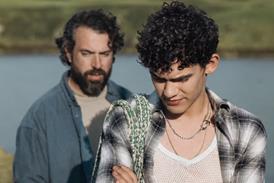
Last year, Willa produced Claire Denis’ The Fence, which launched at Toronto, and Max Keegan’s The Shepherd A Bear, which it also distributed.
The company is circling two further titles for distribution, one of which launched at this year’s Sundance.
“We do have an international presence,” says Woodward. “I am in the UK quite often; we have projects based in the UK and France. It’s New York-based with an international presence, making sure we’re looking at projects on the international front.”
She says she is ultimately optimistic about the future of the business. “Destabilisation and changing tides are exciting from the perspective of young companies and people who are interested in doing things differently,” she suggests. “[The industry has been] operating in a system that’s based on specific structures, that have never served women and people of colour.
“Things need to crack open for new things to be born.”



No comments yet