













The ‘Burning’ director reunites with star Sul Kyung-gu for an enigmatic drama about two married couples divided by wealth
Dir: Lee Chang-dong. South Korea. 2026. 165mins
Money – or the lack of it – informs every interaction between the two married couples at the centre of Possible Love. South Korean filmmaker Lee Chang-dong follows up 2018’s Burning with another disquieting, enigmatic study of class and desire, drawing the viewer increasingly into the lives of mismatched characters whose burgeoning bond threatens to implode. Loosely inspired by the 10th episode of Krzysztof Kieslowski’s Dekalog (the one based on the Commandment ’Thou Shalt Not Covet’) the film accrues its considerable power from exploring the invisible tensions between a well-to-do documentarian and her impoverished subjects, whose sorrow might be little more than grist for her creative aspirations.
Lee interrogates how filmmakers can steal real people’s pain to cultivate their art
Lee returns to the Venice competition for the first time since 2002’s Oasis, which like Possible Love stars Sul Kyung-gu. Netflix releases the picture in South Korea on September 23 before opening in UK and US theatres on October 23. (It lands on the streaming platform on November 6.) Lee’s international standing, together with fact that the film has been selected as South Korea’s official Oscar entry, will be a major draw, as will his formidable ensemble, which includes Jeon Do-yeon (who shone in his 2007 drama Secret Sunshine) and Cho Yeo-jeong (who earned worldwide acclaim thanks to 2019’s Parasite).
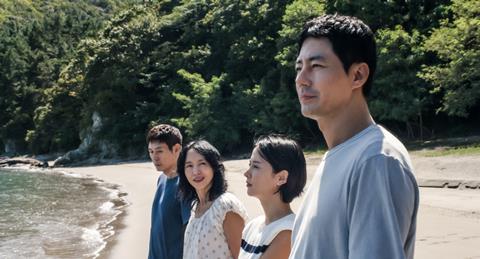
Jeon plays Mi-ok, a fortysomething factory worker married to Ho-seok (Sul), a despondent former welder still struggling to regain his equilibrium after being downsized two years previously. They meet Ye-ji (Cho), a documentary filmmaker who wants to tell the stories of everyday labourers trying to survive in a competitive, automated job market. Mi-ok instantly takes a liking to Ye-ji, who is about the same age but far more affluent due to her marriage to Sang-woo (Zo In-sung), a successful but aloof entrepreneur. Ye-ji begins interviewing Mi-ok about the couple’s financial difficulties but Ho-seok is reluctant to go on camera, resorting to drinking rather than seeking counselling for his depression.
Stretching out confidently over almost three hours, Possible Love initially focuses on Mi-ok and Ho-seok’s rocky but enduring marriage as she fights to buoy the family’s sagging spirits. (They are raising a sensitive 10-year-old, Cheol, played by Jung Seop, who internalises his father’s perpetually downcast mood.) Once they cross paths with Ye-ji, Mi-ok hopes her sympathetic documentary will shed light on lives like Ho-seok’s, that were destroyed by the mass layoffs at his former company.
But Lee consistently subverts our expectations regarding where this narrative is headed, while challenging our impressions of the four main characters. Sul portrays Ho-seok as frighteningly withdrawn, his anguished silence becoming more concerning after Mi-ok’s admission to Ye-ji about his anger issues and suicidal ideation. Eloquent flashbacks, including brief interludes from Mi-ok and Ho-seok’s teenage courtship, eventually reveal what drove Ho-seok to such bottomless despair. Even so, Sul slowly brings surprising new layers to this man.
The scourge of economic inequality is pointedly dramatised through these two couples – one living in a rundown house, the other residing in a swanky condo when they’re not vacationing at their palatial beachside estate. But this juxtaposition proves anything but simple, as Lee examines how each of his protagonists reacts to money and status. In this regard, Ye-ji emerges as the film’s most fascinating figure, residing in an uneasy middle ground between her rich husband and the working-class couple. Cho’s performance is one of nuance and nested mysteries, never making it clear if Ye-ji is exploiting or empathising with her subjects – or even if Ye-ji knows for sure.
That inner conflict is visualised by Ye-ji’s growing insistence on inserting her camera into Mi-ok and Ho-seok’s private lives, turning her supposed dignified portrait of labourers into a juicy domestic melodrama revolving around the couple’s marital issues. In the process, Lee interrogates how filmmakers can steal real people’s pain to cultivate their art, dehumanising the individual with the same cruelty as corporations and the wealthy. As badly as Ho-seok’s employers mistreated him, so too, in their own microaggressive ways, do Ye-ji and Sang-woo seek to take from their new friends, ultimately resulting in shocking exchanges that are a direct result of the characters’ unspoken animosities and secret cravings.
Those familiar with Kieslowski’s Dekalog: Ten should be advised that Lee has crafted a very different story. Nevertheless, Possible Love lays bare how contemporary life leaves so many people desiring what they do not have or believe they have lost. Bong Joon-ho’s frequent composer Jung Jae-il only occasionally contributes to this subtly devastating drama, but his wistful score accentuates the characters’ aching need – to make more money, to find some sense of contentment, or to live parasitically through a stranger who has piqued their curiosity.
Production companies: Pinehouse Film Co., Ltd., Anonymous Content, LLC, NOWFILM Co., Ltd.
Worldwide distribution: Netflix
Producers: Lee Joon-dong, Lee Chang-dong, David Levine, Chadwick Prichard
Screenplay: Lee Chang-dong, Oh Jung-mi
Cinematography: Kim Ji-yong
Production design: Jang Min-woo
Editing: Kim Da-won
Music: Jung Jae-il
Main cast: Jeon Do-yeon, Sul Kyung-gu, Zo In-sung, Cho Yeo-jeong