








Fernanda Tovar’s assured friendship drama won Berlin’s Generation 14Plus strand

Dir: Fernanda Tovar. Mexico/Spain/France. 2026. 90mins
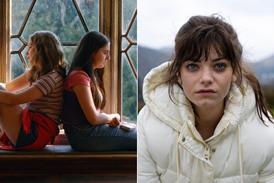
Sixteen-year-old best friends Paula (Darana Alvarez) and Maestra (Rocio Guzman) are inseparable. When they are not training hard to represent Mexico at the Junior Pan American Swimming Championship in Brazil, their lives in Mexico City are an adolescent whirlwind of homework, hanging out and parties. But when a shocking incident upends their lives, both find themselves having to redraw their relationship. The debut feature from Fernanda Tovar (a member of Mexico City creative collective Colectivo Colmena) is a sensitive and knowing study of female teenage friendship, powered by strong performances from its young leads.
The central friendship is both the film’s heart and its engine
Premiering in Berlin’s Generation 14Plus, where it won both the International Jury Grand Prix and the Youth Jury Crystal Bear, Sad Girlz should attract the attention of further festivals, particularly those with programmes aimed at youth audiences. Boutique distributors and streamers could also be tempted by the film’s authentic voice. Audiences, particularly young adult viewers, should similarly respond to its confident, accessible handling of difficult themes.
The central friendship between Paula and Maestra is both the film’s heart and its engine. Having worked through a long rehearsal process with Tovar, Guzman and Alvarez capture the heady, effortless, carefree bond that exists between them, their closeness underscored by their physical shorthand; a shoulder nudge, a look that sends them into peals of laughter. They are excited about the future, about the opportunity of travelling to Brazil, about the new experiences that lie on the horizon.
For Paula, that includes sex. Unlike Maestra, she is still a virgin and is keen to experience intimacy – particularly with fellow swimmer Daniel (Lucio Lemus). But she wants it to be meaningful, and looks forward to an upcoming party where she will have the chance to get closer to Daniel. The camera stays away when he follows her, unbidden, into the bathroom, but from that moment on, Paula is changed – withdrawn, silent, permanently on the verge of tears.
When she finally reveals what has happened to Maestra, in a superb scene set during an al fresco dance class, it’s in halting, unsure terms. “It’s what I wanted,” she says. “But not there. I said no.” Her confusion is heightened by the fact that Daniel seems to behave as if he’s done nothing wrong, checking she is OK and repeatedly asking her out. Maestra is full of love and support – but doesn’t really know how to help her friend in practical terms.
Craft choices underscore that narrative dichotomy, blending the sense of youthful enthusiasm with the darker elements of the story. Cinematographer Rosa Hadit Hernandez takes in the bright sunshine of the Mexico City district of Coapa as Paula and Maestra lounge in a rooftop paddling pool, the more claustrophobic, shadowy tones of the swimming pool changing rooms. Several underwater sequences are well used, the muted depths below the surface proving to be something of a sanctuary for both girls
Handling the complicated fallout from sexual violence with care and compassion, Sad Girlz foregrounds Maestra’s experiences as a bewildered youngster who finds herself out of her depth without ever minimising what Paula has been through. Notably, aside from Maestra’s loving older brother Mario (Tomas Garcia-Agras), adults play a minimal role in this story as the girls attempt to navigate this unprecedented situation alone. They look for answers online, asking Chat GPT to define Paula’s experience – which it does in no uncertain terms – and Maestra consults her tarot cards in a desperate search for reassurance.
It’s a firecracker performance from Ruzman, burning with righteous fury but with a permanent undercurrent of fear and vulnerability. She feels overwhelmed with anger, a sense of injustice and a need to do something – particularly when faced with a swim coach who tells her not to go “looking for trouble” – and struggles to accept Paula’s desire to stay silent.
As Paula, Alvarez is restrained and hugely sympathetic, although a carefully calibrated screenplay and performance make sure that the character is not completely defined by the assault. She still takes pleasure in her friendship with Maestra, finds moments of joy and laughter in their interactions and draws palpable strength from the depth of their friendship.
Production companies: Colectivo Colmena
International sales: Alpha Violet info@alphaviolet.com
Producers: Daniel Loustaunau, Araceli Velaquez
Cinematography: Rosa Hadit Hernandez
Production design: Selva Tulian
Editing: Jose Pablo Escamilla
Music: Wissam Hojeij
Main cast: Darana Alvarez, Rocio Guzman, Lucio Lemus, Tatsumi Milori, Tomas Garcia-Agras, Monica del Carmen