
















Jung follows ‘Next Sohee’ and ‘A Girl At My Door’ with Cannes Un Certain Regard title

Dir-scr. July Jung. South Korea, France, Luxembourg. 2026. 137 mins
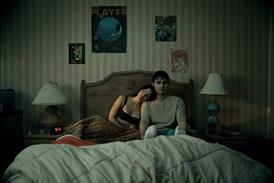
A fragile young woman, Dora (K-pop performer-turned-actor Kim Do-yeon) is scarred both mentally and physically, with the livid, oozing rash that covers her body a physical manifestation of her psychological disorders. Together with her warring parents, she moves from Seoul to a remote coastal community, in the hope that the quiet life will heal both Dora and her ailing father. And for a while, with the support of a Japanese neighbour named Nami (Sakura Ando), it works. But beneath the serene peace of village life is a mess of unrequited passion, mental health issues and characters with a questionable grasp on the concept of consent, in July Jung’s overwrought and overlong melodrama.
Too incoherent to satisfy fully as a viewing experience
This loose interpretation of Freud’s Dora case study is Jung’s third film to premiere in Cannes, following her 2014 debut, A Girl At My Door (Un Certain Regard) and 2022’s Next Sohee (Critics’ Week); both went on to win multiple awards at subsequent festivals. Dora premieres in Directors’ Fortnight and, like Jung’s previous pictures, should enjoy a solid festival journey. Beyond this, the picture may play best domestically, where the pull of Kim Do-yeon’s star power will be most effective. Elsewhere, the film’s curious tonal shifts and murky messaging on LGBTQ+ themes might hamper its prospects theatrically.
Jung’s use of location and the nature that surrounds Dora’s new home (a handsome building designed by her architect father) is one of the film’s most successful aspects. The cinematography lingers on the beauty of the coastline – a view that Dora initially blocks out with shutters.
Nami’s vegetable garden is used as a barometer for the story’s emotional climate: at first it’s an idyllic space, rich with produce. But after a highly symbolic storm sweeps through, it turns into a mudbath full of broken plants and recriminations. The sea is also an indication of Dora’s mental state. Initially, it’s something to be feared, like her own damaged body. She manages to nearly drown within seconds of walking into the waves. But as she learns to swim, her physical confidence grows and the rash gradually recedes.
Dora’s blossoming beauty has an unsettling effect. Nami’s husband, a creatively blocked artist, asks her to model for him, but becomes increasingly possessive and needy. A local young man pursues her. But Dora is drawn, with mounting intensity, to Nami. To complicate matters, Nami and Dora’s father are involved in a not-so-secret affair.
The source material – a case that Freud considered to be a professional failure – is a study of a young woman who was diagnosed as suffering from ‘hysteria’, the main symptom of which was a persistent cough. It’s an unexpected choice of inspiration, particularly since Freud’s theories and practices, with their inbuilt sexism, have rather fallen from favour. Jung redresses the balance by telling the story from Dora’s point of view rather than that of the men who dismiss her complaints as delusional.
Even so, there’s a friable vulnerability to the character and an intensity to the infatuation that she develops for Nami that makes her seem unreliable as a protagonist. This wouldn’t matter, were it not for the fact that all the other characters are equally untrustworthy. There comes a point at which we start to question the version of events that we see through Dora’s eyes, with no anchor of truth or a fixed spot to fall back on. The result is heady and passionate, almost lurid at times, but too incoherent to satisfy fully as a viewing experience.
Production company: RedPeter films, The French Connection, Les Films Fauves
International sales: Finecut Co. Ltd sales@finecut.co.kr
Producer: Dongha Lee
Cinematography: Irina Lubtchansky
Editing: Han Miyeon
Production design: Mokwon Lee
Music: Younggyu Jang, Taehyun Choi
Main cast: Kim Do-yeon, Sakura Ando, Song Sae-byeok, Choi Won-young