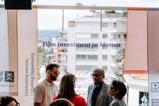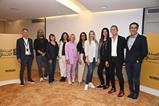









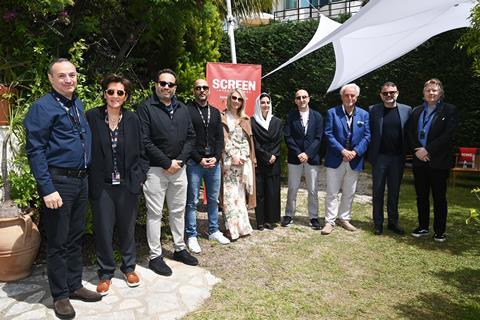
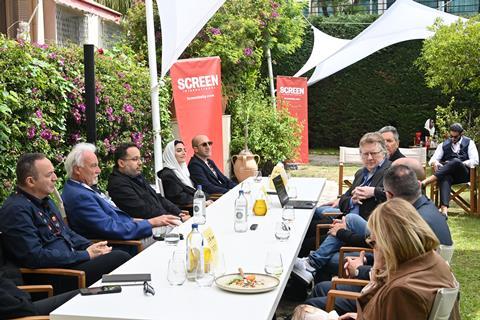
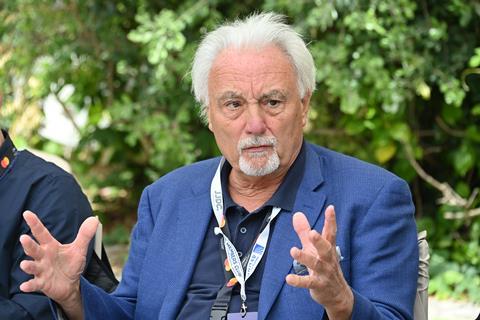
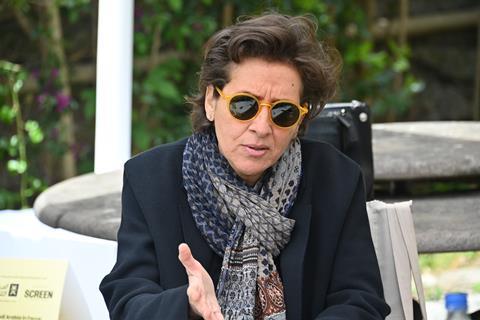
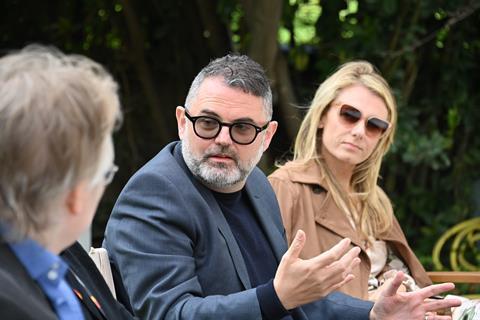
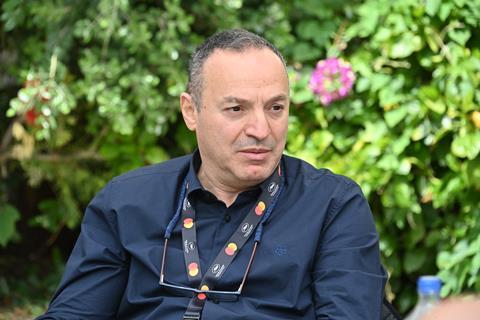
In the week the Saudi Film Commission announced an eye-catching 60% financial incentive, several leading figures from the country’s film sector joined an international panel hosted by Saudi Arabia’s Cultural Development Fund (CDF) in association with Screen International to explain how the Kingdom aims to create a stable and supportive environment for international production.
The commission has worked with CDF on what it described as an enhanced model for managing and disbursing the incentive, aiming to provide a more efficient and flexible experience for projects.
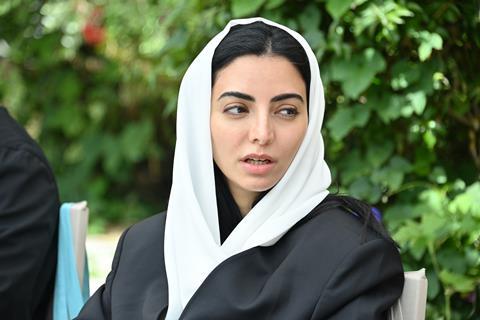
Rasha Al-Masoud, general manager of investment for culture & entertainment at the Ministry of Investment, highlighted the ongoing government support of the sector, and how the Kingdom is ramping up its activities.
“I don’t know where we’re placed now, I can only imagine it’s the top 1%,” she said of the newly boosted incentive. She said the Kingdom wants “to ensure that any creative or investor has a seamless journey, whether it is through clear policies, regulations and requirements or whether it’s through access to investment opportunities and financing.”
“We are going to be very busy but I’m sure we can handle it,” added Al Masoud. This was echoed by several Saudi panellists as further measures are put in place to turn the Kingdom into one of the world’s most attractive filmmaking hubs.
“I am somewhat speechless,” said Ian Gibbon, head of media at UK-based chartered accountants and business advisors Alliotts, expressing his “amazement” at the size of the new incentive. “It’s terrific and it shows a will to succeed.”
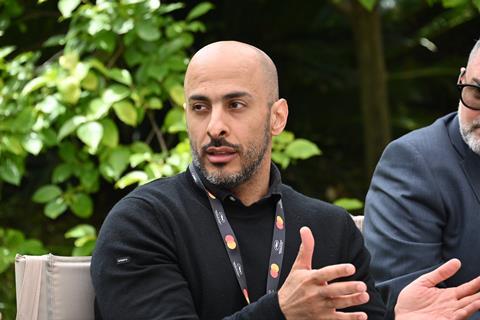
The challenge for Saudi Arabia is to skill up quickly. “This is a very young market — probably the youngest market globally,” commented Basil Al Alola, chief business officer at the Cultural Development Fund. “Any inward investment is definitely going to be beneficial on a national scale. It goes without saying… the contribution to GDP is going to happen regardless, the employment happens regardless. But it’s [about] ensuring knowledge is properly transferred… you cannot rush something of this delicacy over a very short period of time.”
The long-term goal is to build a local industry sustained by the private sector without having to rely on government support.
International appeal
Rasha Al Emam, founder and CEO of Yellow Camel Studios, one of Saudi’s most prominent production services companies, talked of the experience already accrued since launching in 2021. She said her company “started hand in hand” with the announcement of the incentive programme in Saudi Arabia, then at 40%.
“I started the company mainly to help international companies to come to Saudi, have a brilliant experience and fly out and tell everyone else about it,” she said.
The film services sector in the Kingdom has grown sharply in the five years since the launch of Yellow Camel. As evidence of this, Al Emam cited the increasing numbers of Saudi equipment rental houses and caterers. “Today, I am comfortable to say the infrastructure in Saudi is 80% completed,” she said.
A training boom is already underway, although there are some areas where she acknowledged the Kingdom is lagging. “We don’t have Saudis who do stunts, not yet! It’s always a funny conversation. We bring them in [but] I don’t think a lot of Saudis want to try flipping themselves in a car.”
When Yellow Camel worked on epic drama Desert Warrior in 2021, Saudi Arabia was still a small market focused on local productions. That film, the Yellow Camel boss said, “was like going to a film school”. The project had a massive cast and crew — and 10,000 extras. “It was a really difficult film but we pulled it off. Today, we have expertise, we have resources.”
Frictionless experience
Leon Forde, CEO of London-based consultancy Olsberg SPI, shared his insights on how the Saudi “offer” compares with that of other territories.
“We have seen a real growth globally in government’s understanding that our sector has immense strategic and economic value. We can track that through the number of incentives. There are now something like 120 incentives globally.”
Forde first visited Saudi Arabia a decade ago, before any big international productions had shot in the country, and has been “fascinated” to see the growth of the industry there. “The level of ambition has been fantastic,” he said.
“One thing we always advise our clients is that it is not just about the incentive. It’s about the ecosystem,” Forde continued. “It’s about not thinking in terms of one lever but all of the levers that need to exist to enable investment - to enable producers to come, have a frictionless production and then have a frictionless experience of getting the incentive…and Saudi has been really thoughtful in how it approached this, and working at laser speed as well, going from a standing start to implementing all the parts that go into making a healthy sector.”
The Olsberg SPI exec also praised “how much thought is being given to local talent” and to youth. “The strategy isn’t just to get a big Hollywood movie in but to do something longer term.”
Forde’s observations were expanded on by Tiffany Boyle, president, packaging and sales at LA-based Ramo Law, who insisted ‘timing is key.’ She is also a producer and shared a cautionary tale about one of her recent films that shot in 2023 and premiered in Cannes in 2024. “We were just informed by the state we shot in that we will not be receiving our tax credit until 2028.”
This, she said, was damaging when there are investors waiting to recoup. “A number of clients do follow where the best incentives are,” she added. “Most recently, that has been Spain…I think once they hear more about this [the Saudi incentive] I think this is going to be a big piece [for them], just knowing there are people who understand the accounting of it all properly.”
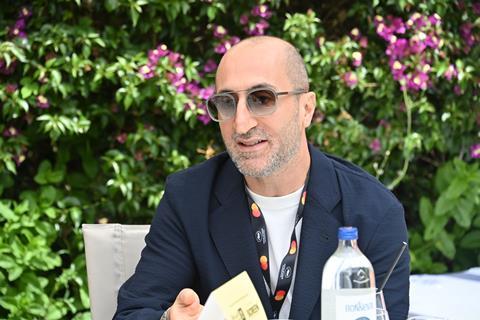
Meanwhile, producer Firas Dehni, director of physical production at MBC Studios, talked through what he has experienced in Saudi over the last five years.
“When we came to Saudi, we knew that we needed to help with building the infrastructure and the ecosystem. We don’t take this as a challenge. We take this with love…this is where we want to go, bringing MBC back to the country where it belongs and going further and [making it] bigger.”
One key ambition for Dehni is to nurture “young, local talent” in Saudi and to broaden the crew base. “The gap is still big but we intended to fill this gap,” he concluded.