








Mungiu’s Cannes Competition title sees a Christian family going up against Norway’s child protection services
Dir/scr: Cristian Mungiu. Romania/France/Norway/Sweden/Denmark. 2026. 146mins
Cristian Mungiu is one of the great moral thinkers of contemporary cinema. In films that range from the Palme d’Or winning 4 Months, 3 Weeks, 2 Days to his last, R.M.N., he has derived tense drama from ethical quandaries, compromises and transgressions that are steeped in the culture, politics and landscapes of his native Romania. With Fjord, the director turns his gaze to a supposedly progressive European country, Norway, crafting a culture-clash story that sets a devout Romanian-Norwegian Christian family against the authorities of a country that allows its child protection services to enter homes, observe families and remove children from their parents without any court order.
Mungiu dilutes the potency by getting lost in screenplay rabbit holes
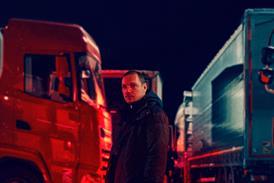
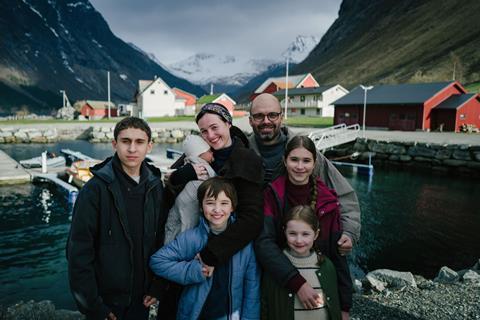
For some of its running time, Fjord builds slow, icy dramatic potency like one of the avalanches that threaten the small west-coast seaboard town where the five Gheorgiou siblings have moved with their Romanian father Mihai (Sebastian Stan), and their Norwegian mother (Lisbet), played with subdued authority by Renate Reinsve. But its cold precision thaws in a way that is uncharacteristic for Mungiu, leaving us with a thought-provoking drama about conflicting values that feels, in the end, a little bloodless and underpowered.
Yet the presence of hot properties Reinsve and Stan, who both deliver intriguingly understated performances here, coupled with the film’s visual grandeur and the global relevance of its story could nevertheless propel Mungiu’s sixth feature to a solid arthouse run in multiple territories. Neon will distribute in the US and Picturehouse will release in the UK.
The film opens with what seems like a premonition: a bleak landscape tableau of a black, snow-dusted mountain at the head of a Norwegian fjord. Beneath lies the town where Mihai, Lisbet and their five children have made their new home after several years in Romania. The couple met through the church, and they are devout practicing Christians, reading Bible stories with the four older siblings (the youngest is still a baby), coaching them in parables, psalms and songs and applying a merit system of points awarded or deducted
But they get on well enough with their undevout neighbours, and the four older kids bond with their new classmates at the bright modern local school they all attend. The couple’s adolescent daughter Elia (Vanessa Ceban) forms a strong bond with Noora (Henrikke Lund-Olsen), who lives nearby with her father – the school principal – and her mother, a former lawyer. One day, however, Elia’s gym teacher notices bruises on the girl’s neck. After a short inquiry, these two seemingly loving parents are confronted with the unthinkable: their children are to be taken away and placed in foster care by Norway’s Barnevernet child services agency while an investigation unfolds. That includes the baby, which Lisbet is still breastfeeding.
There’s a bait and switch of sorts in what follows. We more than half expect the two parents of this bible-bashing family to be exposed as monsters. After all, Mihail has a creepy authoritarian side to him and admits to investigators that he does occasionally slap his children when they act up – but never actually ‘hits’ them. What we get instead is a slow procedural expose of a justice system that it is inevitably also a cultural construct. As Lisbet attempts to defend their integrity and good name by enlisting neighbour Mia as their attorney, the frustrated Mihail decides to fight the charge by playing the populist card. Soon enough, the courtroom is besieged by demonstrators from the Christian far right defending traditional family values.
Fjord works, when it works, by presenting two sides and forcing the audience to take a stand. Is it right that a family can be reported to family services because one of their children told a classmate at school that she would go to hell for being a lesbian? And where does ‘traditional’ parenting shade into coercive control? When parents refuse to allow their children to have mobile phones? (But aren’t nation states themselves doing the same thing these days?) If Mungiu had found a way to make this uneasy dilemma stick, Fjord might have ranked alongside his greatest work. But he dilutes the potency of the exercise by getting lost in screenplay rabbit holes – among them Noora’s crush on Elia, which verges into teen-movie territory.
Production company: Mobra Film
International sales: Goodfellas, sales@goodfellas.film
Producers : Cristian Mungiu, Tudor Reu
Production design: Simona Paduretu
Cinematography: Tudor Vladimir Panduru
Editing: Mircea Olteanu
Music: Kaspar Kaae
Main cast: Sebastian Stan, Renate Reinsve, Lisa Carlehed, Ellen Dorrit Petersen, Lisa Loven Kongsli, Henrikke Lund-Olsen, Vanessa Ceban