







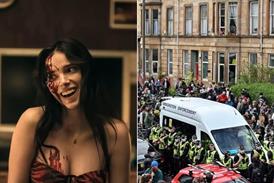


Niels Schneider also stars in Arthur Harari’s twisting Cannes Competition title
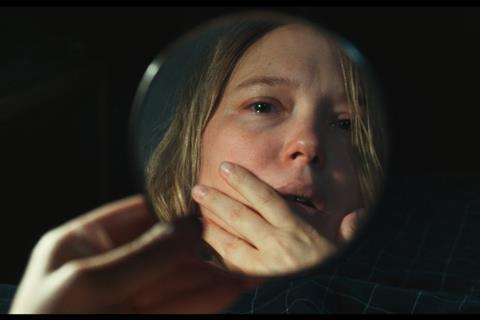
Dir: Arthur Harari. France/Italy. 2026. 140mins
In the art-house cinema of enigma, there’s often a thin line between the mysterious and the murky. Arthur Harari’s The Unknown treads this line with varying degrees of daring and discomfort, but ultimately never feels quite confident enough to lead us compellingly through the labyrinth of its bizarre body swap narrative.
It’s not entirely clear what principles are guiding this narrative game of hide and seek
French writer-director Harari has prestigious credentials, notably for his 2021 Japanese-language war drama Onoda: 10,000 Nights in the Jungle and as Oscar-winning co-writer of Justine Triet’s 2023 Palme d’Or Anatomy Of A Fall. But his third feature The Unknown, premiering in Cannes Competition, shades too soon into the downright nebulous. Despite the universal appeal of star Léa Seydoux, it’s unlikely to be quite the international hot ticket that it seems on paper.
The film is very much a family affair, based on a 2024 graphic novel by Harari and his artist brother Lucas, the duo co-scripting here with long-term associate Vincent Poymiro; a third brother, Tom Harari, is cinematographer. The ostensible protagonist is David Zimmerman (Niels Schneider), a photographer working on a project to record the enduring traces of historic sites in the modern Paris region. He has also covertly photographed an enigmatic woman (Seydoux), whose image in negative haunts the opening credits. Moody and introverted, David glumly accompanies friends to a riotous New Year’s Eve party, where he spots the woman, and they end up having joyless but extremely loud sex.
The next morning, the woman wakes up and realises that she is actually David – who has somehow come to inhabit her body. After an initial panic, s/he cool-headedly establishes that other people have undergone this alarming body-swap experience, and heads out to track them down. One is a woman (Victoire du Bois: Nino, Call Me By Your Name) whose experience has been catastrophic; another is David himself, or rather David’s body, now occupied by a young woman called Malia (Lilith Grasmug, from Claire Burger’s Foreign Language). A slippery narrative structure, flashbacks included, reveal that the character played by Seydoux is a sometime actress, sometime waitress named Eva.
The Unknown derives its initial impetus from keeping us on tenterhooks, wondering where the story is going. But once its premise is revealed, then further developed, it’s still not entirely clear what principles are guiding this narrative game of hide and seek. A potentially fruitful angle is that we start out following one character, who then transforms into another, at least on the outside – leaving us uncertain exactly whose story we’re supposed to invest in. The dual-identity trope is one that has been pushed to an extreme very compellingly in films such as David Lynch’s Lost Highway and Vertigo, which receives at least one visual wink. Unfortunately, Hararis don’t feel truly in control of these elusive dynamics, nor of the film’s tone. That’s most apparent in the register of knitted-brow earnestness embodied by Andrea Poggio’s score, with its ominous four-note theme à la John Carpenter.
That problem is partly due to the casting of Niels Schneider (An Impossible Love, Woody Allen’s Coup de Chance), who for much of the film comes across as saturnine and sullen. Schneider hits on one intriguing nuance, playing borderline-feminine when David’s own body is occupied by a woman; the problem is that he never establishes the pre-metamorphosis David beyond his impenetrable dourness, which doesn’t encourage us to look for traces of the character’s identity within Seydoux’s Eva.
Seydoux (who can also be seen in fellow Cannes Competition title Gentle Monster) takes over the film with no-nonsense confidence once Eva/David gets to work as a sort of identity detective. The consistency and solidity of her no-frills performance hold together a film that otherwise lacks the coherence that is essential when setting out to flout conventional narrative shapes.
There are enough teasing themes here to make the film frustrating for not getting satisfyingly to grips with them, especially as an enquiry into identity and gender – and if the film can be read as a trans parable, it’s a somewhat threadbare one. Visually too, it’s somewhat on the mundane side, although the only loosely integrated background theme of David’s photo project affords intriguing use of unfamiliar, sometimes wilfully unprepossessing locations in and around Paris, with echoes of Jacques Rivette.
Cinephiles will enjoy a supporting role for Romanian auteur Radu Jude as Malia’s Marcus Aurelius-quoting crane-operator dad. A closing credits song by another Zimmerman altogether feels like a gratuitous bit of cheek, rather than motivated by any real purpose.
Production companies: Bathysphere, To Be Continued
International sales: Pathé Films, alya.belgaroui@pathe.com
Producer: Nicolas Anthomé
Screenplay: Arthur Harari, Lucas Harari, Vincent Poymiro
Based on the graphic novel Le Cas David Zimmerman by Lucas Harari, Arthur Harari
Cinematography: Tom Harari
Editor: Laurent Sénéchal
Production design: Emmanuelle Duplay
Music: Andrea Poggio
Main cast: Léa Seydoux, Niels Schneider, Valérie Dréville, Lilith Grasmug, Victoire du Bois