







An authorised documentary offers a comprehensive look at Avedon’s artistry and drive
Dir: Ron Howard. US. 2026. 104 mins
Made in collaboration with the Richard Avedon Foundation, Avedon offers a respectful portrait of one of the great American photographers of the twentieth century. Access to a vast archive of photographs, home movies and interviews allows director Ron Howard to create a comprehensive picture of his artistic life and perfectionist drive. Some consideration of family pressures and private tragedies adds a welcome extra dimension.
Avedon is persuasive in arguing why the photographer mattered
The result is a valuable addition to the growing gallery of photography documentaries that stretches from Finding Vivian Maier (2013) to The Salt Of The Earth (2014) and Tish (2023). A Cannes Special Screening seems tailor-made to provoke renewed interest in Avedon and prove the film’s classy appeal for documentary channels.
Howard ensures that Avedon is a significant presence in the film, using extensive interview material in which he discusses his working methods and personal life. In many respects it allows the photographer to tell his own story. A chronological structure conveys the full extent of his sixty year career but is loose enough to encompass asides, observations and comments from an impressive roster of talking heads ranging from his son John F. Avedon to Lauren Hutton, Isabella Rossellini, Calvin Klein, Twiggy and various colleagues, curators and proteges. They help us understand what made Avedon such an influential figure and reveal his working methods.
Howard’s smartest move is to let Avedon’s images speak for him. In post-war America, he captured fashion, glamour and celebrity at their most beguiling. He seems to have photographed everyone who mattered from movie stars to models, politicians to painters. The film is peppered with memorable portraits of everyone from Katharine Hepburn and Humphrey Bogart to Picasso, Ella Fitzgerald and Ronald Reagan.
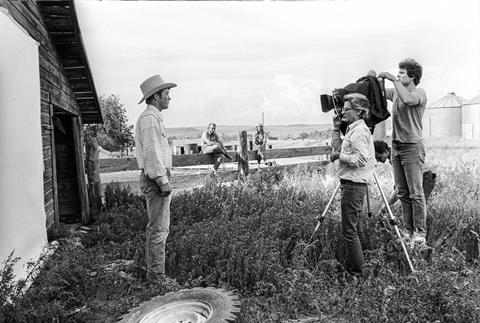
Avedon photographed individuals against a white background, preferring a stripped-back approach to ensure there was no impediment to the connection between himself and the subject. Behind the scenes footage shows him as playful and attentive. He charmed and seduced to get the photo he wanted. There is little surprise that a debonair Fred Astaire was cast as the Avedon-like photographer in Funny Face (1957).
Movement is shown to be an Avedon trademark, along with a determination to capture an aspect of a personality that is only revealed when their public mask slips. A weary, dejected Marilyn Monroe is caught when her champagne sparkle has gone flat. A sitting with the Duke and Duchess of Windsor shows a brittle anxiety rather than their traditional blithe spirits.
Avedon was sent to Paris in 1947 and photographed a new Dior collection. The swirling hems and voluminous material seemed a symbol of a Europe reborn after the horrors of the war; haute couture presented as an act of defiance. There was always an undercurrent of social commentary to Avedon’s work for the likes of Harper’s Bazaar and Vogue. That became more pronounced in his later career and photography during the Civil Rights era, the counterculture movement and beyond. There are striking photographs that capture for posterity the denizens of The Factory and members of the Chicago Seven trial, and Avedon was still happily working at the time of his death in 2004.
The film is sometimes reticent on the darker sides of the photographer’s life. Avedon is said to have been emotionally ruthless, and once conceded that he was difficult to live with. We do gain some insight when we learn about his relationship with a stern, demanding father and the mental health problems faced by his beloved sister and earliest muse, Louise. She was eventually diagnosed with schizophrenia and spent the last dozen or so years of her short life in a state hospital. Avedon was eventually reconciled with his father and some of his most unflinching, emotional photographs are of family members.
Smoothly executed throughout, Avedon displays some snappy editing allowing for flow. It may be couched in admiring tones but it is persuasive in arguing why the photographer mattered, and why he seemed most at home and in control from behind a camera lens.
Production companies: Imagine Documentaries, Fifth Season
International sales: Fifth Season sales.tvd@fifthseason.com
Producers: Brian Grazer, Ron Howard, Dallas Brennan Rexer, Sara Bernstein, Christopher St. John, Justin Wilkes
Cinematography: Robert Chappell
Editing: Andrew Morreale
Music: David Fleming