









Marie-Clémentine Dusabejambo’s Un Certain Regard title is set against Rwanda’s post-genocide gacaca courts
Dir: Marie-Clémentine Dusabejambo. Rwanda, Gabon, France, Norway, Côte d’Ivoire. 2026. 101 mins
This first feature from Rwandan director Marie-Clémentine Dusabejambo is an African ghost story that becomes a tale of resilience. The ghosts are those killed in the country’s 1994 Genocide against the Tutsi; but also the survivors, many of them Tutsi women who were brutally raped and beaten. By 2012, when the film is set, a new generation of Rwandans has moved on, the story suggests, to the point where they have trouble even distinguishing the ethnicity of their friends and classmates. But in this impressive, evocative debut, the trauma still lingers, tainting not only relations between neighbours but also the rapport between an activist mother and her daughter.
Ben’Imana works by accretion, layering its stories, characters and themes like colourful textiles
Dusabejambo brings a refreshing insider perspective to a tragedy that has been examined from an outside perspective in films such as Hotel Rwanda, Shooting Dogs and Sometimes in April. A committed cast of non-professional actors help to ground the film, as does the air of authenticity that clings to the locations and many of the community scenes depicted here. The director apparently spent several months working with local women’s groups before crafting a story set during the closing stages of Rwanda’s national truth and reconciliation process. It’s this authentically local point-of-view that should persuade adventurous arthouse distributors to take a look.
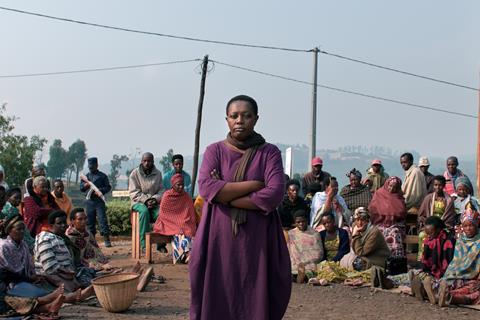
An opening caption informs us that the action is set in the rural Kibeho district, 18 years after the massacres, against the background of one of the traditional open-air tribunals that were supposed to herald “a new era of truth”. Clementine U. Nyirinkindi plays Veneranda, a genocide survivor and part of the area’s large Catholic community, who has become a campaigner for this national reboot – unlike her volatile sister Suzanne (Isabelle Kabano), who has sworn she will never forgive or forget.
Whether addressing public meetings or making up flash cards with snappy motivational slogans on them, Veneranda is deeply committed to the reconciliation process. But when her teenage daughter Tina (a terrific Kesia Kelly Nishimwe) reveals that she is pregnant, jeopardising her prospects of finishing school, her mother reacts with fury. That’s not just hypocrisy, we feel. The script by Dusabejambo and Delphine Agut constantly reminds us that it’s impossible to separate states of the mind, body and nation. Veneranda craves a clean slate – but life just got messy again.
Ben’Imana is a film that works by accretion, layering its stories, characters and themes like the colourful textiles seen in robes, scarves, curtains, bedcovers, school uniforms, or, in one devastating scene, the torn clothes of massacred children, unearthed in a garden. It’s a weave in which silences become as significant as words, and in which the truth and reconciliation process risks becoming not a cathartic release but a piling on of subjective certainties, ancient grievances and simmering resentments. Dusabejambo gives poetic visual shape to this tension through bridging shots of mist-covered hills receding towards the horizon, or the deserted main street of a market town emptied of bustle and life. Old photographs also loom large in a film with much to say about absent presences.
But this is also a story about three generations of women fighting for their dignity and independence. Evocatively scored by Rwandan musician Igor Mabano, Ben’Imana summons moments of great beauty that stand like sentinels against the horror. A scarlet floral dress, the combing of hair, the washing of feet, candles flickering in church, the lined face of Tina’s grandmother, the neighborly solidarity displayed during a home birth – all these scenes, shot with a tactile feel for texture and natural light, feel like small, precious acts of resistance.
Production companies: Ejo Cine, Ogweli Productions, Princesse M Prod, Les Films du Bilboquet, Duo Film
International sales: MK2, intlsales@mk2.com
Producers: Samantha Biffot, Marie Epiphanie Uwayeezu, Pierre-Adrien Ceccaldi, Marie-Clementine Dusabejambo
Screenplay: Marie-Clementine Dusabejambo, Delphine Agut
Cinematography: Mostafa El Kashef
Production design: Ricardo Sankara
Editing: Nadia Ben Rachid
Music: Igor Mabano
Main cast: Clementine U. Nyirinkindi, Kesia Kelly Nishimwe, Isabelle Kabano, Leocadie Uwabeza, Antoinette Uwamahoro, Aimé Valens Tuyisenge, Arivere Kagoyire