
















The Asian Contents & Film Market (ACFM) returns for its 21st edition with a lineup that increasingly extends beyond the traditional business of buying and selling films.
Running from October 10-13 at Busan’s Bexco exhibition centre, the market is positioning itself as a meeting point for sales, streaming, intellectual property, artificial intelligence, microdramas and international co-production.
This expansion reflects a wider shift across the Asian film business as producers and financiers seek new ways to develop projects across multiple territories and platforms.
“The industry is at a crossroads and the ACFM aims to offer a map for the Asian film industry,” says ACFM director Ellen YD Kim. “We want our market to connect all of Asia and expand the industry through collaboration with other sectors but place the emphasis on film. We will be a guide, and I hope can offer some direction.”
The timing is significant. Last year’s 20th anniversary edition was ACFM’s biggest to date, registering 1,222 companies and 3,024 professionals from 55 countries while recording its biggest ever attendance of 30,006. The sales market generated 8,438 business meetings, with an estimated transaction value of $71.1m.
“The growth has slowed a little this year,” admits Kim. “It is difficult to grow more than we already have so we’re looking at how the film industry, which continues to face challenges, can work with other sectors such as technology and brands.”
This ambition is reflected in the scale and breadth of this year’s agenda, which comprises 64 programmes across seven strands, including the Asian Project Market (APM), Busan Story Market (BSM), InnoAsia, Producer Hub, Doc Square, Platform Busan and The A. It positions ACFM not just as a
market for finished films, but a place where projects, IP and partnerships can be assembled.
Daring storytellers
Film remains at the core of ACFM with APM showcasing 30 titles seeking partners to bring them to fruition (see below). But even here, Kim is looking for evolution.
“The APM is the market’s oldest programme, but I want to keep it fresh with strong projects that have commercial appeal,” she says. “We want titles like Tiger Stripes [the Malaysian arthouse horror about a girl whose body begins to transform as she learns to embrace her true self]. Daring, fresh storytelling that can both be poignant and enjoyable. We want new discoveries.”
If APM represents the traditional independent film market, BSM looks beyond these boundaries. Now in its fifth year, its 2026 selection comprises 25 original IPs from Korea, Taiwan, Japan and Indonesia, with projects presented for adaptation. The market is also introducing a new Remake IP section, with Thailand — ACFM’s inaugural country of honour — presenting five feature-film properties to international partners.
This focus on IP is becoming increasingly important as Asian producers seek properties that can travel between film, series and short-form formats. “We believe in the potential of IP and stories evolving into other forms of cinema and series,” says Kim. “I foresee BSM continuing to grow and I’m looking into how we could bring in videogame storytelling. There is a big market that runs here after the ACFM called G-Star, which brings together all the gaming companies. Perhaps we can connect with them in future.”
The attraction is clear for rights holders. Rather than relying on a single finished film, a story can become the basis for multiple adaptations and revenue streams. Thailand’s presence is therefore more than a national showcase. Its selection as country of honour reflects ACFM’s growing emphasis on cross-border partnerships and on markets that can supply distinctive local stories with remake and adaptation potential.
InnoAsia is perhaps the clearest indication of where the market sees the industry heading. It launched last year and places generative AI and emerging technologies front and centre at the market.
The programme brings together 44 organisations and companies, with sessions covering AI, production, microdrama, branded content and new models of film development. Content generation company Kling AI will co-host a session examining how generative technology could reshape filmmaking, while other sessions will include a bootcamp for creators and a works-in-progress showcase for AI films.
“We want to show the big picture of how AI is influencing the film industry,” says Kim. “It continues to change the paradigm of our business, so we want to go deeper. How can it influence creators and eventually establish a different economy? We’re going to find out.”
Microdrama receives similar attention. Its inclusion reflects the extraordinary growth of short-form narrative entertainment in parts of Asia, particularly China, and the possibility that stories developed for mobile-first audiences can migrate into longer form film and television. It marks an important shift and panels on the format will explore if the next generation of buyers may not necessarily travel to Busan simply looking for feature films.
Delving deeper
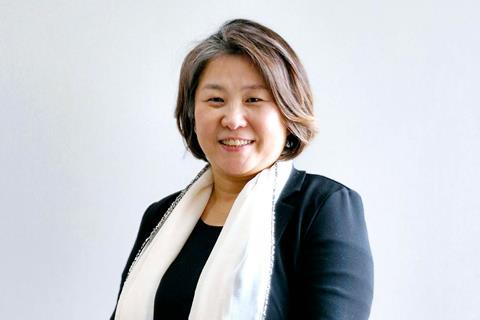
Japan is the programme’s Focus Country within the Producer Hub. There are 10 Japanese producers pitching projects, while the wider programme examines co-production structures, production environments and financing opportunities.
“Japan is now Asia’s most dynamic co-production partner,” says Kim. “Building on its strength in independent and arthouse cinema, international collaboration is expanding on all fronts to encompass commercial films and series, backed by bold policies centred on grants and incentives.”
Producer Hub, which launched in 2024, will also see producers from Korea, Indonesia, Japan and Taiwan discuss the changing relationship between local industries and international partners.
Documentary will be in focus at Doc Square, where 16 work-in-progress projects will be presented, alongside programmes examining co-production and the social impact of nonfiction.
Together, it adds up to a market that has expanded significantly since Kim took the role as ACFM director in 2024. The veteran executive, who played a crucial role in establishing ACFM in 2006, adds: “The size of the market, the diversity of countries and the new technology is mind-blowing compared to what we had at the first edition. But I still see the same people from 20 years ago, and connecting these experienced executives with new people and young talent remain at the core of everything we do.”
Asian Project Market preview
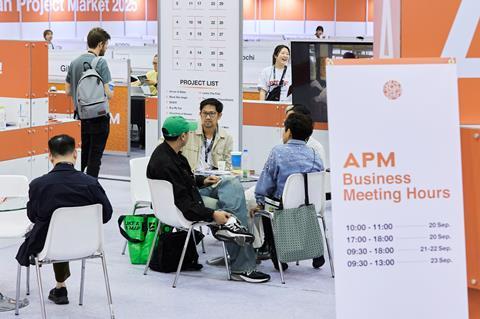
This year’s Asian Project Market (APM) includes 30 titles that range from courtroom drama and queer romantic comedy to crime thriller and family drama.
Despite being one of the oldest elements of ACFM, the co-production and financing market continues to grow and received a record-breaking 455 submissions from 44 countries — up 33% on 2025.
They include Casparina by Reza Rahadian, one of Indonesia’s most recognisable stars, who won four Busan Vision awards in 2025 with debut On Your Lap. His second film as director will chronicle the story of his own grandmother, who was a freedom fighter and journalist.
Also from Indonesia, Mouly Surya brings The Wife Who Can See Dead People (Or Jinn). The filmmaker is one of the country’s most internationally acclaimed directors with credits including Marlina The Murderer In Four Acts, which played in Directors’ Fortnight at Cannes in 2017, and This City Is A Battlefield, which closed Rotterdam in 2025.
Japan’s Nanako Hirose, a former protégé of Hirokazu Koreeda, has Wings Of Return (working title) in APM. Hirose plays in Competition at the festival with Between Two Lovers, having been selected for the New Currents competition in 2018 with debut His Lost Name.
Kangdrun, whose acclaimed 2025 debut Linka Linka marked the first fiction feature by a female Tibetan director, returns with Orlo In The House.
Notable producers bringing projects to Busan include Singapore’s Anthony Chen, whose work as a director includes Berlinale 2026 selection We Are All Strangers and Ilo Ilo, winner of the Camera d’Or at Cannes in 2013. He is attached as producer to Talk To Me When You Are Dead by Alvin Lee.
Philippe Bober, whose long list of credits includes the 2023 Academy Award-nominated Triangle Of Sadness along with Club Zero and Force Majeure, reunites with South Korean director Park Syeyoung on Satellite Of Love. They worked together on The Fin, which premiered at Locarno 2025.
Renowned Taiwanese filmmaker and actress Sylvia Chang is a producer on One Fine Day, a Malaysia-Taiwan co-production from Tan Seng Kia, whose credits include the award-winning Shuttle Life.
Also from Taiwan, veteran producer Patrick Mao Huang from Flash Forward Entertainment — whose credits include Cannes 2023 Critics’ Week winner Tiger Stripes and 2024 Karlovy Vary-winning Pierce — will bring Uncle, the debut feature of Yen Hao-Hsuan.
Singapore-based Spanish producer Fran Borgia, whose credits include 2024 Venice competitor Stranger Eyes, 2025 Cannes Competition title Renoir and Tiger Stripes, is on board with Islands by Sri Lanka’s Prasanna Vithanage. It marks the filmmaker’s follow-up to Paradise, which won Busan’s Jiseok Award in 2023.
Other Busan winners with projects at APM include Japan’s Tatsuya Mori with 13, whose September 1923 won the festival’s New Currents competition in 2023; and India’s Tribeny Rai with her second feature A Chronicle Of Minor Things (working title), after Shape Of Momo won two Busan Vision Awards last year.
The winning projects will be announced at an awards ceremony on October 13.





No comments yet