













The international TV industry will gather in Lille from March 20-27 for Series Mania amid tightening budgets, major media consolidation and geopolitical tensions.
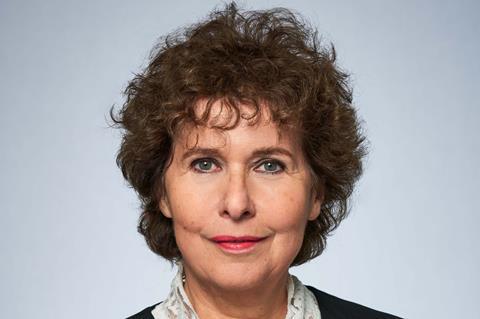
Despite – or perhaps because of – the challenges facing the industry, the festival’s founder and director Laurence Herszberg said Series Mania has seen a “boom” in accreditations that are up by 20% from last year. She is expecting more than 5,000 professionals from some 75 countries.
“Hollywood is in crisis,” Herszberg suggests. “It is increasingly moving away from its longtime role as being the centre of the global TV market. The industry is trying to pivot and reposition and find new alliances from Europe to Canada, Asia and Africa. Everyone is asking: ‘If the US isn’t playing the same role, what can we do?’”
“The role of an event like ours is to connect people, despite the changes in the landscape,” adds Francesco Capurro, director of industry platform Series Mania Forum, which runs March 24-26.
All eyes on Europe
Amid industry instability, particularly in the US, Europe is emerging as a focal point of creativity as the streaming giants commit to local production and European companies consolidate and continue to widen their scope.
“As the US is closing its borders both commercially and politically, this is an opportunity for Europe to partner with other places for ambitious international shows,” says Capurro. “The industry is just reshaping. This is not a bad thing, but instead a real opportunity for Europe to jump into the game.”
Herszberg observes that while European audiovisual rules and regulations have often been considered to be too rigorous, many producers are using them to their advantage to structure financing.
“People said the regulations were putting the brakes on creation – au contraire… Before, streamers would just take world rights, but now they are agreeing to share rights with traditional broadcasters.”
For example, Netflix and TF1 unveiled a distribution partnership last year, as did Prime Video with France Televisions. “Even the UK is shifting and looking to Europe because it is losing its longtime US ally,” says Herszberg.
Meanwhile, the Council of Europe’s new convention for the co-production of series will be officially signed by several ministers at Series Mania. “This will give a boost to the industry and open doors to new forms of financing,” explains Herszberg.
Is less more?
Both Capurro and Herszberg have noticed that the number of series commissions has dropped.
“This year, we have seen an incontestable contraction in the industry,” said Herszberg. “Cable and traditional broadcasters are disappearing and today there are essentially a handful of major global streamers – Apple, Amazon, Netflix and Disney – running the show. We are waiting to see what will happen with the Warner Bros-Paramount deal.
“Fewer series [have been] submitted [to Series Mania]. Shorter formats and seasons with fewer episodes.”
Herszberg and her selection teams received just 380 submissions for the festival this year compared to 450 last year. In France alone, belt-tightening has been intense, with major budget cuts at France Télévisions and Canal+. Meanwhile, Disney’s pledge to increase its investment in local cinema production in exchange for a shorter window in France’s media chronology has meant “more investment in films and less in series”, says Herszberg.
She further observes, “Series are taking longer to be greenlit.”
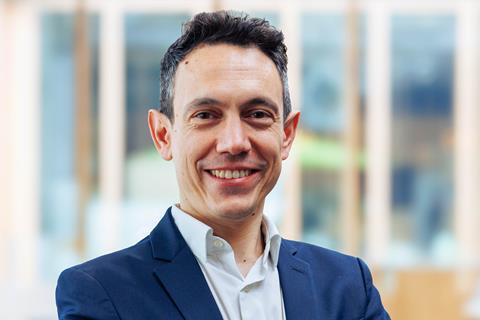
For Capurro, the consolidation trend – which saw Banijay and All3Media agree to merge this month – is not necessarily a bad one, and not a threat to smaller producers.
“We need the European champions,” he says of powerhouses such as Mediawan, Federation and Fremantle, which “have the financial capacity to bring high-profile projects with A-list talent and high production value that can travel.”
At the same time, “We have a lot of independent producers in Europe continuing to provide quality content, and we need both to be able to compete on a global scale.”
Herszberg describes the consolidation as both inevitable and unpredictable. “It’s a readjustment. We all knew that post-Covid, we were producing too much. It wasn’t sustainable.”

Despite the economic constraints, Herszberg insists scripted content has not suffered as a consequence.
“The quality hasn’t suffered. US platforms in the US are taking less risks, but here in Europe, broadcasters are daring to air shows like ZDF with The Flaws or even an ambitious adaptation of Lucky Luke for France Televisions and Disney.”
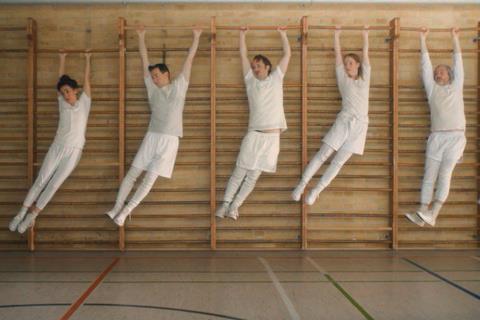
The Flaws is a quirky satire on the working world, using physical comedy, while Lucky Luke is adapted from the classic French comic book series.
Thematically, Herszberg highlights a handful of trends programmers have observed in this year’s crop of submissions, namely series that are either politically charged or, at the other end of the spectrum, a complete escape from the current global state of affairs.






No comments yet