











French Cannes Competition title is an adaptation of the novel by Laurent Mauvignier
Dir/scr: Lea Mysius. France. 2026. 114mins
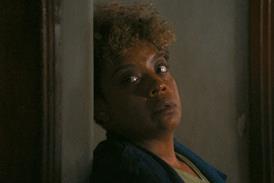
In a rural, isolated French marshland hamlet, preparations are underway for a surprise birthday party. But when a trio of uninvited guests gatecrash the event, the celebrations soon turn sour. Lea Mysius’s third feature is a taut exploration of family, identity and betrayal, with a claustrophobic atmosphere and strong performances from Hafsia Herzi and Monica Bellucci. But conventional plotting and a relentlessly sombre tone mean that The Birthday Party never truly comes alive.
Lacks the dramatic spark and heady atmosphere of Mysius’s previous films
Adapting the 2023 novel by French author Laurent Mauvignier, Mysius keeps a tight focus on character and largely avoids tipping into the cliches of the genre. The result created is a solid feature that segues from family drama to intense home invasion thriller, with echoes of Michael Haneke’s Funny Games (in its polite-but-menacing antagonists), David Cronenberg’s A History Of Violence (in its web of volatile past secrets) and, most intriguingly, The Drama (in its idea of truth as a destabilising force).
Yet it lacks the dramatic spark and heady atmosphere of Mysius’s previous films Ava (which premiered in Critics’ Week in 2017) and The Five Devils (Directors’ Fortnight, 2022), which both went on to festival and theatrical play. Its more conventional style, along with the presence of international hot properties Herzi and Bellucci, could nevertheless help boost its onward prospects following its premiere in Cannes Competition.
Nora (Hafsia Herzi, also seen in Un Certain Regard title Words Of Love) has a hectic but content life working for the local planning authority, where she’s in line for a coveted promotion. She, husband Thomas (Bastien Bouillon) and their adolescent daughter Ida (impressive newcomer Tawba El Gharchi) live on a secluded farm well off the beaten track, with only chic artist Cristina (an arresting Bellucci) as their immediate neighbour. Their busy, noisy house contrasts with Christina’s quiet, minimalist home; a modern extension built from glass and steel, it is a cavernous open-plan space where she can paint her giant, minimalist canvases. The interplay between the two very different homes – particularly, the way that light and sound travel between them - will soon come to the fore.
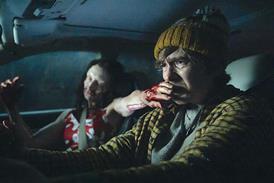
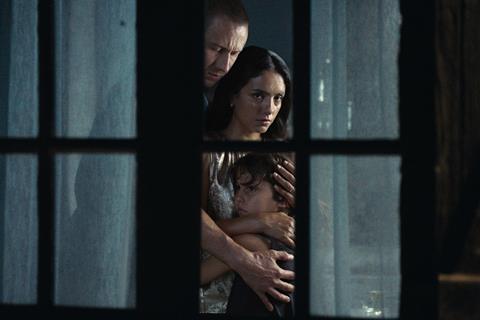
Thomas, Ida and Cristina are planning a surprise party for Nora’s birthday: a small affair attended by just them and two of Cristina’s work friends. That Nora suffers a nasty injury while fixing a puncture on her way home is an indication that the night won’t go to plan, and, indeed, the arrival of three uninvited guests throws things into confusion. Franck (Benoit Magimel), Flo (Paul Hamy) and Begue (Alane Delhaye, a standout) are smart and well-spoken, but armed and clearly dangerous, and are determined not to leave until they have spoken to Nora. Held at gunpoint by the vulnerable but unpredictable Begue, Cristina can only watch from across the yard as the muffled sounds and flashes of movement weave a patchwork of terror.
Unlike the novel’s challenging style, which utilises long sentences, flashbacks and interchanging viewpoints, Mysius’s screenplay follows the straightforward formula of the genre. It takes more time than the book to set up its characters and their environment, and the first half plays like an understated slice-of-life domestic drama. Nora and Thomas seem content, but this is far from an idyllic existence; she is pouring everything into her work, he visits prostitutes on his way home from picking up party supplies, and money is tight. Nevertheless, they are a close unit, and Franck’s arrival is like a bomb going off.
Yet, at least until its climactic orgy of violence, The Birthday Party is never explosive. Mysius (one of the Oscar-winning co-writers of Emilia Perez) augments the story’s characters to suit her subtle, slow-burn approach. In the novel, Nora (named Marion in the book) is brash and blond, while Cristina is a flashy redhead. She has toned both down in personality and style, and Herzi and Bellucci underplay their emotions in this extreme situation, creating an undercurrent of tension but giving the audience far less to hold on to. While we find out more about Nora that may explain her reactions – and Herzi does well to find balance in a role that requires her to keep a great deal beneath the surface – Cristina remains more of an enigma.
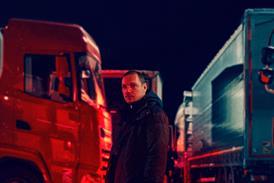
Visually, the film makes more of an impact, inspired by Spanish painter Goya’s idea that there is no colour in nature, only sun and shadows. With the film taking place over a taut 24 hours, cinematographer Paul Guilhaume leans into the chiaroscuro approach and plays evocatively with the changing of the light and the encroaching shadows. The dead darkness of night is punctuated by pops of colour – the blinking red lights of wind turbines, Begue’s blue tracksuit.
This measured film does indulge one flight of fancy, when the camera suddenly swoops from Cristina’s home to the farmhouse, the colour draining to black and white and the party guests arranged in a strangely textured static tableaux – created, apparently, from thousands of 3D scans. The effect is like a striking piece of art and effectively underscores the film’s preoccupation with the contrast between darkness and light, truth and lies.
Production company: F Comme Film
International sales: mk2 Films intlsales@mk2.com
Producer: Jean-Louis Livi
Screenplay: Lea Mysius, from the novel by Laurent Mauvignier
Cinematography: Paul Guilhaume
Production design: Esther Mysius
Editing: Yorgos Lamprinos
Music: Florencia Di Concilio
Main cast: Hafsia Herzi, Monica Bellucci, Benoit Magimel, Bastien Bouillon, Tawba El Gharchi, Paul Hamy, Alane Delhaye, Servane Ducorps, Tatia Tsuladze


No comments yet