The filmmakers’ adaptation of Denis Johnson’s 2011 novella explores the life of a labourer and logger in the Pacific Northwest over several decades

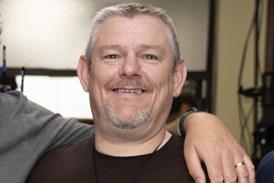
Clint Bentley and Greg Kwedar were introduced by a mutual friend back in 2010. “I was an accounting major and dropped out of senior year to become a filmmaker,” recalls the Austin-based Kwedar. “My friend Rachel was from a small town in Texas and was home for the holidays. Clint is from a cattle-ranching and horse-racing family. They had bought a ranch in the same tiny town in Texas as Rachel. Clint was visiting his parents, and he met Rachel. She learned he was interested in film and said, ‘You need to meet my friend Greg.’”
At the time, Kwedar was interested in making a film about border patrol agents on the US/Mexico border. So was Bentley. “Our friendship and working relationship began by trying to figure out how to make that first film, which took over six years,” says Kwedar of 2016’s Transpecos, which he directed and co-wrote with Bentley. “At the end of that, he married Rachel, and, I guess, me in the process.”
Post-Transpecos, Bentley and Kwedar continued to collaborate, co-writing several screenplays, with the former directing 2021’s Jockey and the latter 2023’s Sing Sing.
“We’ve got a lot of shared values, even if we have different tastes and want to make different films,” says Bentley. “Our partnership is very organic and how we’re working together looks different on each film.”
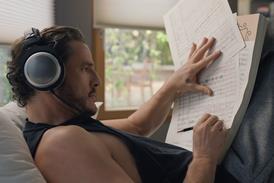
After Jockey debuted at Sundance, Bentley was approached by producers Marissa McMahon, Will Janowitz and Ashley Schlaifer to see if he was interested in adapting Denis Johnson’s 2011 novella Train Dreams. It told the story of Robert Grainier, a railroad labourer and logger who lives a mostly isolated life in the woods of the Pacific Northwest, as the world transforms around him over 80 years.
Johnson, it transpired, was Bentley’s favourite writer, and Train Dreams his favourite book by the author. “I loved that the book felt like an elegy for somebody who wouldn’t even get an obituary in the local paper,” he says. “Taking a little life that would otherwise be forgotten, and showing all the depth and beauty of it, felt very, very rich.”
“Clint called me and said, ‘Is this a movie? Should I do it?’,” adds Kwedar. “I read it cover to cover in one sitting. I was intimidated by the level of prose, and how confounding it was structurally. But it was an exciting prospect. You felt the adventure in it.”
Cabin fever
The pair began writing in spring 2021, renting a woodland cabin on the Moyie River in Idaho, where the story is set and close to where Johnson lived. “It gave a lot,” says Bentley. “As an artist, you want to make sure you’re experiencing as much as you can to bring your perspective on it.”
A day the pair spent with a naturalist was particularly inspiring. “We hiked to a peak where there was a stand of old-growth trees, and walking into that cathedral you could feel the air shift around you,” says Kwedar. “We learned the history of the landscape, how it shifted and changed and how people interacted with that changing world. We went to the local bars, chatting up loggers and people who have been there for generations, hearing their stories over beers. We met people from the Kootenai tribe. Then we went out and saw stacks of timber, several storeys high, laid on their sides.”
As they drove around, they also listened to the audiobook of Train Dreams read by Will Patton, who they later asked to narrate the film.

“We had never used voiceover, and there’s always that fear it’s a crutch, that you’re using it to escape what you must do visually or through performance,” continues Kwedar. “But we were trying to create space for Denis’s prose to be experienced by the audience alongside the rest of the film. Then, at a certain point, we transcended his prose and found our own way to convey the spirit of Grainier and the world of the book.”
To play Grainier, they cast Joel Edgerton, who was also a big fan of Johnson’s novella and had tried to buy the rights to adapt it himself. The Australian actor also joined the project as executive producer.
“Joel has incredible range,” says Kwedar. “Stillness is a very hard thing for a lot of actors, and it takes an actor of Joel’s capability to be able to convey that through his face, his hands, his eyes. He’s a timeless actor.”
The production geared up to shoot in Washington State in summer 2023 with a budget of under $10m provided by Black Bear, whose Teddy Schwarzman and Michael Heimler also produce.
“We just got off the plane and were having lunch and the actors’ strike began,” remembers Kwedar. “We weren’t sure how quickly it would be resolved, and we stayed in limbo there for a few weeks, seeing if the project was going to have a future.”
Bentley and his wife had rented out their house in Texas, thinking they were going to be in Washington State filming for a couple of months. They chose to stay rather than head home. “It was a nice time to drive around and look at different areas and talk to different people,” says Bentley. “A lot of the locations in the film were found on that trip.”
The production returned to Washington State in spring 2024, once the strike was resolved. Joining the cast were William H Macy, Kerry Condon and Felicity Jones as Grainier’s wife Gladys.
The shooting schedule was 29 days, with filming often beginning in the afternoon and continuing into the evening, allowing Bentley to film his actors against golden hour, sunset, blue hour and night.
“Tarkovsky was a big influence in terms of the look and the feeling, trying to create a film that gives space to the audience,” says the director, who also cites Francois Truffaut’s Jules And Jim, Alfonso Cuaron’s Y Tu Mamá También and Hayao Miyazaki’s Princess Mononoke. And then, of course, there is Terrence Malick, whose lyrical oeuvre looms large over Train Dreams.
“I will not pretend Malick is not an influence. I love his films deeply,” says Bentley. “But I’m as influenced by Malick as by Roy Andersson, trying to take inspiration from these very composed frames. But Malick is incredible. Working with nature, it is hard not to be influenced.”
On track
Train Dreams premiered at Sundance last January and was picked up by Netflix, which released it in November following additional festival stops at Toronto and London.

The film’s awards season trajectory so far has seen it nominated for two Golden Globes (best actor for Edgerton and best original song for Nick Cave and Bryce Dessner’s title track) and four Independent Spirit awards (feature, director, lead performance and cinematography), as well as making the Bafta longlists for adapted screenplay, leading actor and cinematography.
“People are connecting with it,” says Bentley, who was Bafta and Oscar-nominated with Kwedar for their Sing Sing adapted screenplay. “That’s all you want as a filmmaker.”
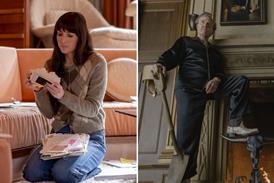
The pair have wrapped their follow-up Saturn Return, a decade-spanning friendship and romance story about three people who meet during freshman year of college. Backed by Plan B and Netflix, it stars Rachel Brosnahan, Charles Melton and Will Poulter and was co-written by Bentley, Gaelyn Golde and Kwedar, and directed by the latter.
“We want to keep helping each other’s dreams come true. And I don’t see that stopping anytime soon,” says Kwedar. “We’ve started a company, Ethos, which is going to be a home for the films we make. Within it is a big thing we’ve always tried to do which is be community-driven filmmakers and try and create healthier ways for a film to exist in the world.”


No comments yet