











When Palme d’Or winning Romanian filmmaker Cristian Mungiu first contemplated making a film set in Norway, he approached Joachim Trier to ask who might make the best Norwegian co-production partner. This led him to Eye Eye Pictures, whose credits include Trier’s Oscar winner Sentimental Value.
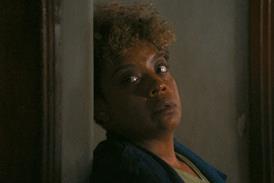
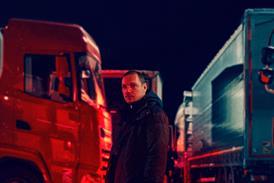
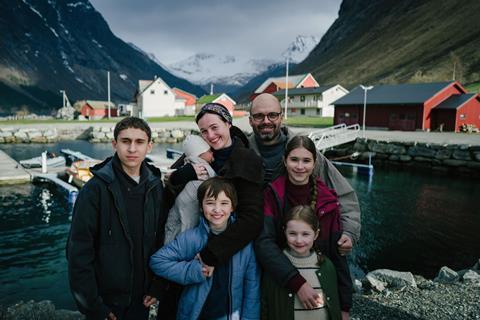
The result is Fjord, starring Renate Reinsve and Sebastian Stan, about a Romanian Norwegian couple who move with their children to a village on Norway’s coast. Here they befriend their neighbours, the Halbergs, despite their very different values and beliefs.
“It’s an interesting take on how Norwegians and our system and society are perceived from someone on the outside,” says producer Dyveke Bjorkly Graver of Eye Eye Pictures. “It shows that everything has grey areas. [Norwegians] think we are so well organised and our system is for the best.”
The Cannes Competition film, which premieres tomorrow (May 18), is produced by Mungiu and Tudor Reu through Bucharest-based Mobra Films, alongside France’s Why Not Productions, Denmark’s Snowglobe, Finland’s Aamu Film Company, and Sweden’s Filmgate Films and Garagefilm. Bjorkly Graver and Andrea Berentsen Ottmar of Eye Eye are the lead Norwegian producers, and sales are handled by Goodfellas.
“The Nordic countries contributed with soft funding from the respective film institutes,” says Reu. “[The project] also received regional funding in Norway and Sweden, plus the Nordic Film and TV Fund. Eurimages and Creative Europe Media also supported the project.”
Search party
Mungiu took a scouting trip early in development, travelling around the west coast of Norway in search of what Reu calls “the right fjord”. Local knowledge helped as Eye Eye had already shot the 2024 thriller Armand in the coastal town of Alesund and knew the region well.
The crew was an even combination of Romanian and Norwegian craftspeople. Mungiu was again teaming with his regular cinematographer Tudor Vladimir Panduru, a Romanian and a Norwegian production designer worked together, and the costume designer was Finnish. The cast and crew generally communicated on set in English, and the film is shot mostly in English.
“The Norwegian crews were experienced and extremely helpful to the project,” says Reu. “There was a mix of crew members and HoDs from Norway, Romania, Sweden and Finland. We brought almost 40 people from Romania for two reasons. One, Cristian has his own collaborators [director of photography, art department, first AD, production] and two, the Romanian crew rates are still lower than the Nordic ones.”
Much of production was based in Stenes near Øye and in nearby villages. The crew stayed in private houses and in hotels in the area. “The cast stayed in a fabulous place, Hotel Union Øye, which the Norwegian production managed to open earlier especially for us,” recalls Reu.
There were 36 shooting days, stretching from March to May 2025 to capture the seasonal changes. The weather conditions changed dramatically, and snow and landslides became occupational hazards. “The transport involved ferries for the minibuses and equipment trucks. When the roads were closed, everybody used private boats,” says Reu.
The Romanians and their Nordic partners got on well and lived together in a tiny community where there was not much else to do. “A lot of the Romanian crew took up fishing. People went hiking. It was possible to go skiing,” says Graver.
Reu was impressed by the culinary and social experience of filming in Norway. “The Norwegian food was better than expected, everybody got used to it. Still, many Romanians were cooking in private and invited their Norwegian mates to dinners or barbecues,” he says.
Eye Eye’s Graver challenges the perception Norway is an expensive country. “When we compare prices, it really is not,” she says. “If you have euros to spend, it is actually quite cheap at the moment.
“I am sure it would have been a lot cheaper to film [elsewhere], but with the story, it wasn’t possible not to shoot in Norway and we brought a lot of money from the Nordic countries as well.”
Both Reu and Graver insist they would love to collaborate again. “I hope Fjord will bring more Norwegian-Romanian co-productions,” says Reu. “Everyone at Mobra Films would work again with Norway in any possible way.”




No comments yet