













Now in its fourth edition, Cannes Marché’s Investors Circle aims to bridge the gap between private equity players and independent auteur projects.
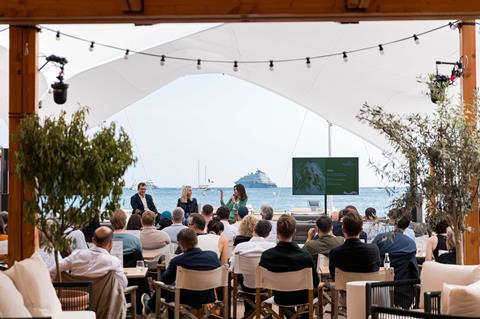
Launched in 2023 in response to the strangulated financing landscape for European independent auteur cinema and pressure on traditional co-production models, the one-day Investors Circle summit enters its fourth edition as one of the Cannes Marché’s more high-profile, and seemingly successful, post-pandemic add-ons. Over its first three editions, 29 filmmakers with “Cannes DNA” (as Marché director Guillaume Esmiol described it) pitched new films to private equity investors, seeking to attach finance to projects ranging from early stage development to those on the verge of production, in behind-closed-door sessions.
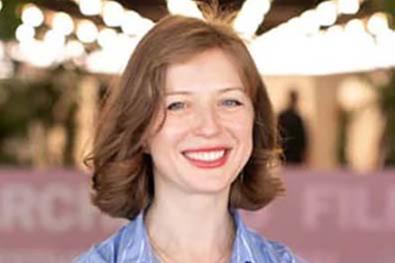
Given the highly curated nature of the event, and the filmmakers invited (Radu Jude, Ruben Östlund and Jasmila Zbanic among them), it is not a surprise that 19 of those 29 projects have already premiered at major festivals, or are about to. Two of last year’s cohort, Lukas Dhont’s Coward and Marie Kreutzer’s Gentle Monster, will debut in this year’s Cannes Competition. “While private equity has been present in the industry, it has not always aligned naturally with European arthouse cinema, especially non-English-language films,” notes Alexandra Zakharchenko, the Marché’s head of industry programs, who organises the Investors Circle in collaboration with Esmiol.
The pair invite 35-40 private equity financiers, high-net-worth individuals and family offices each year, prioritising investors with a track record or who have at least demonstrated interest in festival-driven, auteur-led cinema. While the Marché does not divulge who they are, it is known that Waypoint, Anonymous Content and AC Independent have taken part, as has Desmar, which invested in Gentle Monster last year. (Zakharchenko describes the narrowing-down process as “self-selection”, whereby potential investors fall away quickly if the Circle model does not align with their interests.)
The projects are identified through scouting, with the selection made by Esmiol, Zakharchenko and a rotating committee that this year included FilmNation Entertainment vice president of international sales Alice Laffillé. There is no budget cap but in the past two years, the range has been $3.5m-$11m (€3m-€9m).
Spread the word
Projects arrive at all stages of development, but the best results, according to producers who have taken part, are achieved by projects with a production start date looming and most of their financing in place. In some cases, results can still be achieved even if the investors in the room do not latch on, as producer Michiel Dhont discovered last year. He and brother Lukas were already in “full pre-production” with a mid-August start date on Coward, and while none of the investors present boarded, another financier did reach out afterwards off the back of their Investors Circle participation and ended up investing “a significant amount”.
“Money is important to this person but his interest in our project was sparked by the story we were trying to tell,” says Dhont. “I was a little hesitant to participate in the event at first because I’m not used to working with private financing, but now I’m so happy that we did it.”
Not every producer has had a satisfactory experience. One who attended with an ambitious project from a renowned European auteur says too little time was dedicated to the actual pitching, and also noted a lack of interest from many attending financiers for non-English-language projects. “Given the A-list directors they had in the room, the event felt superficial to me,” they comment. “They should spend more time beforehand sending around information about the projects and then set up structured meetings.”
But for most, taking part is a positive experience. As noted by producer Hans Everaert, who attended in 2024 with director Teodora Ana Mihai and Heysel 85, visibility is the biggest advantage. “It helped create awareness around the project,” he says. “No-one in the room ended up investing, but it was helpful for closing other financing. We financed the last 10%, €350,000, through different sources afterwards, and found our sales agent [Salaud Morisset].”
While participating filmmakers are announced in advance, the projects they are pitching aren’t until after the Circle has taken place. The eight-strong 2026 lineup features Magnus von Horn, whose The Girl With The Needle played in Competition in 2024, and Chile’s Felipe Galvez, whose last film The Settlers premiered in 2023 Un Certain Regard.
In terms of the Marché’s own measurement of success, Zakharchenko says the ambition has always been to build up independent arthouse cinema “not only as a cultural endeavour, but as a credible and structured investment opportunity”.
“What matters,” she concludes, “is whether investors continue to engage with this segment of the industry over time.”



No comments yet