











Nicolas Winding Refn sees his first feature in a decade — Her Private Hell, playing Out of Competition at this year’s festival — as not only a new phase of his career, but also a new phase of life. “Some years ago, I came to what I called the end of my creative odyssey, because I had basically nothing left that I hadn’t done,” he says. “I had made the films I wanted to make, I had done a couple of shows.”
Then, an undisclosed health crisis in 2023 shook Winding Refn out of his creative doldrums. “I was dead for half an hour, and I was brought back to life with electricity, like Frankenstein,” he reveals. “I suddenly realised I could start over again. I had this desire to go back and make movies again like I’ve never made movies before.”
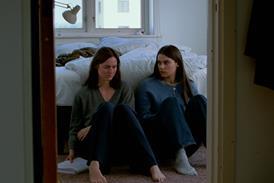
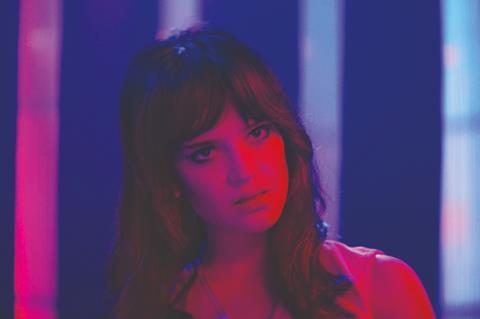
Not much has been disclosed about Her Private Hell ahead of Cannes, except that the cast includes Sophie Thatcher, Charles Melton, Havana Rose Liu, Kristine Froseth, Dougray Scott and Diego Calva, and the official synopsis reveals that it is about a deadly entity unleashed in a futuristic metropolis as a troubled young woman searches for her father and an American GI seeks to rescue his daughter.
Refn says his first idea was to make a horror film, and then perhaps a sci-fi. “But then I got interested in melodrama like [Douglas] Sirk’s melodramas,” he says. “And I began to look at bloody John Waters movies again.”
At the end of the shoot, he also decided Her Private Hell should be operatic as well, so he hired Italian veteran Pino Donaggio, whose credits include Carrie and Body Double, to compose the music. “It’s all these things combined — that’s what excites me,” he says. “It’s like going into a candy store and throwing everything into a mixed bag.”
The film’s world premiere on May 18 will mark Winding Refn’s return to Cannes, where he won best director in 2011 for Drive and also played in Competition in 2013 and 2016 respectively with Only God Forgives and The Neon Demon. Neon, which financed and is selling internationally, holds North American rights to Her Private Hell and plans a July 24 release; Mubi will release in the UK & Ireland, Italy, Spain and Latin America.
Long time coming
Winding Refn spent more than a year casting the film, and pays tribute to Neon’s Tom Quinn, a key collaborator and longtime friend, for letting him start the process before knowing what the film would be. “It kept on changing and it was like a constant exploration,” he says.
“It wasn’t until the very end of the casting that Sophie Thatcher came in… I knew the minute I saw her that she was essential for the film — the same with Kristine and Havana. And my youngest daughter is a Riverdale fan, which is where I saw Charles Melton looking so cool and I knew that he would be Private K.”
One of his first inspirations in this new phase of life was Asia. “Coming from Scandinavia originally and growing up in New York, whenever I go to Asia, I always feel like I’m the furthest away that I could ever come,” he says. “I like that very much.”
Although Her Private Hell is set partially in Japan — and includes some scenes in the Japanese language and features actors including Shioli Kutsuna, Aoi Yamada and Hidetoshi Nishijima — Refn reveals he filmed the entire project on sets in Copenhagen (contrary to earlier reports that it was shot in Japan). He was travelling through Japan and South Korea when, he says, “I realised what I’m looking for doesn’t exist. I have to build it. In the end, I ended up back in Copenhagen.”
The writer/director, who now splits his time between Copenhagen and Los Angeles, kept the production lean, with fewer than 30 people on set including cast at any one time. Her Private Hell shot for 57 days from May to July 2025.
The script was co-written with Esti Giordani, who he met when they were co-developing Maniac Cop, an HBO project that never came to fruition. “I enjoy working with her. She’s super smart, and I knew it would be good for me to be surrounded by good people,” he says.
He also points to US producer Kimberly Willming as a key sounding board as the project evolved during three years of development, production and post-production. Speaking to Screen International before making the trip to Cannes, and still putting the finishing touches on the colour grade, he says: “It never stops before it’s finished.”






No comments yet