


















After missing out on Oscar nominations in 2025 and 2026, Asia looks well positioned to compete more powerfully this time around. Screen assesses the region’s contenders.

Last year saw four submissions from countries in Asia — India, Japan, South Korea and Taiwan — make the Oscars’ international feature shortlist of 15, though none achieved a nomination. This time around, acclaimed selections helmed by world-renowned auteurs bid to secure the first nod for the region since Japan’s Perfect Days in 2024.
Asia Pacific titles have been nominated in 14 out of 26 editions since 2000, winning the category four times during that period with Taiwan’s Crouching Tiger, Hidden Dragon in 2001, Japan’s Departures in 2009, South Korea’s Parasite in 2020 and Japan’s Drive My Car in 2022.
Chief among the Asia Pacific titles this time around is South Korean entry Possible Love, Lee Chang-dong’s first film in eight years (see page 26). His drama about two intersecting marriages is led by Cannes 2007 best actress winner Jeon Do-yeon, alongside Lee regular Sul Kyung-gu, Hope’s Zo In-sung and Cho Yeo-jeong from four-time Oscar winner Parasite.
This marks Lee’s fourth time representing South Korea at the Oscars, following Oasis in 2003, Secret Sunshine in 2008 and Burning in 2019, which was the first Korean film to appear on what was then a nine-title shortlist. Netflix-backed Possible Love won the Fipresci prize and Silver Lion grand jury prize at Venice Film Festival in September.
Bonding moment
Japan’s All Of A Sudden also has significant momentum. Ryusuke Hamaguchi’s multilingual drama centres on the bond between a French care-facility director and a Japanese theatre director who is battling cancer. Leads Virginie Efira and Tao Okamoto were jointly awarded the best actress prize at Cannes where All Of A Sudden premiered in Competition. Neon has North American rights.

Hamaguchi, who also co-wrote the film, is back in the race for a second time after winning with Drive My Car in 2022, the first Japanese film to be nominated for best picture. It also won the Bafta for film not in the English language that same year. Japan made the Oscar shortlist of 15 in 2026 with Lee Sang-il’s kabuki-themed Kokuho, which stands as the highest grossing Japanese live-action film of all time at home.
Philippines entry Filipiñana premiered at Sundance this year where it won a special jury award. The drama follows a 17-year-old country club worker forced to reckon with post-colonial class disparities. Rafael Manuel wrote, directed, produced and edited, and China’s Jia Zhangke executive produced. This marks the 36th entry for the Philippines and would be the nation’s first nomination or shortlist inclusion if selected.
Nepal’s submission Elephants In The Fog won this year’s Un Certain Regard jury prize at Cannes, and Abinash Bikram Shah’s directing debut went on to receive three nominations at the Asia Pacific Screen Awards. Newcomer Puspa Thing Lama plays a Kinnar community matriarch who investigates the disappearance of her daughter. Nepal has only been nominated once, back in 2000 with its first Oscar submission, Eric Valli’s Himalaya.
Singapore’s contender We Are All Strangers was the first from the territory to compete at the Berlinale. It centres on family life over a span of three years and completes director Anthony Chen’s ‘Growing Up’ trilogy, which began with Cannes 2013 Camera d’Or winner Ilo Ilo and 2019’s Wet Season. Both films were Oscar entries, as was Chen’s 2023 release The Breaking Ice. This fourth selection ties Chen with Eric Khoo to become the Singaporean director with the most Oscar submissions, though it has no nominations or shortlist inclusions from 19 previous entries.
Representing Thailand, Sompot Chidgasornpongse’s 9 Temples To Heaven follows a family embarking on a nine-temple trip with their grandmother. The film premiered in Directors’ Fortnight at Cannes, and is produced by Palme d’Or winner Apichatpong Weerasethakul, who was submitted with Uncle Boonmee Who Can Recall His Past Lives in 2011. Thailand has been shortlisted once for How To Make Millions Before Grandma Dies in 2025. Ratchapoom Boonbunchachoke’s A Useful Ghost won the Critics’ Week grand prix at Cannes last year, but was deemed ineligible for Oscar after incomplete information was submitted to the Academy.
Double bill
Gondhal, India’s pick by debut director Santosh Davakhar, is only the fourth of India’s 59 Oscar submissions in the Marathi language. Another Indian film, Theja Rio’s Angh, is also competing this year thanks to its Platform prize win at Toronto. India has been nominated for the Oscar three times, most recently in 2002 with Ashutosh Gowariker’s Lagaan. Payal Kapadia’s All We Imagine As Light was nominated for Bafta’s film not in the English language in 2025.
Indonesia bets again on director Kamila Andini with Four Seasons In Java, after her Toronto Platform prize-winner Yuni was submitted for 2022. The drama centres on a woman who returns to her village after years in prison. Andini’s fifth feature picked up a best cinematography nomination at the 2026 Asian Pacific Screen Awards. The country has submitted films to Oscar regularly since 1987, but has yet to secure a nomination or inclusion on the shortlist.
Cambodia has submitted Polen Ly’s debut feature Becoming Human, after last year’s horror entry Tenement was ruled ineligible by the Academy. Ly’s fantasy drama launched at Venice’s Biennale College sidebar in 2025, and follows the spirit guardian of an abandoned cinema. Cambodia scored one nomination previously, for Rithy Panh’s The Missing Picture in 2014. Davy Chou’s Return To Seoul made the shortlist in 2023.
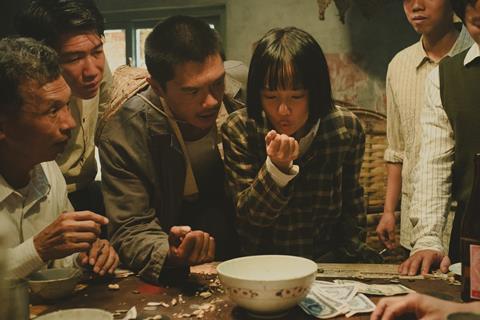
From Taiwan, Chen Yu-hsun’s historical drama A Foggy Tale hopes to follow Shih-Ching Tsou’s Left-Handed Girl, which made the Oscar shortlist last year. A Foggy Tale was the big winner at the 2025 Golden Horse Awards, achieving four wins from 11 nominations including best narrative feature. All three of Taiwan’s previous nominations came from Ang Lee films, including the country’s only win: Crouching Tiger, Hidden Dragon in 2001.
Pakistan has selected the sole documentary entry from the Asia Pacific region this year with Hanging By A Wire. Directed by Primetime Emmy-nominated Mohammed Ali Naqvi, the film revisits the August 2023 cable car emergency in Battagram where eight passengers were left suspended above a ravine. Pakistan has only made the shortlist once with Saim Sadiq’s Joyland in 2023.
Further notable entries include Once Upon A Time In The Middle East, Wen Muye’s summer hit that represents mainland China. If successful, it would mark the first time the territory has landed a nomination since Zhang Yimou’s wuxia spectacle Hero in 2003, and the third in total since Zhang and Yang Fengliang’s Ju Dou was nominated in 1991.
Another big-budget submission is Hong Kong entry Sons Of The Neon Night, Juno Mak’s thriller starring Takeshi Kaneshiro, Sean Lau and Tony Leung Ka-fai. Hong Kong has previously secured three nominations: Zhang Yimou’s Raise The Red Lantern in 1992, Chen Kaige’s Farewell My Concubine in 1994 and Derek Tsang’s Better Days in 2021.
More submissions
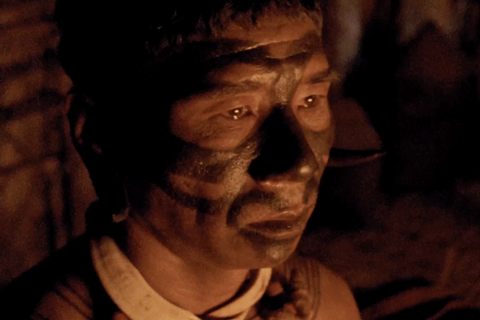
One submission comes from Australasia. James J Robinson’s Philippines-Australia drama First Light represents Australia, whilst Taratoa Stappard’s colonial horror Mārama, selected by New Zealand, was deemed ineligible. Australia has chosen 18 submissions previously, and was nominated for Martin Butler and Bentley Dean’s Tanna in 2017.
More submissions include Malaysia’s The Fox King by Woo Ming Jin, who won Locarno’s Fipresci prize in 2022 for Stone Turtle; Riverstone, a police drama by Lalith Rathnayake that marks Sri Lanka’s first Oscar submission in 17 years; and Nguyen Phan Quang Binh’s period epic Spirit Guardians: The Last Secret Of The First Emperor, one of the largest productions in Vietnam’s history.
Submissions are rounded out with Mongolian entry Independence: Keeper Of The Prophecy, a sweeping historical drama by Tamir Bat-Ulzii; Kazakhstan’s 1990s-set drama Abel by Elzat Eskendir; Bangladesh’s Rotterdam-launched Roid by Mejbaur Rahman Sumon; Kyrgyzstan folk horror Kassandra from director Bekzat Pirmatov; and Azerbaijan’s Taghiyev: School, the latest in Zaur Gasimli’s biographical drama series about industrial magnate Haji Zeynalabdin Taghiyev.
In total, 22 Asia-Pacific countries have submitted films to the international feature Oscar — and Toronto Platform winner Angh brings the tally to 24 — which compares with just 18 from the region last year.






No comments yet