


The Iranian filmmaker makes his Venice Competition debut with the story of a doctor pushed to breaking point

Dir: Ali Asgari. Iran/Switzerland/Italy/Canada/Turkey. 2026. 87 mins.
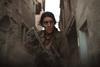
His medical licence revoked, his premises sealed by the Tehran police, his memories haunted by the people he tried and failed to help; Arash (a quietly commanding Misagh Zareh) has come to a decision. He plans to end his own life. It has been a tidy life until now, and Arash sees no reason why his death shouldn’t match. To this end, he calmly breaks the news to his three siblings and puts care plans in place for his patients, pets and plants. But, as the day wears on, Arash is reminded of the small moments that make life worth living and the impact his absence would have on others. Ali Asgari’s latest, A Bit Of Light is a profoundly affecting account of a man derailed by despair.
Understated filmmaking places emphasis on the thoughtful screenplay and the quality of the performances
Directed, with admirable restraint, by Asgari from a screenplay co-written by regular Jafar Panahi-collaborator Shadmehr Rastin, A Bit Of Light explores with economy and piercing clarity the balance of anguish, exhaustion and the rare glimmers of optimism experienced by Iranians at the current moment. The film is set in the aftermath of the brutal crackdown, in January of this year, on anti-government protests and just before the start of the US and Israeli bombardments. Filming started in Tehran – as with Asgari’s previous Venice title, the 2025 Horizons stand-out Divine Comedy, the streets of the city are more than just a backdrop, shaping the tone and personality of the picture. But as the war intensified, filming became impractical and the production shifted to Turkey, where the interiors were shot.
It’s a timely picture and potent response to a government atrocity which left an estimated 30,000-35,000 protestors dead: in part, it’s a howl of grief, but there are flashes of gallows humour too. In the face of oppression, laughing and loving can be acts of defiance. It’s Venice regular Asgari’s first film in the main competition; following its premiere, the film has slots confirmed at Vancouver and the BFI London Film Festival. It will likely be a title of interest to programmers of further festivals, and possibly to arthouse distributors.
Although both are episodic encounters set over a single day, the shift in tone between the droll, breezy energy of Divine Comedy and the sober, shell-shocked stillness of A Bit Of Light is striking. Iran has changed markedly in the year between the two films, and Asgari’s focus has similarly shifted. While his previous picture followed a pair of filmmakers scrambling to dodge the censors and put on an underground screening, the latest is about someone who, on paper, is more of an establishment figure. Serious, slightly paunchy, career-focused: Arash is not a political activist. But by dint of living decently, empathetically and according to his conscience, and by treating terrified teenage protesters gunned down by the authorities, he finds himself regarded as an enemy of the state.
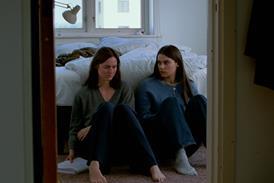
Arash, we realise, is a man unable to turn down a request for help. Part of his disillusionment arises from the fact that his current situation means that providing that help is becoming increasingly untenable. It also, he explains to his sisters, Mahsa (Sadaf Asgari) and Masi (Forouzan Jamshidnejad), comes from waking each morning and not knowing if you’ll make it to the end of the day. “Your soul is exhausted,” says yoga-teacher Mahsa.
This is unshowy, understated filmmaking which places the emphasis on the thoughtful screenplay and the quality of the performances. The contemplative camera mirrors the central character’s stillness; Asgari rightly resists the temptation to fill the loaded silences with music. The most notable design decision is the use of green – in the plants that Arash hauls around the city, and in the dress that Masi wears. A recurring motif in a colour palette which otherwise favours muted neutrals, it’s a colour loaded with significance in Iran, representing everything from nature, heaven and sanctity, to political ideals and the 2009 Green Movement. But mostly, one suspects, it represents hope.
Production companies: Seven Springs Pictures, Sunny Independent Pictures, Zoe Films, Good Measure Productions, Haurvatat Film, MeMo Films, Salt for Sugar Films
International sales: Salaud Morisset paul@salaudmorisset.com
Producer: Milad Khosravi
Screenplay: Ali Asgari, Shadmehr Rastin
Cinematography: Iman Tahsin
Editing: Iman Tahsin
Music: Navid Divan
Main cast: Misagh Zareh, Sadaf Asgari, Forouzan Jamshidnejad, Ramtin Daghigh, Mina Rahimzadeh