










The Japanese auteur’s live-action adaptation of Tatsuki Fujimoto’s acclaimed manga debuts in Venice Competition
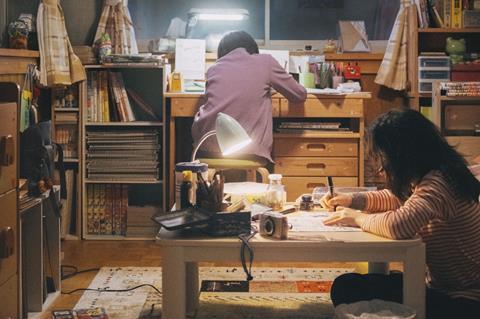
Dir: Hirokazu Koreeda. Japan. 2026. 100mins
Two girls find friendship through their shared passion for drawing in Look Back, Hirokazu Koreeda’s softhearted drama based on Tatsuki Fujimoto’s 2021 manga. The Shoplifters writer/director is on comfortable footing with this depiction of the preciousness and precarity of childhood, although he works in a noticeably sparer, more impressionistic vein than usual. But despite its lovely tone, the picture proves too slight – and, at the same time, too emphatic in its emotional bludgeoning – to achieve its desired tearjerking effect.
Koreeda’s typically restrained approach comes across here as excessive and manipulative
This is Koreeda’s second feature this year, following his coolly-received Cannes competition entry Sheep In The Box. After Look Back premieres in Venice competition, the picture will screen in Toronto and London, with the Japanese release scheduled for September 11. The popularity of Fujimoto’s coming-of-age saga should drive fans to this live-action adaptation, while Koreeda’s reputation among arthouse crowds will also be a draw. Yet the overly sentimental approach may temper critical enthusiasm.
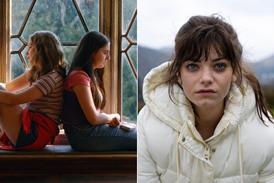
Furi Nanase plays Fujino, an outgoing Japanese grade-schooler praised by her classmates for her drawing talent. Then one day, she is confronted by the work of Kyomoto, a fellow student who is homeschooled and withdrawn. Loath as she is to admit it, Fujino recognises that Kyomoto is an even more gifted manga artist giving up on drawing for a while because she concludes that she will never be as accomplished. But she eventually decides to meet the reclusive Kyomoto (Rokka Okada) by visiting her at home, only to be greeted with a warm embrace from a girl who turns out to be a huge fan of Fujino’s drawings. The two become fast friends, inspiring each other to new creative heights.
Examining the phenomenon of having a childhood passion - only to realise that someone in your orbit harbours the same interest - Look Back celebrates the pair’s mutual respect and artistic aspirations. Sheep In The Box composer Yuta Bandoh once again provides an unsubtle string-laden score that amplifies the characters’ joy at discovering a like-minded soul. But whereas Koreeda’s pictures usually feature measured, controlled storytelling, his latest veers toward the episodic, offering snippets of Fujino and Kyomoto’s days together, whether gleefully walking through heavy snow or dreaming about their futures. In its early stretches, Look Back unspools like a collection of honeyed memories - delicate recollections all the more wistful because they seem to evoke an unretrievable past. Even before the narrative takes a dark turn, the viewer may suspect that the girls’ happy days cannot last.
Those familiar with Fujimoto’s manga will know what awaits Fujino and Kyomoto, but suffice it to say that the film moves forward a few years, with Natsuki Deguchi and Aju Makita playing the characters in high school. As their careers develop, an exciting professional opportunity presents itself, but it creates tension between the friends once Kyomoto declares that she would rather get an art degree than pursue paid work. The decision drives a wedge between them, before tragedy strikes.
In pictures ranging from Nobody Knows to Sheep In The Box, Koreeda has evocatively explored the enormity of one’s formative years, viewing childhood as both fleeting and momentous. The filmmaker’s quietly observational style allows both sets of young actors to essay unguarded performances, and Nanase and Okada are especially endearing as the grade-schoolers. Nanase’s more poised portrayal is sweetly counterbalanced by Okada’s buoyant energy, suggesting how each girl needed the other to become the artists they longed to be.
Look Back’s gentle rhythms and compassionate portraiture can be deeply affecting, but eventually the picture succumbs to what might best be described as a nagging insubstantiality. The dramatic flimsiness is only exacerbated by the story’s shocking revelation and its aftermath, in which the narrative introduces an unexpected temporal shift. These bold flourishes get to the heart of Koreeda’s fascination with adolescence’s poignant impermanence, but the film lacks the heft to support such substantial plot twists.
Even more troublesome, the veteran writer/director’s typically restrained approach comes across here as excessive and manipulative. In his finest films, Koreeda effortlessly communicates the inherent pain and beauty of being alive, but in Look Back he forces the audience to be devastated instead of letting that reaction slowly and inexorably wash over us.
Production company: K2 Pictures
International sales: Goodfellas, Solene Michel, smichel@goodfellas.film
Producer: Daiju Koide
Screenplay: Hirokazu Koreeda, original work by Tatsuki Fujimoto, Look Back published by Shueisha Jump Comics
Cinematography: Senzo Ueno
Production design: Shinsuke Kojima
Editing: Hirokazu Koreeda
Music: Yuta Bandoh
Main cast: Natsuki Deguchi, Aju Makita, Furi Nanase, Rokka Okada