














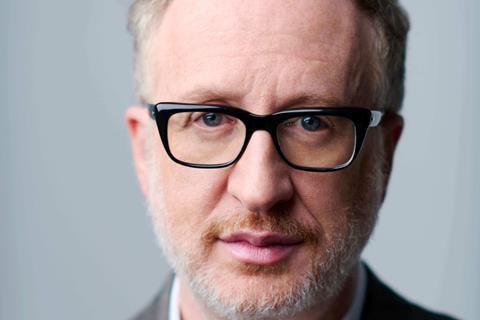
US filmmaker James Gray has addressed the industry’s widespread anxiety regarding artificial intelligence (AI) at São Paulo International Film Festival, stating that “creative people” have nothing to fear.
“We should worry about AI for things we can’t control, like some horrible virus gets out. For artists, no problem,’’ Gray said during an on-stage conversation (October 15) moderated by Walter Salles at the festival, known as Mostra de São Paulo. “Because AI is never going to get to the landscape of the infinite nature of our souls. It’s never going to get there.’’
Gray continued: “It’s this struggle for the human heart that is the coin of the realm. And that will never change.’’ He emphasised that this is what makes cinema so epic. “Budget doesn’t matter. That’s what Cassavetes could access just as surely as David Lean. It doesn’t mean that you have to work on a huge scale.”
Gray drew laughter from the audience when he was asked about the filmmaking process and what he had learned over the years. “All filmmakers know [that] you have to have a sickness in your brain, a narcissism, that is so deep and reveals that you are an awful person in some ways, to get the film made. My vision, what I want to say, is worth a year and a half, 150 people, and millions of dollars. That’s how great I am. And then the minute day one [of the shoot] comes, you have to lose that completely.
“Movie direction demands two different versions of you, which is the hardest thing,” he went on. “So when you forget the narcissist –which is not easy for a narcissist, and I am definitely a narcissist – you realise that you’re not William Shakespeare, that your words are just the idea of the scene. So if the actors feel comfortable improvising, they should do it, as long as they are doing it consistent with character and with the scene.’’
Looking back on his career, Gray remarked that he has only managed to make very personal films. “My mother’s illness that she died from is in Paper Tiger but also Little Odessa. I also use my father’s legal troubles and the run-ins with organised crime in New York,” he said, adding that personal and autobiographical are not the same.
“Autobiographical is the facts of your life while personal means that are you connecting in the most emotional way with the material and revealing your most intimate impressions. No matter what the subject is. That to me is everything in cinema,’’ Gray said.
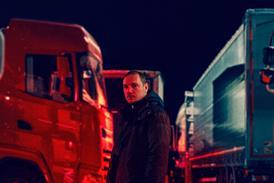
On the same night, Gray, whose latest film Paper Tiger opened the festival, received the Leon Cakoff Award in recognition of his career spanning more than 30 years. The filmmaker, who designed the festival’s poster, is also the subject of a retrospective.
Sala Petrobras da Mostra, set up at the Solar Fábio Prado specifically for this 50th edition of the festival, has a bustling timetable of activities right to the end of the festival, which runs until October 29.
The space will host exhibitions, special screenings, masterclasses, public discussions and a portion of the third Mostrinha (a programme for younger audiences), as well as various panel discussions for the sixth Audiovisual Ideas Meeting.






No comments yet