















Paramount and Warner Bros Discovery (WBD) confirmed their $110bn merger on Friday and promised to build a tech-savvy venture that would maintain both studios and release at least 30 films each year with a minimum 45-day theatrical window globally.
Less than 24 hours after Netflix stunned Hollywood by walking away from an agreed deal with WBD, Paramount and WBD said in a joint press release that both boards had “unanimously” approved Paramount’s offer of $31 per share and additional sweeteners in a merger that would create ”a premier global media and entertainment company focused on expanding consumer choice and empowering creative talent worldwide”.
The deal is expected to close in Q3 2026, subject to customary closing conditions, regulatory clearance, and the WBD shareholder vote in early spring that had been scheduled for March 20 but will now take place once merger proxy documentation is filed.
The pending deal creates a media behemoth housing more than 15,000 film titles including the storied Warner Bros library, and thousands of hours of television.
Intellectual property, studio divisions and television networks include DC Studios, HBO, the Harry Potter, Lord Of The Rings, Transformers, Mission: Impossible and Top Gun franchises, as well as the Game Of Thrones universe, and a broad stable of cable and free-to-air networks in more than 200 countries that includes news outlets CNN and CBS, sports and entertainment, and a streaming platform of HBO Max, Paramount+ and Pluto.
Theatrical plans
The theatrical offering will bring 15 features from each studio “for our combined platforms and third-party distribution partners”. The companies noted, “Every film will receive a full theatrical release, with a minimum 45-day window globally before becoming available on paid video-on-demand (VOD), with the intention of 60-90 days or more to maximise the audience for our most successful releases […] Paramount will continue to adhere to specific windowing regimes in geographies it operates in, including in France where Paramount maintains its windowing commitments.”
In addition, “Both studios will continue to support a vibrant third-party ecosystem by licensing their films and shows across their own and third-party platforms, while remaining active buyers of content from third-party studios and independent producers.” Paramount hired Lia Buman in December to head the global acquisitions unit and Republic Pictures, when it said it planned to “significantly” expand its global acquisitions pipeline.
The studios said the film strategy will drive “long-term job growth across the film and creative industries”. Industry observers have been skeptical about a 30-strong release count. Last year Warner Bros and Paramount released 11 and nine films, respectively.
Anti-trust regulators will scrutinise the deal. The US Department of Justice has opened its investigation and EU regulators will also review. Earlier on Friday Cinema United, the US-based exhibition industry lobby group, reiterated its concerns over consolidation as it maintains dialogues with Capitol Hill, the US Department of Justice, and state attorneys general.
The combined streaming offering will, the companies said, be “pro-competition” that expands consumer choice and opportunities for creative talent and labour. The subscriber count will reach more than 210m worldwide, and while that is still considerably behind market-leader Netflix’s 325m global membership, it is higher than the combined 195.7m of Disney+ and Hulu membership reported in December. The number does not include Pluto TV, which is free ad-supported and reportedly has more than 80m monthly users.
By acquiring the entirety of WBD for $31 per share in cash in addition to the 25 cent “ticking fee” Paramount must pay WBD shareholders each quarter should the transaction not close by September 30 2026, the deal values WBD at $81bn in equity value and $110bn in enterprise value.
Job losses
The press release said the merger will “yield over $6 billion in synergies” and “corporate-wide efficiencies”, which is widely understood to imply job losses and is a huge worry for the industry.
Both companies have laid off staff in recent years – WBD made around 1,000 employees redundant after the WarnerMedia-Discovery merger in 2022 and axed a further 10% (around 50 staffers) at the motion picture group last year. Paramount made 1,000 of its workforce redundant last October and will lay off another 1,000 in cuts stemming from the Skydance Media merger.
The transaction is funded by $47bn in equity, fully backed by the Ellison Family and RedBird Capital Partners, which may at closing include ”other strategic and financial partners”. Paramount will issue new Class B shares at $16.02 per share. The transaction is backed by $54bn of debt commitments from Bank of America, Citigroup, and Apollo, which includes $15bn to backstop WBD’s existing bridge facility and $39bn of incremental new debt. The $54bn excludes $3.5bn of bridge financing from these institutions to backstop an existing $3.5bn revolving credit facility.
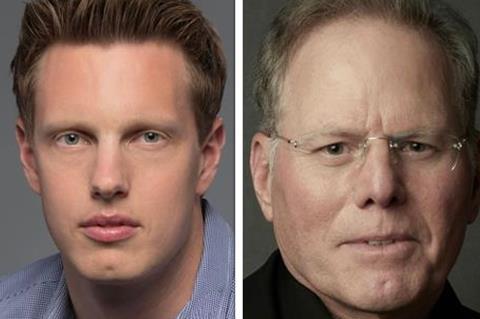
Paramount CEO David Ellison said, “From the very beginning, our pursuit of Warner Bros. Discovery has been guided by a clear purpose: to honour the legacy of two iconic companies while accelerating our vision of building a next-generation media and entertainment company. By bringing together these world-class studios, our complementary streaming platforms, and the extraordinary talent behind them, we will create even greater value for audiences, partners and shareholders — and we couldn’t be more excited for what’s ahead.”
WBD CEO David Zaslav said: “I’m very pleased with the outcome we achieved for WBD shareholders and the entertainment industry. Our guiding principle throughout this process has been to secure a transaction that maximises the value of our iconic assets and our century-old studio while delivering as much certainty as possible for our investors. We look forward to working with Paramount to complete this historic transaction.”
The two companies will host a webcast on Monday when executives will field questions. The industry has many, some of which might not be addressable for some time, and include: how long will Warner Bros remain a stand-along company within the Paramount fold; what will become of film heads Mike De Luca and Pam Abdy, whose blockbuster 2025 theatrical slate drove more than $4.4bn in global ticket sales and delivered this season’s two best picture Oscar frontrunners; and what now for HBO Max - will it remain a stand-alone streamer, or operate as a tile on a larger DTC portal.






No comments yet