














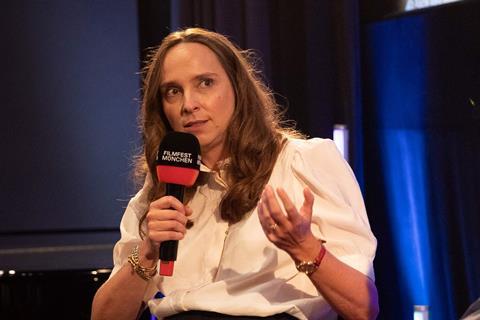
This week’s Munich International Film Festival (MIFF) cast the spotlight on the German government’s plans to introduce an investment obligation requiring international streamers and German VoD services to invest at least 8% of their net annual revenue in the production and exploitation of European audiovisual works
The legislation may be operational from January 1, 2027, following the Federal cabinet’s adoption of the draft Media Services Investment Obligation Act at the end of May. The legislation will now go before the Bundestag in September after the summer recess.
However, discussion on two panels organised by the Fieldfisher media law practice and the Greens party in Bavaria, at MIFF, showed the so-called “acceptable compromise” on the investigation obligation that Wolfram Weiner, the state minister for culture and the media, claimed to have reached with the various stakeholders - including the streamers - on the investment obligation may be far from a done deal.
“It’s no secret we’re struggling to understand why this law is necessary at all,” said Inga Moser von Filseck, Amazon’s head of media policy for German-speaking countries, on Wednesday.
“We’ve been investing here for over 11 years in 15 German-language commissioned programmes a year, and have enjoyed great success with such productions as Maxton Hall, The Tiger and LOL: Last One Laughing. From our point of view, there’s no problem.”
Von Filseck criticised the level of investments in works originally produced in the German language being set at at least 80%, and that 60% of the investment was to be allocated to the production of new works.
She pointed out the investment obligations in countries such as Italy and France specified the term “new works” also included works within the last five years.
On Thursday, producer Lisa Giehl, one of the managing directors of Wiedemann & Berg Film and W&B TV, part of the Leonine Studios Group, welcomed the inclusion of a clause on reversion of rights to producers. To qualify as an eligible investment, exclusive exploitation rights may only be granted for a limited period of between three and seven years.
However, she said the decision to set the percentage of the streaming services’ net annual revenue for investment at 8% was “a joke” when compared with the rates in Italy or France of between 16% and 25%.
Meanwhile, the Green party’s panel Bundestag deputy Sven Lehmann argued the concerns and wishes of the various trades in the film industry such as cinematographers and production designers, should also be heard in the debate on the proposed law. He said he would ensure in his capacity as chair of the Bundestag committee for the arts and the media that these groups’ representatives are invited to a planned public hearing in the autumn.
At the same time, he suggested there was the need to return to pursuing the idea of a tax incentive model being introduced in Germany as the third pillar in the package of nation’s film funding reforms alongside the new German Film Law [FFG, which came into effect at the beginning of 2025] and the proposed investment obligation.





No comments yet