








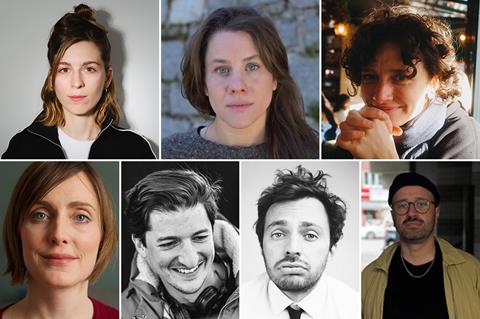
Seven rising German directors with features selected for the New German Cinema competition of this year’s Munich International Film Festival
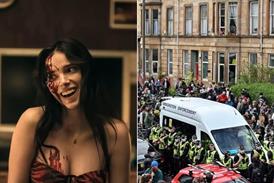
Nicolas Ehret, Echo of Tomorrow’s War
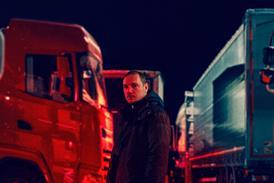
Nicolas Ehret began developing his debut feature, Echo of Tomorrow’s War, while studying at film school 10 years ago. The dystopian drama is set in a Europe that has failed politically and is succumbing to military escalation. The cinematographer is Fabian Gamper, the award-winning DoP of films including Mascha Schilinski’s Sound Of Falling and Dark Blue Girl.
“I wanted to explore the question of what war would mean for my generation, which knows nothing but prosperity, security and, indeed, peace,” says Ehret.
Hüseyin Tabak’s Epik Film came on board as producer in 2019 after seeing Ehret’s graduation short The Red Wheel at the Max Ophüls Festival.
“Funding only started to materialise with the Russian invasion of Ukraine, and interest from broadcasters and funding bodies increased significantly,” Ehret recalls, rather grimly.
Ehret is happy to have a career straddling both film nd TV.“I will always try to find a fresh, unbiased perspective on my subject and a cinematic or stylistic language that is appropriate to each project.”
David Helmut, So Happy It Hurts
The dark comedy So Happy It Hurts is the first feature from renowned music promo and commercials director David Helmut, who has also co-written the film and co-stars with his wife, Lena Meckel.
They play a couple whose Bali wedding venue turns out to be a scam, and they also produce through their own company Any Agency.
“Commercials teach you to communicate ideas visually and economically, while music videos encourage bold stylistic choices and emotional storytelling,” he says. “A feature obviously requires much more patience and character development, but I never felt I had to abandon my previous experience. Instead, I tried to combine cinematic visuals with a story that allows the audience to laugh first and reflect afterwards.”
He cites Mike White, Ruben Östlund, and the Coen brothers as “major inspirations” because “they create uncomfortable situations that reveal fundamental truths about human behaviour.
“Edgar Wright’s precision and visual rhythm have certainly influenced the way I think about comedy and editing,” he adds.
“More generally, I’m inspired by directors who trust audiences enough to laugh at themselves while still taking their emotions seriously. That’s the balance I was aiming for with So Happy It Hurts.”
Christoph Otto, The Ballad Of Wednesday To Thursday,
South Korean director Hong Sang-soo was an important reference for Christoph Otto while making The Ballad Of Wednesday To Thursday, an ensemble comedy set over the course of one night in Cologne’s pub, bar and hookah lounge scene.
“I like the way he approaches his characters: non-judgemental, not overtly manipulative, but curious,” says Otto of Hong. “His films simply observe people as they talk, drink and misunderstand one another. Often, very little seems to happen, and yet something exciting and unexpected emerges from it.”
He produced the film through his own company, Monte Kalk Film.
Otto is known in Germany as a film editor, working particularly with director Jan Bonny on films such as Wintermärchen.
“The step from editing to directing wasn’t that big a leap for me,” he says. “I’d studied directing, made my own short films and worked on set in various roles.”
He intends to continue his career as an editor while hoping to direct again. “Having these two main areas of work gives me the feeling that I’m a bit more independent and free,” he says.
Katharina Rabl, Memories Of A Forest
Memories Of A Forest, Katharina Rabl’s first fiction feature, is a portrait of a tempestuous mother-daughter relationship, tested to the limits when they fall out over the future of the spruce forest they have inherited.
She chose to work with two renowned documentary producers on the project, Ralph Wieser of Mischief Films, and Nicole Leykauf of Leykauf Film, for whom it is also their fiction debut.
“We share a similar way of looking at the world and a set of values that we also found reflected in the project itself,” Rabl notes of her collaborators.
Rabl said she admires the work of Céline Sciamma, Alice Rohrwacher and Lucrecia Martel. But it was while watching Chantal Akerman’s Jeanne Dielman while writing Memories Of A Forest that left a lasting impression on her. Similarly, six months before shooting, she felt compelled to return to the screenplay and rewrite parts of it after being bowled over by Payal Kapadia’s All We Imagine As Light.
Pauline Roenneberg, Let Sleeping Dogs Lie
“All my work has walked the thin line between reality and fiction,” says Pauline Roenneberg.
Her first foray into fiction features is Let Sleeping Dogs Lie, which she describes as “the most personal work I’ve ever made”.
It is inspired by autobiographical events and family dynamics. ”The day my grandfather died, my granny was expecting her British relatives for lunch and didn’t want us to tell the guests about his death,” she recalls. “We all ended up ‘happily’ having lunch together while his dead body was lying upstairs in bed.”
Let Sleeping Dogs Lie tells a version of this story. It is produced by Milk Pictures, the company Roenneberg set up with fellow director Felix Bärwald in 2023. It is co-produced by Veronica Ferres and Julia Rappold of Construction Film, which is building a slate of projects by rising local talents. It was also the local producer on Padraic McKinley’s The Weight, starring Ethan Hawke and Russell Crowe, which shot in Bavaria in 2025.
Featuring a cast including Corinna Harfouch, who also stars in Jutta Brückner’s In My Mother’s Mirror , which has its world premiere at the festival this week, with Lea Drinda and Victoria Mayer. Weltkino has German rights and will open the film in cinemas later this year.
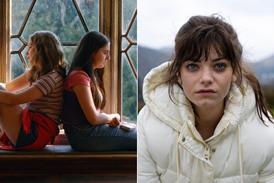
Nina Wesemann & Ella Cieslinski, Dear Future Self
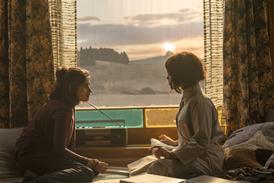
The fragility of female friendships and how two friends drift apart is the heart of co-directors Nina Wesemann and Ella Cieslinski’s first foray into fiction filmmaking, after meeting as students at Munich’s University of Television and Film (HFF).
“Childhood and adolescent dreams, the image one once had of oneself while young, become something different in adulthood,” Wesemann suggests. “Not necessarily worse, but different. And this ‘different’ also means saying goodbye. And who could mirror that farewell better than one’s oldest childhood friend?”
The duo produced Dear Future Self via their own production company, appropriately called Freundinnen Film (literally, Girlfriends Film). Cieslinski took on the hands-on directing role, with Wesemann behind the camera as DoP.
Citing the French cinema of the 70s and 80s and, more recently, the films of Ira Sachs as inspirations, Wesemann and Ciesinski are keen to continue working together and are curious about exploring further possibilities of hybrid narrative forms.
”We will also follow our individual paths,” Wesemann adds. “Ella as a writer and director and me as a cinematographer and director.”





No comments yet