








Concerns about the amount of paperwork involved in putting together UK-Dutch co-productions and how to overcome different packaging strategies have come under the spotlight at the International Film Festival Rotterdam (IFFR) this month.
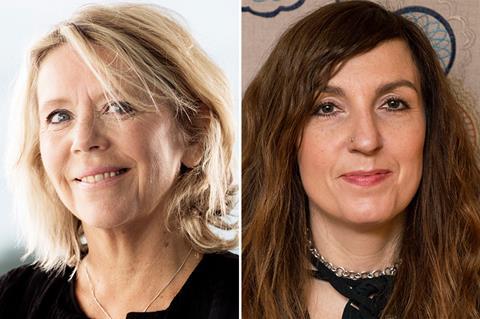
Mia Bays, director of the BFI Filmmaking Fund, spoke about a “generational shift” among UK producers to make films not in the English language, at an event called ‘Industry Exchange: Crossing Borders’, organised by the Netherlands Film Commission.
“We’ve always needed to collaborate, and more than ever now because of the scarcity of money,” she said. “Distribution is much more complicated now. There’s not automatic access to English-speaking markets as there was before. Opportunities are smaller.”
Bays tried to assuage concerns about the amount of paperwork that can be required when working with UK partners by saying the UK side would take of this.
Alongside Bays, Sandra den Hamer, CEO, Netherlands Film Fund, observed, ”There is a genuine interest” among Dutch filmmakers to work more closely with UK partners. “That’s the reason why we are here.”
Another potential sticking point, said producers, is that films are packaged differently in the two countries. In the Netherlands, majority-Dutch projects need a local distributor already on board to access Film Fund production support.
In the UK, by contrast, producers will often go into production without distribution secured.
There is a limited amount of Dutch-UK collaboration already happening. UK filmmaker Steve McQueen is based in the Netherlands and has made films in the country, including his epic wartime documentary, Occupied City. Dutch director Sacha Polak made Dirty God and Silver Haze in the UK with Mike Elliot’s EMU Film.
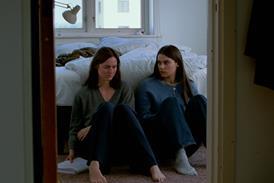
Fast-rising Dutch auteur Mees Peijnenburg, whose latest feature A Family premieres in the Generation strand at the Berlinale, is now based in London.
Denitsa Yordanova, head of the BFI Global Screen Fund (GSF), gave details of the support the Fund potentially has available to Dutch producers. The GSF’s budget is shortly due to increase from £7m to £18.1m per year during the 2026-2029 period.
Yordanova said that the coproduction fund was at “the core” of Global Screen Fund activities. Thus far, its main emphasis has been on minority coproduction for feature films.
Rules require 60% of the budget already to be in place, excluding UK tax relief. The funding comes as a non-recoupable grant of up to £300,000. The support is aimed at features “looking for the final piece of the puzzle and that are definitely going to be shot in the next eight months,” she explained.
Festival and P&A support is also available from the GSF, as is backing for companies looking “to grow their business and their presence internationally”.
From the audience, veteran Dutch-UK producer Paul Trijbits drew attention to the vastly different sizes of the UK and Dutch markets. Through his company Film Wave, Tribijts has been working with Dutch production outfit Lemming on medical drama Dag En Nacht.
Dutch producers in attendance included representatives from Keplerfilm, Lemming and Baldr, among others.
From the UK, producer Cat Villiers, whose recent credits as coproducer include Palestinian director Annemarie Jacir’s Oscar-shortlisted Palestine 36, said she had been coproducing internationally throughout her career.
“There is a misconception the UK is too difficult to work with. It is not,” she insisted.
Another UK producer, Carley Armstrong, urged potential Dutch partners to look at UK producers beyond those based in London and the south-east.
“I live in Newcastle and so I am an hour away from the Netherlands. I am actively looking to collaborate with people from Europe and beyond,” said Armstrong, at IFFR as part of the Rotterdam Lab for emerging producers.
The two countries signed a ‘memorandum of understanding’ in December 2024.
The courtship between the two national industries is set to continue with further networking events planned throughout the year.
“The point of the MOU is that we are open for business with each other,” said Rabarts.





No comments yet