





The Esiri brothers’ Cannes Directors’ Fortnight title relocate Virginia Woolf’s potent themes to modern Nigeria
Dirs: Arie and Chuko Esiri. Nigeria. 2026.125mins
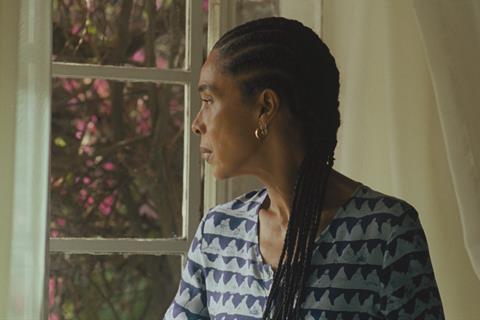
Clarissa, Arie and Chuko Esiri’s second feature, is a boldly executed and eloquent reimagining of Virginia Woolf’s landmark novel that pushes her critiques of colonialism, class and isolation with renewed fervor. An adaptation of Mrs. Dalloway, the film stars Sophie Okonedo as the society hostess who plans a dinner party for her husband’s colleagues and her close friends — a task that inspires many memories to surface with growing urgency.
Smartly retools the book’s post-First World War London setting to contemporary Lagos
The novel, which mixes timelines and perspectives through Woolf’s signature stream of consciousness, is a natural fit for the filmmakers. Their first film, Eyimofe (This Is My Desire), similarly navigated a dense ensemble and socioeconomic themes to make larger political statements. With Clarissa, they’re able to accomplish those feats and attract a talented cast that includes Okonedo as the anxious socialite and David Oyelowo as her former lover.
Clarissa bows in Cannes Directors’ Fortnight and will release in the US through Neon, which hopes the well-known property, significant stars and likely strong reviews could attract an arthouse audience and perhaps make it an awards contender; particularly for Okenedo’s acutely calibrated performance, which translates an entire lifetime into small spaces of silence.
The Esiris make several audacious alterations to Woolf’s novel, primarily changing the title from the protagonist’s married name to her first name. That means Clarissa’s emotional journey isn’t necessarily a reflection on her decision to choose a stable marriage with Richard (Jude Akuwudike), her milquetoast analyst husband, but her isolation from the rapidly modernising world around her. It’s not an accident, for instance, that her picturesque medium-sized home is dwarfed by scaffolding for a new, significantly larger, condominium next door. The filmmakers also morph the novel’s stream of consciousness, far too literally, into images of streams, and through its use of sound – police sirens and crashing plates – to leap from character to character.
Clarissa’s anxieties about ageing and time are further rendered through memories of an endless summer from decades ago. Then she was in love with Peter (Toheeb Jimoh), an aspiring writer, gravitated toward the outspoken Sally (Ayo Edebiri), and humored the jovial Ugo (Kehinde Cardoso). These pastoral scenes, when Clarissa read interesting novels and spoke deeply about important subjects, have a honeyed sheen, as opposed to the dour present-day occurrences. Now, a broke Peter has returned to untangle his father’s estate, Sally (now played by Nikki Amuka-Bird) is seeing off her young son at the airport, Ugo (Danny Sapani) works for the aloof Lady Maryam (Joke Silva).
These updates take some bite out of Woolf’s distinctly obnoxious characters; it’s fascinating, therefore, to view what the film does with Septimus (Fortune Nwafor). The traumatised veteran is arguably the novel’s emotional centre, breaking the stereotype of the British stiff upper lip and the apathy of the British ruling class for the mental health of its former soldiers. Though this Septimus doesn’t outwardly possess the same fragility – which perhaps owes to the social expectations around masculinity in Nigeria – Nwafor lands the brokenness of this man who sees the ghosts of his dead comrades, and articulates the many ways the government has failed soldiers like him with aplomb.
And it’s through Septimus that the filmmakers smartly retool the book’s post-First World War London setting to contemporary Lagos. Rather than a book about a current colonial power, they offer a film about a former colony of the British Empire which retains an uneasy relationship with class. Likewise, the nimble negotiation between the country’s Christian and Muslim populace takes place between these disparate characters and in the soundscape, which replaces the tolling of Big Ben, an imperialist emblem central to the novel, with Islamic prayers over a loud speaker. The future of this diverse and independent Nigeria, therefore, is contingent on new and varied voices being heard.
Okonedo and Oyelowo give affecting performances as star-crossed lovers who can’t quite own up to their mistakes. While Okenedo is more sage than you’d expect Clarissa to be, her matter-of-factness translates the character’s inherent aloofness for a few surprisingly dry comedic moments and many indelible instances of longing. Oyelowo, conversely, plays wounded well. Together they give Clarissa a touching guardedness that might not offer the spit and fire of Woolf’s Mrs. Dalloway, but certainly understands the permanent heartache and the poeticism of a life deferred.
Production companies: Per Capita Productions, Inc., Invention Studios
International sales: Neon, kristen.figeroid@neonrated.com
Producers: Arie Esiri, Chuko Esiri, Theresa Park, Nicholas Weinstock, Thomas Bassett, Nina Gold, Hannah Tom
Screenplay: Chuko Esiri
Cinematography: Jonathan Bloom
Production design: Hanrui Wang
Editing: Blair McClendon
Music: Kelsey Lu
Main cast: Sophie Okonedo, Ayo Edebiri, David Oyelowo, India Amarteifio, Toheeb Jimoh, Fortune Nwafo, Nikki Amuka-Bird, Joke Silva, Kehinde Cardoso