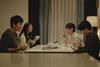
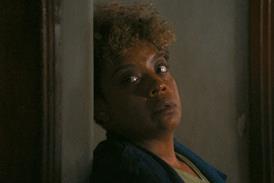












Lavish production from ’The Yacoubian Building’ director Marwan Hamed premieres in Marrakech
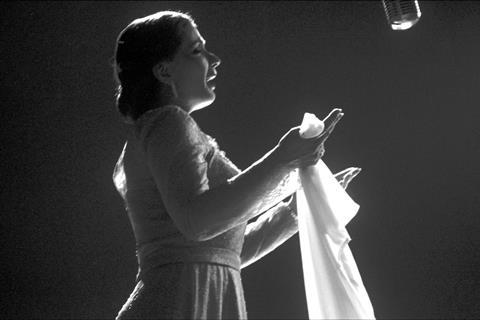
Dir. Marwan Hamed. Egypt/Saudi Arabia. 2025. 155mins
El Sett – meaning simply ‘The Lady’ – is an appropriate title for the biopic of a legendary singer. Umm Kulthum (1904-1975) was the grandest Egyptian grande dame since Cleopatra; a legendary singer and an icon both in Egypt and in the wider Arab world, she comes across in Marwan Hamed’s busy, reverential film as a cross between Edith Piaf, Aretha Franklin and Maria Callas. Indeed, the latter hailed her voice, as have Bob Dylan, Robert Plant and other Western admirers.
Only intermittently gives us the personality behind the legend
Hamed’s film certainly conveys the status of a woman dubbed ‘Star of the Orient’ and ‘the Fourth Pyramid’, but only intermittently gives us the personality behind the legend, while lavish, sometimes cluttered period evocation takes the focus away from a voice we barely get to properly appreciate. Premiering in Marrakech before heading to Rotterdam – where it features in a retrospective of director Hamed – El Sett may be too ungainly to click cinephile boxes, but should score with mainstream Arabic-speaking audiences wherever its subject’s legend still resounds.
Director Hamed is best known internationally for expansive 2006 novel adaptation The Yacoubian Building, which successfully melded realism and melodrama. But here, the melodrama overwhelms the insight, feeling generic rather than fully emotive. Altogether a luxury production, the film is often heavy-handed and distractingly busy in its period evocation, and the editing – sometimes interpolating archive footage both real and pastiche – can be needlessly agitated.
The film zigzags through the singer’s life, begining in 1967 with a prestigious concert at Paris’s fabled L’Olympia, where Umm Kulthum is very conscious of representing her nation in the wake of its war with Israel. This over-extended, abruptly curtailed sequence establishes her glory rather over-insistently, as adoring punters explain to camera that they have come from around the world to see a living legend; throughout the film, shots of fans in states of rapture hammer the message home.
El Sett then jumps back to the singer’s childhood. Hailing from a poor family in the rural Nile Delta, she would travel with her father, village imam Sheikh Beltagi (Sayed Ragab), to sing at weddings – one of which erupts into violent mayhem as two families feud. In the 1920s, as a young woman (Mona Zaki), she comes to Cairo at the behest of a talent agent, although her father insists that she only sing devotional songs; her traditional repertoire, as well as her male robe and headdress, brings resistance, even derision, from cosmopolitan audiences. It is when a pasha’s daughter gives her an impromptu make-over and a fashionable dress to wear that the elegantly august image of ‘El Sett’ begins to gel.
Hamed continues to skip through key episodes in her biography, alternating between colour and black and white, including Umm Kulthum’s meeting with poet Ahmed Rami (Mohamed Farag), composer of some of her greatest successes; and the moment when musician Mohamed El Kasagbi (Tamer Nabil) pulls a gun in protest against the possibility that she might abandon singing. There are also glimpses of her romantic life, notably a dalliance with a dapper associate of King Farouk, eventually quashed by a disapproving Queen Mother. The singer goes on to be revered in post-Revolution Egypt, adored by President Nasser. Throughout, she proves an imperious, autonomous figure who calls the shots both in her music (“I don’t sing light or cheerful songs,” she frostily announces) and her business dealings.
There are also moments of private agony – in middle age, alone in her mansion, she lives in anxious isolation. The film discreetly, if not coyly, gives some sense of her romantic side: when she and her statesman admirer visit the Pyramids, she directs sly, knowing looks at him as he confesses about a previous love. Overall, Egyptian star Mona Zaki, recently in Flight 404, struggles to bring out the personality behind the image, not least because for much of the film, she is lost behind mask-like make-up and stately, often stiff demeanour.
What’s missing above all is a sense of the voice that Callas called “incomparable”. We hear only fragmentary performances, sometimes slathered in orchestral accompaniment; Hamed seriously misses a trick in letting that voice soar uncumbered, in the intimacy it deserves.
Production companies: Film Square, Synergy Films, Film Clinic, Big Time Fund, Luxor Studios, Oscar Picture
International sales: Film Clinic mohefzy@film-clinic.com
Producers: Ahmed Badawy, Tamer Morsi, Mohammed Hefzy, Marwan Hamed, Fadi Rahim, Wael Abdallah
Screenplay: Ahmed Mourad
Cinematography: Abdelsalam Moussa
Editor: Ahmed Hafez
Production design: Muhammed Attia
Music: Hesham Nazih
Main cast: Mona Zaki, Mohamed Farag, Sayed Ragab, Tamer Nabil