











Nadim Tabet’s atmospheric second feature plays Cairo’s international competition
Dir: Nadim Tabet. Lebanon/France/Qatar. 2026. 79mins
A Syrian refugee working on a remote building site in Lebanon finds himself plagued by supernatural visions in Lebanese filmmaker Nadim Tabet’s effective sophomore feature. Exploring the omnipresent spectre of conflict via a literal ghost story is an intriguing narrative device, and the film is also well served by a compelling central performance from Ziad Jallad and atmospheric visuals that combine an almost documentary-like aesthetic with an uncanny, otherworldy tone.
Combines an almost documentary-like aesthetic with an uncanny, otherworldy tone
Now playing in Cairo’s international competition after berths at Beyond Fest and Imagine Fantastic Film Festival, In This Darkness I See You is Tabet’s second feature following One Of These Days, which premiered at Rome in 2017. Like that film, which followed ordinary young people over one ordinary Beirut day, this follow-up similarly finds Tabet (who also co-founded the Lebanese Film Festival) exploring the enduring impact of his country’s troubled past. Its well-handled genre elements should help it attract further festival attention, while distributors interested in authentic voices from this underrepresented region may also take note.
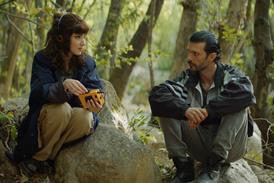
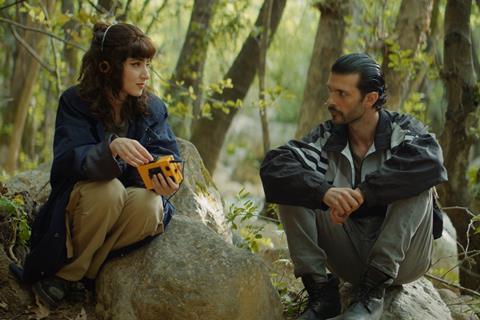
Tarek (Jallad) is one of several Syrian refugees tasked with building a new guesthouse in the woods of Mount Lebanon: ‘The Home Of Happiness’ proclaims the advertising hoarding. That will become a bitter irony, alluded to in opening sequences in which cinematographer Mark Khalife’s agile camera prowls the surrounding forest, the haunting score from Charbel Haber and Fadi Tabbal suggesting there may be darkness hiding in the trees.
Clues soon begin to mount that something is seriously amiss. Deep cracks keep appearing in the walls, despite numerous attempts to cover them; sometimes they seem to whisper and pulse. While clearing out the old house that stands on the property, Tarek finds a camera and Walkman – both will come into play later in the film. He also finds old newspapers from 30 years ago, with headlines about a tentative peace agreement between Israel and Palestine, and protests in Lebanon against the Syrian military presence. (Originally deployed to intervene in the Lebanese civil war, which ran from 1975-1990, Syrian troops remained in the country until 2005.) “Is that why they can’t stand us in the village?” asks one worker. “Because our army was here?”
Indeed, there is a palpable sense of animosity between the Lebanese locals and the Syrians, who are not allowed in the village after 6pm and who face accusations of everything from theft to assault. And while kindly local woman Rana (Marilyne Naaman) takes a shine to Tarek, and tries to help him understand his increasingly strange experiences, it feels as if some of the local men are just waiting for a chance to settle old scores.
Indeed, that tensions from the past continue to be felt in the present is the core conceit of the restrained screenplay, written by Tabet alongside Antoine Waked and Jamal Belmahi. Despite the collective efforts of the Lebanese people to move on from (and perhaps even forget) the violence – the construction of the guesthouse, meant to lure tourists, promises a new chapter, ‘a place to escape your worries’ – issues of displacement, marginalisation and xenophobic aggression maintain an uneasy presence. When Lebanese and Syrian men go missing, each side blames the other and history really starts repeating.
There are echoes here of Yanis Koussim’s 2025 Venice title Roqia, which similarly viewed Algeria’s civil war through a horror-tinged lens; both films bring a distinct cultural voice to familiar genre tropes. Tabet skilfully manages the film’s strong craft elements – including effectively eerie sound design from Rana Eid – to keep the atmosphere on a knife edge and slowly crank up the tension. And, as the film moves towards a moving, damning denouement, the suggestion is that may be impossible to escape the cycle of violence and fully exorcise the ghosts of our past.
Production companies: Abbout Productions, Andolfi
International sales: Mad Solutions info@mad-solutions.com
Producers: Georges Schoucair, Eli Souaiby
Screenplay: Nadim Tabet, Antoine Waked, Jamal Belmahi
Cinematography: Mark Khalife
Production design: Nanou Ghanem
Editing: Loic Lallemand
Music: Charbel Haber, Fadi Tabbal
Main cast: Ziad Jallad, Marilyne Naaman, Moe Lattouf, Maya Dagher, Ziad Seaibe, Hassan Doba