







Yuval Abraham and Rachel Szor’s wrenching Venice competition film is executive-produced by Jonathan Glazer

Dir: Yuval Abraham, Rachel Szor. UK. 2026. 80mins
Directed by Yuval Abraham and Rachel Szor, two of the four directors behind the 2025 Oscar winner No Other Land, the sombre, politically-urgent NAZA sets out to detail the intentionality behind Israel’s targeting of civilians in Gaza. It does so by interviewing – on a series of rooftops in Tel Aviv – some of the Israeli Intelligence Corps operatives who supplied the intelligence, or the technical expertise, for those who ordered the drone strikes and the carpet bombing.
Achieves much of its impact through the slow accretion of devastating facts
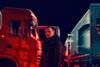
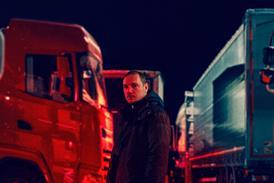
Executive produced by Jonathan Glazer, NAZA is, however, much more than a simple news documentary. It conveys its explosive message in a deeply and stylishly cinematic way. Interviews, conducted under the cover of night, take on a ritual, confessional quality. They are edited and arranged to create a series of chapters that ramp up the shock incrementally but also create a series of internal echoes. In between, we see some of the inhabitants of Israel’s most modern, liberal city going about their lives.
All of this – added to the sheer impact of its content and the coverage that is sure to follow the film’s Venice competition debut – should help the film secure theatrical distribution in multiple territories ahead of streaming and VOD deals. But US distribution could be a hurdle, as it was for No Other Land. The team behind that film ended up self-distributing it in the States; NAZA could well follow the same route.
Perhaps surprisingly, this is a quiet film. Given that the discourse over Gaza, October 7, Hamas, Netanyahu and the definition of genocide has become something of an entrenched shouting match, that seems like a smart call. No Other Land saw Abraham and Szor embedded with their two Palestinian co-directors, Basel Adra and Hamdan Ballal, charting settler violence, forced displacements and family anguish, visiting chaos and unpredictability on the audience as it was visited on the West Bank communities of Masafer Yatta. In NAZA, voices are never raised. The documentary achieves much of its impact through the slow accretion of devastating facts; one of which explains the film’s title.
The interviews take place at night. Seating consists of two facing chairs, or sometimes simply the low parapet around the flat roof terrace of one of Tel Aviv’s downtown blocks. A caption tells us that a total of 24 IDF operatives were interviewed; all have been involved with “the surveillance and killings of civilians in Gaza”. An opening caption informs us that the appearances and voices of all the interviewees have been ’digitally altered’ to conceal their identities. In between these segments, we are afforded glimpses into the city’s modernist apartments, where residents (their faces always concealed) go about their daily lives while news reports flicker on dozens of TV screens. This footage must, we assume, have been shot by drones; the irony is not lost.
Abraham personally conducts the interviews. His face is partially lit; those of his interviewees are shrouded in darkness. His questions probe for facts, only rarely for feelings or ethics. Most of the revelations that emerge here have already been published in The Guardian – which produced the film alongside Jim Wilson’s JW Films – or its two Israeli reporting partners, +972 Magazine and Local Call. But hearing them directly is strangely riveting.
Everyone on the rooftop is a middle-class Israeli who has gone through a highly competitive selection process to join the Intelligence Corps. (Abraham himself was selected for the Corps and completed a week’s training before leaving on conscientious grounds, though we are not told this in the film). “Most of us are left-wing”, says one interviewee, “there aren’t really any Arab haters in my unit”. Another opines that it’s better to assign the monitoring and identification of targets to AI than “someone whose friend was killed by Hamas”. “It’s like a video game”, says another.
It’s not just Glazer’s involvement with NAZA that prompts comparisons with The Zone of Interest. Sure, that was a film about unrepentant perpetrators living in the shadow of the horror they created, but it was also a film about how those pressures affect sleep, gait, voices. Only a couple of the 24 intelligence operatives interviewed here sound like they have few or no regrets. But none of the others act like classic whistleblowers. Instead, they seem unable to process what they have done. One describes listening in on two young sisters in order to discover when their father, a suspected Hamas operative, would be at home – then discovering, after the strike that killed the two girls along with the man’s entire family, that he wasn’t there. His voice is impassive, but there’s an eloquent tension there.
During the interviews, there are as many silences as there are words. This eerie calm – punctuated only by the hum of traffic, the whoosh of planes overhead and, once only, by the wail of an air-raid siren – enhances the horror of what is being revealed. So does the film’s clever structure. The shock level is raised incrementally in a series of themed chapters with eye-catching titles such as ‘Where’s Daddy?’, ‘Annihilation Zone’ and ‘Bibi’s Department’. Only in the film’s brief final section do we enter Gaza itself, a sequence calculated to dismay and enrage, a parting hammer blow.
Production companies: The Guardian, JW Films
International sales: mk2 intlsales@mk2.com
Producers: Harry Davies, Lindsay Poulton, James Wilson
Editing: Yuval Abraham, Rachel Szor, Harry Davies
Cinematography: ’Anonymous’, Rachel Szor