Kasper Kalle’s Fantasia Cheval Noir title stars Pilou Asbaek and newcomer Egor Venned

Dir: Kasper Kalle. Denmark. 103mins. 2026
The Faroe Islands, 1862, is an isolated and foreboding place. Our first impression of this far-flung outpost, located in the icy North Atlantic between the Scottish Hebrides and Iceland, is of looming cliffs, windswept waters and animal skulls strung up by the small fishing community who live amongst this harsh landscape. This is an insular, superstitious place, wary of outsiders – and the ideal location for director Kasper Kalle’s enigmatic, atmospheric tale of queer identity and belonging.
The allegory may be a familiar one, but Kalle and his cast play it well
Making its debut in Fantasia’s Cheval Noir competition, No Rest For The Wicked’s strong sense of place (the film shot in the Faroe Islands, and dialogue is in Faroese and Danish), stirring Nordic Gothic aesthetic and well-handled LGBTQ+ themes could well appeal to further festivals. Based on the 1884 short story Manor by German author Karl Heinrich Ulrichs, the film has the uncanny, out-of-time feel of the work of Robert Eggers, and shares similar themes of small-town intolerance with Adrian Chiarella’s recent Leviticus. It is most reminiscent, however, of Thordur Palsson’s 2024 Iceland-set (though English language) period horror The Damned – and could similarly appeal to an arthouse audience. It will open in Denmark on September 3 through SF Studios.
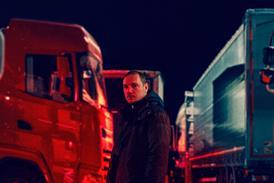
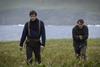
Following the death of his father, 20-something Baldur (charismatic Faroese newcomer Egor Venned) lives with his mother Asla (Sofia Nolsoe) in a small two-room hut near the coast, and spends his days fishing or praying. Religion and superstition are close bedfellows in this small enclave, the locals fervently worshipping God and hanging up bones to ward off evil. Yet, when Baldur rescues – or at least attempts to – rugged Danish whaler Helge (Game Of Thrones star Pilou Asbaek) from a thick fog and brings him home, Asla and, later, the community are welcoming, even though Helge speaks little Faroese and his adventurous seafaring ways are a million miles away from their own cloistered life, anchored to the island. “I’m free as a bird,” Helge explains in Danish – it’s a foreign language in more ways than one.
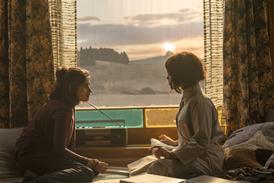
In early sequences, cinematographer Jacob Moller captures the humble warmth of Baldur’s home; the open fire, the thick straw beds, the plentiful local produce. It – along with the small church – feels like a sanctuary from the elements which pose a continuous challenge in this terrain, devoid of much in the way of greenery or trees, the external colour palette a muted blend of cool blues and greys. This is a beautiful but claustrophobic place, hemmed in on all directions by the sea. To be different here feels an impossible task. For Baldur, Helge offers a tantalising glimpse of life beyond – and when the pair’s obvious attraction soon spills over into the physical, in several tasteful scenes powered by the chemistry between Venned and Asbaek, Baldur feels his horizons may finally be broadening.
Torn between exciting new desires and a responsibility to his family, community and religion, Baldur is a tortured soul long before a devastating tragedy sends him spiralling – and the narrative firmly into genre territory. Screenwriters Kalle and Rasmus Birtch render Baldur’s longing and loneliness as a supernatural force, the strength of his emotions unleashing a seemingly unnatural entity that brings nightly comfort to Baldur but terrifies the islanders. Their attempts to fight it, to bury it, to beat it back with scripture and moral judgements, only make it stronger. The allegory may be a familiar and well-used one, but Kalle and his cast play it well.
Indeed, while the second half of the film leans into vampire lore, it’s more folk-horror infused than high camp and events remain understated. That’s reflected in the lilting, melancholy score from Faroese musical duo Hettarher, which works in tandem with elemental sound design to foreground Baldur’s growing isolation and desperate search for acceptance.
Production company: SF Studios
International sales: Charades
Producer: Lars Bredo Rahbek
Screenplay: Kasper Kalle, Rasmus Birtch
Cinematography: Jacob Moller
Production design: Sabine Hviid
Editing: Mads Michael Olsen, Mark Bukdahl
Music: Hettarher
Main cast: Egor Venned, Pilou Asbaek, Sofia Nolsoe, Johannes Haukur Johannesson, Kjartan Hansen