









Pegah Ahangarani’s deeply personal film hits the sweet spot between intimate diary and political narrative
Dir. Pegah Ahangarani. Czech Republic/Spain 2026. 95 mins
Several decades of modern Iranian history are evoked and interrogated in Rehearsals For A Revolution, a searching documentary that can surely lay claim to being the timeliest film in Cannes this year. Going right up to the present, and the war currently waged by the US and Israel with Iran, the film focuses on several key moments when Iran entertained real hope for social change, only to find it repeatedly crushed.
This intensely intelligent work will be a must for serious-minded outlets and festivals
Showing in Cannes Special Screenings section, this first feature by actress Pegah Ahangarani is a deeply personal work that, over five chapters, pays homage to people close to her, muses on her own experience and, in the face of despair, contemplates enduring hope for her nation. Hitting an elusive sweet spot between intimate diary and political narrative, this moving, intensely intelligent work will be a must for serious-minded outlets and festivals.
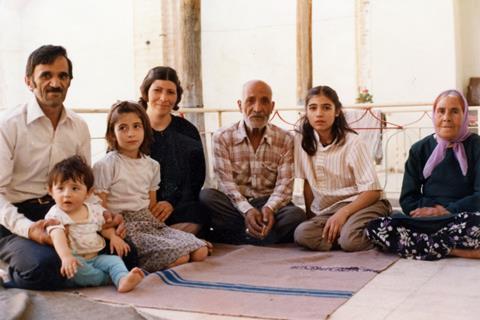
Born in 1984, Aharangani begins her narrative, narrated by herself, some time before her birth - in the run-up to the Iranian Revolution of 1979. The first chapter is devoted to her father, filmmaker Jamshid Ahangarani, whose early Super-8 fictions, starring his friend Davood, voiced anti-Shah protest. Jamshid was a committed patriot who fought for eight years on the front line in the Iran-Iraq War, but who became bitterly disillusioned when the Revolution resulted in the repressive theocracy that endures today. His daughter Pegah would be told that Davood, a beloved family friend, had “gone to Hollywood” – a white lie that covered a grimmer reality.
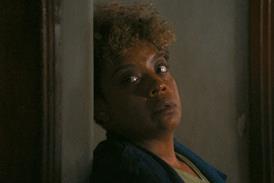
The second section is devoted to Pegah’s old teacher, a woman named Shermin Sarraf – an embodiment of free-spirited living in defiance of oppression. The young Aharangani idolised Sarraf, yet unwittingly betrayed her - and this section’s painful, self-lacerating mea culpa is punctuated with expressly grotesque animations showing school officials as demonic inquisitors. We also learn how Aharangani achieved her own personal revolution, leaving school to become first a child actress, then an adult professional, including taking several roles for her mother, the director Manijeh Hekmat.
The following section is devoted to Aharangani’s uncle Rashid, a journalism student whose voice recordings provide a key commentary, accompanied by close-ups of the turning reels of a cassette recorder. The key crisis in this section is the 1997 election of Mohammad Khatami as Iran’s president - an appointment that promises liberalisation, but that soon results in a further clampdown on resistance. Aharangani scans footage of the protests of July 1999, and the authorities’ brutal raid on Tehran University, which led to a tragic outcome for Rashid.
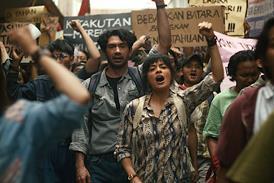
Another bitter setback is depicted in the fourth chapter, in which Aharangani addresses close friend Amir, seen as a silhouetted figure speaking to the crowd during the protests of 2009. The section is built around Aharangani’s own vivid video footage of the events, in which she figures as a player – at one point, freezing on an image of herself in a sort of prelapsarian moment shortly before horror erupts, with guards opening fire on protesters.
Despair and hope sit together in a final self-reflexive section. Now in exile in the UK, Aharangani films the editing software on which she assembles her images, including updates from Iran following the assault on protestors in January this year, with some reports numbering tens of thousands killed by government forces. Musing on her images and questioning what she hopes to find in them, Aharangani also presents us with a figure of possibility for the future – her baby daughter Lily, whose candid, joyous gaze seems to promise faith in the future for new generations ahead. This despite the bitter present, when current conflict seems only to have entrenched Iran’s hardline regime rather than facilitating change.
Rehearsals For A Revolution manages to be at once personal and politically insightful, with individual sections followed by captions outlining key facts, dates and statistics. The film also serves as a mini-history of the materials and formats available to cine-essayists, ranging from home movies and faded family photos from the 70s and 80s, through later video and TV news footage, to the digital technology that Aharangani uses to sharply philosophical effect in her final section. A spare intermittent score using piano and bass provides a sober emotional undertow, with poignant use of the 60s folk lament ‘Greenfields’ by The Brothers Four.
Production company: Media Nest, Fasten Films
International sales: The Party Film Sales, sales@thepartysales.com
Producers: Kaveh Farnam, Adrià Mones
Screenplay: Pegah Ahangarani, Amir Ahmadi Arian, Ehsan Abdipour
Editor: Arash Ashtiani
Music: Anna Andreu
Main cast (voice): Pegah Ahangarani