





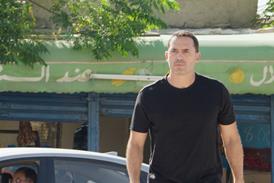






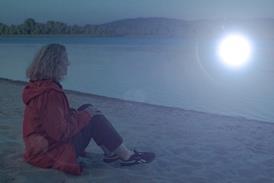


Midori Francis impresses as a medical student going to extreme lengths for the perfect body
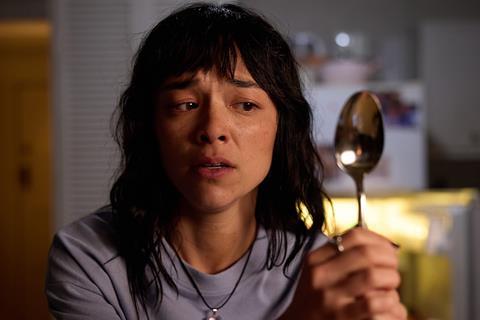
Dir/scr: Natalie Erika James. Australia. 2025. 112mins
A woman resorts to desperate measures to achieve her dream body, only to discover that perfection comes at a terrifying cost. Japanese-Australian filmmaker Natalie Erika James returns to the themes of female identity and family trauma she explored in her standout 2020 debut Relic, but this time goes for all-out body horror rather than creeping dread. The result is an effective, crowd-pleasing blend of gory shocks and shrewd commentary on the insidious dangers of cultural conditioning.
Takes a bite out of society’s toxic obsession with women’s bodies
Premiering in Sundance’s Midnight strand, Saccharine sold ahead of the festival to IFC and Shudder for territories including the USA and UK. It will likely be sought out by audiences who admired Relic and James’s follow-up Apartment 7A, a prequel to Rosemary’s Baby. Saccharine’s thematic similarity to last year’s horror breakout The Substance may also help boost visibility, and the film’s extreme genre elements should also generate valuable word of mouth. A trigger warning is advisable for audiences with experience of the themes explored in the film.
Japanese-American medical student Hana (Midori Francis) is caught in a cycle of binge-eating, shame, regret and renewed determination, unable to shift the excess weight she feels is casting a shadow over her life. Despite a close friendship with fellow student Josie (an engaging Danielle Macdonald), Hana is lonely and adrift, convinced that a slimmer figure would bring her happiness – and win the attention of hot gym instructor Alanya (Madeleine Madden). It’s worth noting that Hana is of average size, but the images and social media she obsessively consumes have convinced her that thinness brings power and acceptance.
James’s screenplay sensitively explores the real-world psychology behind Hana’s disordered relationship with food. Her parents are at the extremes of the scale; her slender Japanese mother (Showko Showfukutei) is fastidious about her diet and, it’s suggested, critical of Hana’s. Her morbidly obese American father – mostly seen in shadow – has totally withdrawn from his family. Hana’s medical studies are stressful and time-consuming, her self-esteem is on the floor. Her mindless comfort eating is an escape, shown in montages of feverish, messy binges which are always followed by depression and self-hatred.
When Hana discovers a miracle weight loss pill called ‘The Grey’ – and discovers, thanks to her skill in the lab, that it is made from human ash – the film takes on a supernatural element. Unable to afford to buy the pill, Hana makes her own, pilfering pieces from a grossly overweight medical cadaver that one of her classmates, in a throwaway bit of casual fat-shaming, has nicknamed ‘Big Bertha’. Taking the pills, Hana is delighted to lose weight fast, but soon becomes convinced that Bertha’s spirit has latched on to her. The more weight Hana loses, the stronger Bertha becomes.
There’s no narrative ambiguity in Saccharine, the audience are right there with Hana as she sees reflections of Bertha in her apartment, enters catatonic states in which she eats everything in her path. The questions here are not about Hana’s sanity – Bertha may be something of a metaphor, but she’s undoubtedly real and not merely a manifestation of Hana’s fractured psyche – but about her compulsions, why she is prepared (and able) to go to such extreme lengths to conform to a supposedly ideal beauty standard. There’s a sense that, initially at least, she feels that living with Bertha is a price worth paying for her trim new look.
There are spiritual elements at play, too. Buddhist tradition sees people leaving edible offerings to deceased relatives to keep them at peace; hungry ghosts, like Bertha, are restless, unsatiated spirits. Hana, too, is something of a hungry ghost, her whole sense of self-worth reduced to her physical appearance, with no thought given to nourishing her soul.
Francis gives a strong, sympathetic performance as a woman constantly on the brink. Clever make-up, costuming and prosthetics join with subtle shifts in body language, lighting and camera angles to show Hana’s vulnerability and self-loathing slowly turning to confidence and pride and then, all too quickly, fear, desperation and sickly despair.
As with Relic, craft elements are exceptional. Working in a subdued colour palette to suggest a life lived in the shadows, cinematographer Charlie Sarroff’s visuals are atmospheric, creepy and often not for the squeamish. James has paid particular attention to creating an evocative aural landscape; fleshy, sticky sound design from Robert Mackenzie foregrounds furious mukbang masticating, the heavy thud of Bertha’s steps, the squelch of a surgeon’s scalpel. It all builds to a frenzied, nightmarish climax of greed, desire and full-tilt excess that takes a sharp-toothed bite out of society’s toxic obsession with women’s bodies, and should leave horror audiences hungry for more.
Production companies: Carver Films, Thrum Films
Internatinal sales: XYZ Films
Producers: Anna McLeish, Sarah Shaw, Natalie Erika James
Cinematography: Charlie Sarroff
Production design: Josephine Wagstaff
Editing: Sean Lahiff
Music: Hannah Peel
Main cast: Midori Francis, Danielle Macdonals, Madeleine Madden, Showko Showfukutei, Robert Taylor