







Bruno Santamaría Razo’s Cannes Critics Week title effectively blends documentary and fiction
Dir: Bruno Santamaría Razo. Mexico, Brazil, Denmark. 2026. 105mins
An elegant fusion of documentary and fiction provides writer/director Bruno Santamaría Razo with a richer understanding of his family history in Six Months In A Pink And Blue Building. Exploring the memories, secrets and unspoken fears that shaped his younger self, Razo creates a tender coming-of-age story that builds towards an emotional reckoning with the past. Further festival screenings seem likely after a world premiere in Cannes Critics’ Week.
Sharply observed specificity resonates far beyond autobiography.
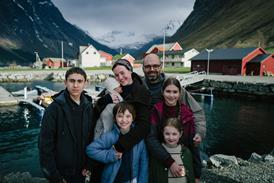
Razo has previously engaged with questions around family, identity and sexuality in his documentaries Margarita (2016) and Things We Dare Not Do (2020). He began Six Months by filming family interviews that may shed light on things that remained unresolved or mysterious from his early years; the interviews became the springboard for a fictionalised evocation of the period and emotions. The film begins as his mother Diana prepares to face his questions. She gathers herself, takes a deep breath and then the screen fades to black and segues into the fictionalised story.
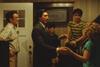
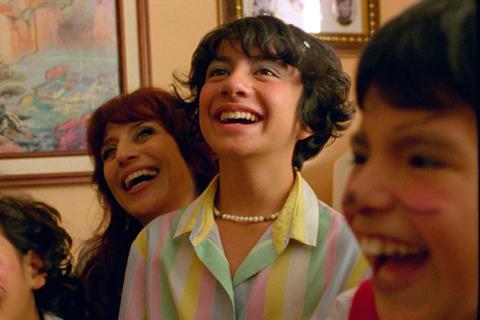
In Mexico City during the 1990s, 11-year-old Bruno (Jack Reyes Vazquez) and his mother Diana (Sofia Espinosa) are dealing with the shattering news that Bruno’s illustrator father Mundo (Lazaro Gabino) has been diagnosed with HIV. Television adverts and classroom lessons are full of scare stories, warnings to exercise caution and lazy links to the gay community. This happens at the very time that Bruno is starting to realise that his feelings for schoolmate Vladimir (Eduardo Ayala) are more than just friendship. The combination of personal and societal anxiety will permanently shape his attitudes to homosexuality and the possibility of coming out.
Razo deftly evokes the boisterous family life that surrounded him. His older brother Diego (Anuar Vera) may be largely absent but home is always bustling with people, music, celebration and creativity. Spanish diva Rocío Jurado’s hit ‘Ese Hombre’ boosts the dramatic feel of the early sequences, while the production design convincingly creates a sense of lived-in spaces cluttered with vivid furnishings, bright colours and floral wallpaper. Changes in the way a room is decorated become a layering of the past, concealing memories and erasing the presence of individuals.
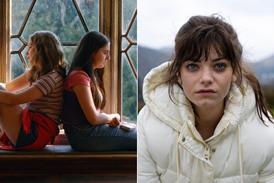
Bruno and Vladimir are inseparable in school and at home. The two boys sneak behind the scenes when Baz Luhrmann films Romeo + Juliet in the city. They watch porn on newly installed cable TV and perform in a school production. Bruno’s longing for his friend is conveyed in shy glances, admiring looks and daring to rest his head on Vladimir’s shoulder as they travel on the metro. The cooling of the friendship is subtly conveyed. When the boys join Diana’s impromptu neighbourhood aerobics session, Bruno sways his hips and savours the movement whilst Vladimir moves to the back of the room practising his boxing drills.
Bruno’s hidden desire is typical of a family labouring under secret lives. Diana is the one who does the contact tracing among Mundo’s friends and lovers, and starts to wonder how much she really knows him. One of the standout scenes is an unusually direct encounter when Bruno asks his father what will happen when he dies.
Reyes Vazquez is a real find as Bruno. His curly mop of hair, wide-eyed innocence and exuberance perfectly capture the vulnerability of the character. Espinosa gives Diana a real strength of character and purpose, whilst Gabino brings a haunted, melancholy air to Mundo.
Unshowy in its inventiveness, Six Months features animated sequences and eventually returns to Razo’s interview with his real mother as she turns the tables and starts asking questions of him. Late revelations subtly reshape everything that has come before. The film may function as personal therapy for Razo, but its sharply observed specificity resonates far beyond autobiography.
Production company: Ojo De Vaca, Desivia Produções, Snowglobe Films
International sales: LuxBox info@luxboxfilms.com
Producers: Bruna Haddad, Carlos Quiñónez, Bruno Santamaría Razo
Cinematography: Fernando Hernández García
Production design: Ivonne Fuentes Mendoza
Editors: Andrea Rabasa Jofre, Bruno Santamaría Razo, Marilia Moraes
Music: Léo Chermont
Main cast: Jade Reyes Vazquez, Sofía Espinosa, Lazaro Gabino, Eduardo Ayala, Valeria Vanegas, Anuar Vera, Teresa Sánchez, Valentina Cohen, Nara Carreira and Demick Lopes