






Strong performances and atmospheric craft anchor a story of quiet resistance and mounting dread
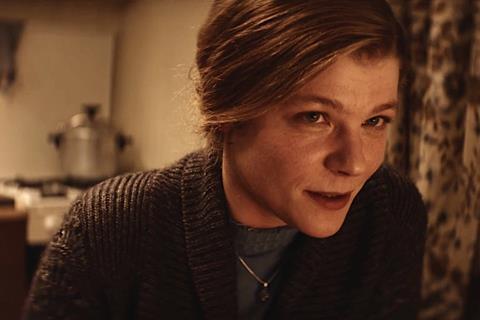
Dir/scr: Rostislav Kirpicenko. Lithuania/France/Estonia. 2026. 93mins
The Russian invasion of Ukraine has already generated an extensive filmography; Lithuanian director Rostislav Kirpicenko’s debut feature is a tough, atmospheric addition. Centred on an Orthodox priest in a Ukrainian town under Russian occupation, it shares some of the themes, as well as the in media res vitriol and energy, of Rossellini’s Roma Città Aperta – another film that tolled a requiem bell for a war that wasn’t yet over. Though it will need to overcome a degree of audience war-weariness, Spring is an invigorating translation of the news cycle into cathartic tragedy, one that should book further festival slots after its Cannes Special Screening.
An invigorating translation of the news cycle into cathartic tragedy
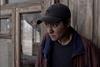
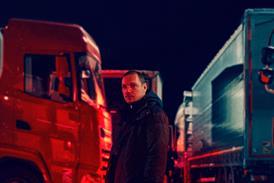
Shot largely at night, or on penumbral grey winter days, Kirpicenko’s drama is both angry and elegiac. It rejects exposition to throw us straight into the apprehensive half-life of an unnamed settlement somewhere, presumably in Eastern Ukraine. Russian troops are everywhere and the locals have retreated back inside themselves, keeping their heads down. But Andriy (Kestutis Cicenas) is forced to come into contact with the occupiers: he’s the Orthodox priest of the church on the hill, and it is to him that bodies of local ‘collaborators’ – in reality, civilians killed on the flimsiest of pretexts – are delivered, on the condition that he is not to bury them or let relatives near them. Once spring thaws the frozen ground, they are all destined for a mass grave.
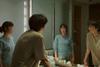
Andriy’s identity as a priest is kept from us when we first meet him, and we struggle to piece together his relationship with the family unit he lives with. He has little need of words with young married couple Tanya (Ieva Gladij) and Vassya (Valentinas Novopolskij), so intimate is their mutual understanding. Spring’s memorable villain, Russian army captain Igor (Daumanta Ciunis), occupies a more intriguingly ambiguous space. He’s an authoritarian who clings to power like a liferaft, and medicates his inner weakness with alcohol and a blind belief in the righteousness of Putin’s ‘Special Military Operation’.
The parallels between these two men struggling in different ways to keep their crises of faith at bay gives depth to a film that, in other respects, offers some classic wartime-drama tropes, including a scene set in a tavern that sees Vassya beaten and humiliated by Igor as silent, fearful clients look on. Led by Cicenas and Ciunis, performances are strong and authentic across the board.
As the bodies build up in the wooden outhouse behind the church and Andriy’s duty to do right by the dead and their loved ones is tightened towards breaking point, a church-organ-dominated soundtrack by Estonian composer Sten Sheripov swells gradually into a full-throated lament. The military front is somewhere off-screen, but only just: the film’s sound design merges distant rumbles with howling wind, mixing war and weather in a way that adds to the oppressive atmosphere of cinematographer Vilius Maciulskis’ camerawork, which makes good use of available light to create textured chiaroscuro effects.
There’s a spiritual vein to this visual style that taps into certain magical elements scattered through the film: a carrot-haired boy who speaks truth to power, ‘Saturday dreams’ that are fated to come true, or the goat’s milk – forced on the priest’s adoptive family by wartime conditions – that seems drawn straight out of Slavic folktale traditions.
Production company: Matka Films, Film Jam, ESSE House
International sales: The Bureau info@lebureaufilms.com
Producer: Helena Pokorny, Stasys Baltakis
Cinematography: Vilius Maciulskis
Production design: Iris Morlat
Editing: Marie Vettese
Music: Sten Sheripov
Main cast: Kestutis Cicenas, Daumantas Ciunis, Ieva Gladij, Valentinas Novopolskij, Viaceslav Lukjanov, Bartas Zdanovicius