







Michael Sarnoski follows ‘Pig’ and ‘A Quiet Place: Day One’ with subversive take on the familiar folk legend
Dir/scr: Michael Sarnoski. US. 2026. 122mins
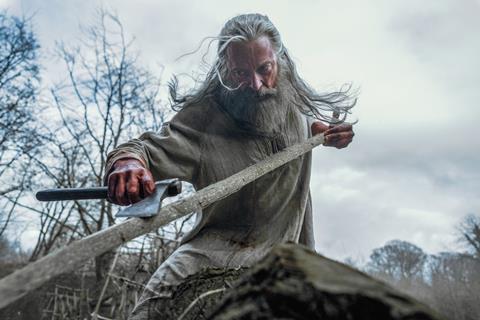
Offering a dark spin on the beloved English outlaw, The Death Of Robin Hood is rich in atmosphere but hamstrung by an excessively brooding approach. Hugh Jackman plays Robin Hood as a grizzled older man who was never the dashing champion that legend suggests, facing a reckoning for his past sins. Writer-director Michael Sarnoski takes significant care with what might be considered a more realistic portrait, but too often the filmmaker draws from a familiar vein of recent cinematic re-imaginings, giving us an anguished Robin Hood who’s awfully reminiscent of other tortured antiheroes.
Rich in atmosphere but hamstrung by an excessively brooding approach
After premiering at the Sydney Film Festival, the picture opens in the US on June 19. Robin Hood has long been a staple of the silver screen, with actors like Douglas Fairbanks and Errol Flynn helping to boost the character’s popularity a century ago. As recently as the 2010s, two different film versions — one featuring Russell Crowe (2010), the other starring Taron Egerton (2018) — have been released, but The Death Of Robin Hood is a decidedly more violent and despairing affair. Jackman will be a major attraction, and is joined by Jodie Comer and Bill Skarsgard in the ensemble. Writer/director Sarnoski is also coming off the critical and commercial success of 2024’s A Quiet Place: Day One ($262 million worldwide).
It’s 1247 in the Celtic hinterlands, and ageing loner Robin Hood (Jackman) must stay vigilant against the bloodthirsty offspring of the men he butchered when he was younger, all of whom have vowed to seek vengeance. He remains a savage warrior but when his former associate Little John (Skarsgard) recruits him for one last mission, Robin is gravely injured, journeying to a distant priory run by Sister Brigid (Comer) to be nursed back to health.
Not unlike Sarnoski’s 2021 breakout Pig, in which Nicolas Cage played a reclusive truffle-hunter, The Death Of Robin Hood follows an older, disillusioned outsider. This is not the Robin Hood of green tights, jolly disposition and swashbuckling adventure. As Jackman’s steely character explains before slaying one of the many people out to kill him, the fables extolling his greatness are all false. In truth, Robin is a brutal but weary murderer during a lawless age, and his reluctant agreement to join Little John’s quest is inspired, largely, by his desire to die.
The film’s bleak view of this unromantic bygone era extends to its opening sequences, which emphasise grisly hand-to-hand combat as Robin stabs and pummels his foes, his face slathered in mud and soot. With his long beard, unruly gray hair and pitiless eyes, Robin longs to be freed of the memory of the terrible things he’s done. But instead of being killed on the battlefield, he wakes up in Brigid’s care and subsequently befriends a kindly leper (Murray Bartlett) and a wary young girl, Margaret (Faith Delaney), who is unexpectedly linked to his gruesome past. After its initial vicious fight scenes, The Death Of Robin Hood shifts tones — not to mention aspect ratios — as Robin tries to adjust to this more peaceful existence. Sarnoski crafts the film as a redemption tale, not a conventional actioner.
Shooting on film primarily in Northern Ireland, cinematographer Pat Scola supports Sarnoski’s meditative vision with stark, naturalistic lensing that seeks to debunk the myth of the gallant Robin Hood. And Jim Ghedi’s folk-tinged score, including occasional bellowed vocals, adds to the feeling of a mournful, intimate epic about regret and rebirth.
Yet while The Death Of Robin Hood can be transporting in terms of mood and period detail, the picture is far less inspired in its depiction of its title character. Jackman brings sufficient sorrow, along with a believable ferocity, but this Robin Hood ultimately isn’t terribly different from the morose protagonists who litter revisionist Westerns and edgy comic-book movies. (Indeed, the Jackman film that The Death Of Robin Hood most resembles is 2017’s Logan, which also flaunted a dour air.) Once Sarnoski establishes that this Robin Hood isn’t the one we know well from cinema and literature, he’s essentially just another flinty antihero manfully attempting to make amends for his bad acts, leading to earnestly executed but fairly predictable twists and turns.
Supporting characters mostly serve narrative functions, inspiring Robin to reconsider his behaviour or launch into teary confessions. That proves especially disappointing considering that Comer and Bartlett are inherently empathetic performers enlivening underwritten roles. Jackman’s scenes with both actors are touching, but genuine human connections are never forged between the characters, each of whom is living with their own degrees of uncertainty and sadness. Pushing too hard to give The Death Of Robin Hood a sense of gravitas, Sarnoski suffocates his story rather than letting its palpable agony envelop the viewer. This Robin Hood subverts our expectations, but he never gets to breathe.
Production company: RPC
International sales: WME Independent, filmsalesinfo@wmeagency.com
Producers: Aaron Ryder, Andrew Swett, Alexander Black, Hugh Jackman
Cinematography: Pat Scola
Production design: David Lee
Editing: Andrew Mondshein
Music: Jim Ghedi
Main cast: Hugh Jackman, Jodie Comer, Bill Skarsgard, Murray Bartlett, Noah Jupe, Faith Delaney, Clive Russell