







The CPH:DOX premiere explores the threat posed by climate change to the country’s glaciers
Dir. Sara Dosa. Iceland, USA. 2026. 90mins
The impact of climate change on the glaciers of Iceland is explored through a poetic, humanist lens in the latest film from Sara Dosa, following her Oscar-nominated Fire Of Love (2022). Drawing on the substantial archive of family home videos of the poet and writer Andri Snær Magnason (on whose book, On Time And Water, this film is based), the film takes the form of a video time capsule created by Magnason and addressed to a viewer some time in the future. It’s a pensive, reflective film which combines striking Super 16 archive material with a deft exploration of the way the narratives of our lives are intertwined with the lands we inhabit.
A fascination with the Earth at its most violent and unpredictable
While Time And Water may not have a dramatic arc to match the doomed vulcanologist romance detailed in Fire Of Love, there is a clear kinship between that film and this ambitious, decade-spanning follow-up. Both films explore the urge for humans to make sense of of the natural world; both have a fascination with the Earth at its most violent and unpredictable. A typically handsome National Geographic Documentary Films production, the film could figure in awards conversations going forward.
For Magnason, the Icelandic landscape is moe than just rock and ice. It is a repository of stories, both intimately personal tales and wider geological histories. The tale of his grandparents’ relationship is, Magnason suggests, layered through the glacier in the same way that traces of eruptions can be seen in the strata of ash deposits that stripe through the layers of compacted snow.
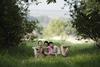
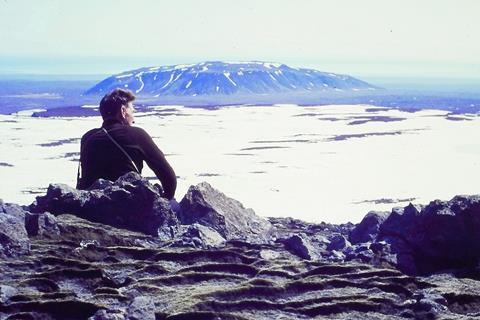
His grandparents, Árni and Hulda, fell in love on the ice of the country’s largest glacier, Vatnajökull. They returned to it after their marriage: their honeymoon was a challenging three-week glacier expedition. An expedition leader and keen photographer, Árni kept extensive visual records – Dosa includes striking footage and photographs of trips in the mid-’50s, of Magnason’s youthful, rosy-cheeked, fearless grandparents; of expedition members hauling a snow vehicle out of a precipitous crevasse. Once again, she uses archive material to powerful and eye-catching effect.
There’s also a wealth of more recent footage, shot in an endearingly haphazard manner, by Magnason himself. There are videos of his young children spanning more than a decade, together with glimpses of his now-elderly grandparents. Towards the end of his life, Árni’s memory broke loose and drifted away, like of the bergs that crumble from the retreating glaciers and float out to sea. Glaciers, like memories, are more fragile than you think.
In a sober narration, Magnason muses on various aspects of the environmental shifts in his country. The impact on language, for example. The Icelandic word for a ‘bird cliff’, the roosting area for sea birds, can also be used to describe a rowdy social event. But now the cliffs are more sparsely nested and the populations of Indigenous Icelandic birds like puffins have plummeted. Will the word continue to carry the same sense of exuberant cacophony and chaos in the future? And what of the name of the country itself? Will Iceland still be Iceland once the glaciers have died? Magnason talks about them throughout as living entities. And the ice is photographed in a way that makes it seem organic and vital rather than mineral and inert – we recognise faces in the shapes of the glacier’s interior; the curlicues of ice look almost sinister, like sculptures by H.R. Giger.
There’s a similar sense of generational links between land and family, not to mention a reverence for glaciers, as in Margreth Olin’s stunning Norwegian film Songs of Earth. But while Olin’s film tempered its anxiety about glacial retreat with the hopeful act of planting a tree for the future, Magnason’s message to the future is bleaker, in the form of a metal plaque bearing an elegy for Ok, the first of Iceland’s glaciers to be officially declared dead. “We know what is happening and what needs to be done,” it reads. “Only you know if we did it.”
Production company: National Geographic Documentary Films, Sandbox Films
Contact: National Geographic Documentary Films Nadia.Ahmadein@natgeo.com
Producers: Shane Boris, Elijah Stevens, Jameka Autry, Sara Dosa
Screenplay: Sara Dosa, Jocelyne Chaput, Erin Casper, Andri Snær Magnason
Cinematography: Pablo Álvarez-Mesa
Editing: Erin Casper, Jocelyne Chaput, Mark Harrison
Music: Dan Deacon
Main cast: Andri Snær Magnason