










Sundance World Cinema Documentary Grand Prize winner proves both intimate and universal
Dirs: Biljana Tutorov, Petar Glomazic. Serbia/France/Montenegro/Slovenia/Croatia. 2026. 105mins
High up in the remote highlands of Montenegro, a tiny isolated community takes a stand against those who would seek to destroy their way of life. This masterful, empathetic documentary from Biljana Tutorov and Petar Glomazic carefully follows the delicate contours of rural mountain living through the experiences of farmer Gara and her daughter Nada. Wider themes of endangered tradition, generational tension and cultural displacement are brought into sharp focus through quiet, respectful and keenly-edited observation.
Quiet, respectful and keenly-edited observation
Winner of Sundance’s World Cinema Documentary competition, To Hold A Mountain should appeal strongly to discerning non-fiction audiences who responded to similar observational works such as 2019’s Oscar-nominated Honeyland. Documentary distributors looking for authentic, insightful global worldviews should also take notice.
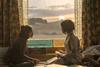
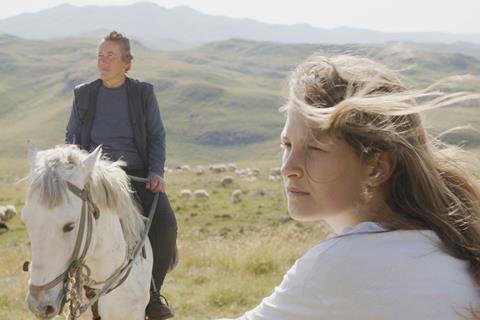
From the moment we meet Gara, resting on the back of a horse as she drives sheep up a rocky mountain path, her weather-beaten face and hard-working hands are evidence of a life lived in the elements. Each summer, Gara and others return to their ancestral pastures to herd animals and work the land; she is particularly proud of her cheese, which we see her making with precision and care in the small but warm home she shares with her 13-year-old daughter Nada. Cinematographer Eva Kraljević routinely captures intimate moments between the pair – hair washing, sleepy cuddles, light-hearted bickering – which speak as much to the intense level of trust between filmmakers and subject as the affection between mother and daughter. Their tender bond is the beating heart of the film.
Gara and Nada – who divides her time between the mountain and being away at school – don’t have many close neighbours, and all of Gara’s other children have left home (to go to college, she says proudly). Yet those who remain on the mountain form a tight community. And when the military reveals its plans to turn Sinjajevina into a shooting range on which to train its troops, the locals all come together in protest. Gara emerges as a strong, tenacious figurehead of the resistance movement, rousing the locals into action and railing passionately and articulately against military officers on local television.
While Gara may be campaigning tirelessly to preserve life on this ‘mother mountain’, intuitive editing from George Cragg slowly raises the question of what exactly the future holds. It isn’t ever clear whether Gara’s older children will return to Sinjajevina, or whether Nada – who we see painting her nails and hanging out with friends when she isn’t helping her mother – will want to keep coming back each summer. But that’s not the point; Gara is not just acting out of self-preservation, but on behalf of the community that exists today and all the generations that came before. As she laments the fact that Montenegro’s rulers simply don’t understand its people, or trust them with their own land, theirs is a plight which will surely resonate with many displaced peoples the world over.
Slowly, too, family dynamics and hidden histories begin to emerge through interactions and conversations, revealing the immense burden of grief and pain that Gara carries alongside her already arduous daily responsibilities. As with Gara’s foray into political activism, however, these revelations are handled with a light touch. Helped by Drasko Adžić’s unobtrusive elemental score, To Hold A Mountain delicately weaves all these narrative threads into an immersive portrait of mountain life, which never tips into nostalgia or romanticism.
Throughout, Montenegro’s stunning landscape is a constant presence, captured in expansive wide shots or carefully composed static compositions; the morning light hitting the tops of the mountains, sheep winding up the hillside, a constant reminder of the fragility and strength of this land and its people.
Production companies: Wake Up Films
International sales: Submarine, Ben Schwartz schwartz@submarine.com
Producers: Biljana Tutorov, Petar Glomazić, Quentin Laurent, Rok Biček
Cinematography: Eva Kraljević
Editing: George Cragg
Music: Drasko Adžić