












Six rising Japanese filmmakers are here in Cannes as part of the country’s Film Frontier programme, supporting young directors to develop their projects and expand into international markets.
From ghostly plants and stop-motion ‘woodpunk’ to quiet road movies and the immigrant experience, the delegation and their work represent a wide breadth of talent and ambition.
The programme falls under the Japan Creator Support Fund’s Film & Animation Section and is operated by Unijapan.
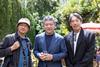
Akio Fujimoto, Yurina Kaneko, Masashi Kawamura, Emma Kawawada, Sota Takahaši and Hiroyuki Yoshihara discuss their upcoming projects and what they hope to achieve at the Cannes market.
Akio Fujimoto - Summer Lesson
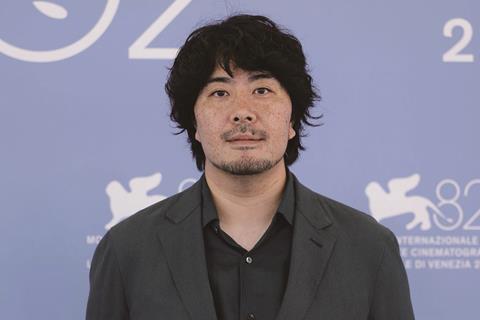
Fujimoto is best known as the director of Lost Land, the first-ever Rohingya-language feature, which won the Venice Horizons special jury prize and the best film award at Red Sea International Film Festival in 2025. His upcoming feature follows a Burmese boy named Aung who is relocated to Japan when his documentary-maker father goes to war. He awaits his parent’s return while navigating an unfamiliar life in a foreign country.
Fujimoto describes his work as “hybrid films that combine the social significance of documentary with the poetic qualities of cinema”. His 2018 debut Passage Of Life depicted the lives of a Burmese family in Japan. In 2021 his second feature, Japan-Vietnam co-production Along The Sea, followed Vietnamese technical interns.
Following a lengthy festival run, Lost Land was released theatrically in France and Japan in April. “This will be my first time attending Cannes,” says Fujimoto. “I look forward to celebrating the history of cinema with everyone.”
Yurina Kaneko - Ghost Of Plants

Kaneko, best known for 2023’s People Who Talk To Plushies Are Kind, is coming to Cannes with Ghost Of Plants, a film that she says, “draws on Japanese traditions of animism while pushing toward a film that genuinely decentres the human”.
The 2023 breakout saw Kaneko garner multiple newcomer awards in Japan, but she also has experience outside of her home country. People Who Talk To Plushies Are Kind was selected for Shanghai International Film Festival, and Kaneko attended Busan’s Asian Contents & Film Market (ACFM) with upcoming project Where All Things Drowse.
Coming to Cannes is “a leap”, says Kaneko. “A film whose protagonist is the ghost of a plant can only exist at the edges of cinema, so Cannes feels like the right place to find out whether those edges can reach people across languages and cultures.”
She is seeking “partners who trust that audiences can follow a gaze that belongs to something other than a person”.
Masashi Kawamura - Hidari
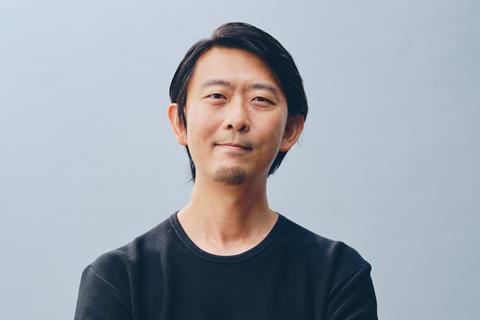
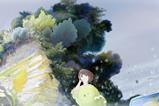
Animated feature Hidari began as a self-initiated proof-of-concept — a stop-motion samurai action film set in what Kawamura describes as a “richly original ‘woodpunk’ world” where everything is carved from wood and brought to life by hand.
The filmmaker believes a combination of distinctly Japanese craft, dynamic anime-influenced action and a universal storyline gives the feature an identity that can stand out. “Having the chance to present it at Cannes feels both validating and exciting,” he says.
Kawamura’s goal is to “meet partners who connect with the film’s creative ambition and help us bring it to the world. We want to build relationships with people who see the value of bold and original storytelling in today’s market.”
Hidari has also been selected for this year’s Annecy Animation Showcase at the Marché.
Kawamura has been a creative director at various global creative agencies and has worked on brand campaigns, TV programme development and music video direction.
Emma Kawawada - Life Is Yours

Kawawada’s debut feature My Small Land, which premiered at the Berlinale in 2022, centred on a Kurdish family in Japan navigating identity and permanence against a shifting landscape. She comes to Cannes with Life Is Yours, which flips the immigrant lens by focusing on a ski resort where Japanese locals are now outpriced by overseas tourists.
“It follows an elderly Japanese woman living in an area with a significant immigrant population,” she explains. “The heart of the story is the evolving relationship between two women of different nationalities, which grows into something resembling a mother-daughter bond.”
Loaded Films’ Eiko Mizuno-Gray and Toei’s Naoya Takahashi produce. Loaded Films is the banner behind Chie Hayakawa’s Plan 75 and Renoir, which both played at Cannes, the latter in 2025’s Competition.
It marks Kawawada’s first time at the festival. “I am eager to experience the forefront of world cinema firsthand and gain fresh inspiration for my work as a director,” she says.
Sota Takahaši - Bomb Beneath The Lake
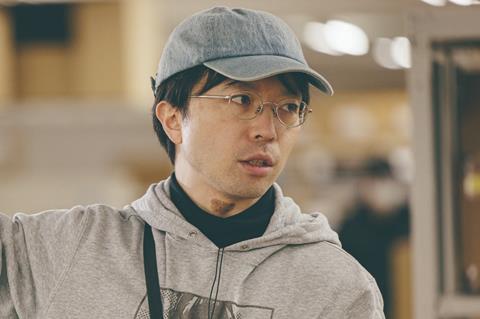
“As a director, I have never been involved in fundraising before,” says Takahaši. He comes to Cannes with a unique project — a satirical film set in Serbia — and says the premise is its “most distinctive feature”, adding, “We plan to shoot in a region where multiple ethnic groups coexist, and we hope that not only Japan and Serbia, but also other European countries will participate in the co-production.”
Takahaši studied at the Graduate School of Film and New Media at Tokyo University of the Arts. In 2023, his independently produced feature Kami-iida Stories was released theatrically, and his graduation film Memory Devices won the audience award at Pia Film Festival that same year.
He hopes that attending Cannes “will open further opportunities for my future filmmaking. I also think it will broaden my perspective on film production.”
For Takahaši, the Marché also presents an opportunity to research global filmmaking trends that he can incorporate into his project.
Hiroyuki Yoshihara - Route 7

Yoshihara is the sole producer in this year’s Film Frontier programme. His goal with Route 7 is to bring further depth to the story of Zainichi — the term given to Korean residents in Japan.
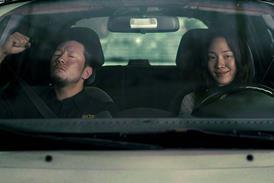
Zainichi, Yoshihara explains, are “people caught between imperialism, war and ideology”. The film will offer a more intimate picture of this life. “On the surface, Route 7 is a quiet family road movie,” he says. After the death of grandmother Kyong-ja, her son and granddaughter embark on a journey to lay her ashes to rest, following a hand-drawn map.
With plans to shoot the latter half of the film in Europe in 2027, Yoshihara is looking for creative partners, co-producers, sales agents and festival programmers. “I’m hopeful about the possibilities that come from serendipitous encounters,” he adds. “Serendipity is the true joy of life.”
What makes the project unique, he says, is the combination of local texture and the sense of crossing borders. For Yoshihara, that is “exactly what international audiences are looking for in a film right now”.
Contact: Kaori Ikeda, Unijapan
Find out more: unijapan.org