




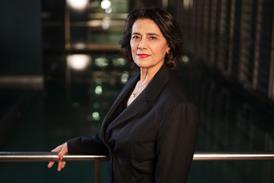
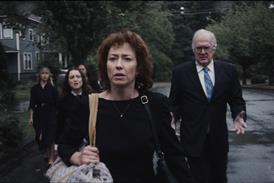
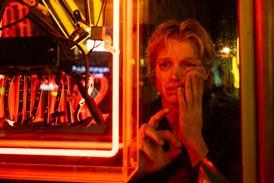
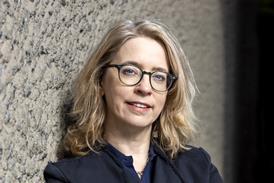






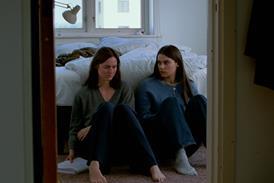


Aina Clotet is no stranger to Cannes — she won the Canneseries best performance award in 2024 for This Is Not Sweden, which she also created — but this year the Catalan filmmaker is experiencing the festival as a debut feature director with Alive (Viva), which premiered yesterday in Critics’ Week.
The film, in which Clotet also stars, follows a 40-year-old biology researcher in crisis after experiencing breast cancer. As she questions how to live her life, themes of mortality, life expectancy, mental health and sexual desire inform the script, which Clotet co-wrote with Valentina Viso.
Produced by Ikiru Films and Funicular Films, which Clotet founded with Marta Baldo, Jan Andreu and her actor brother Marc Clotet, the film is primed for a June release in Spain via Caramel Films, with Loco Films handling international sales.
Clotet began developing the project more than six years ago. “I was driven by the desire to explore fear and dependency in romantic relationships,” she explains. “Despite growing up as the daughter of doctors and receiving a liberal education, I still felt the pressure to find romantic love and find my place in the world.
“One theme I wanted to explore was how science is extending our lives, while the world seems to be moving towards collapse,” she continues. “It’s not autobiographical, beyond drawing on intimate emotions. I wanted to tell a female-led story that conveys strength, positivity and a love of life.”
Alive, she says, is a film that also talks about “the body, feminine desire, visibility… The first time I had a mammogram I thought, how come nobody talks about this! Women endure so much as if it were nothing.”
Clotet began acting as a child and later won two awards at Malaga Film Festival: best supporting actress in 2012 for The Wild Ones and best actress in 2019 for La Filla d’Algú. Her yearning for a more creative role came as a student. “I studied film at university and my desire to write began there, but my acting career took over,” she says. “There were fewer women directors then, and maybe that also played a role in my feeling that this path was less clear.”
Long gestation
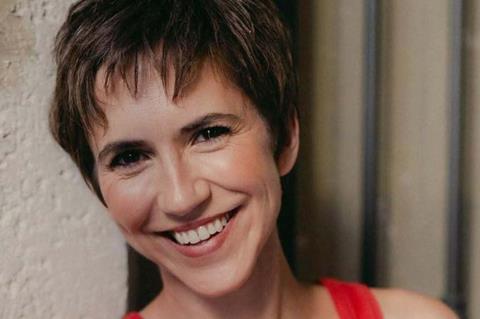
Alive was a slow-burning project and Clotet attended development programmes including TorinoFilmLab’s ScriptLab, Abycine Lanza in Spain and the Catalan Film Academy Residency.
Shot over seven weeks in Catalonia, the film received backing from the Spanish and Catalan film bodies ICAA and ICEC, the support of the Spanish and Catalan public TV channels 3CAT and RTVE, and Movistar Plus+.
Clotet juggled her work on Alive and This Is Not Sweden. The series, which screened in Spain in 2023, is a comedy about the challenges of parenthood when a young family moves to a trendy rustic village near Barcelona.
“We had months in rehearsal,” she says of preparations for Alive. “I needed that to manage both jobs. There were technically and emotionally challenging scenes, shifting between comedy and drama, but I enjoyed the process. I was determined to have a great time because films are so difficult to get up and running that I needed to enjoy that part of the journey.”
She also benefited from others’ experience. “On Alive, I had the support of Edmon Roch at Ikiru Films, the main producer. He came on board even before Funicular was founded and we learned a lot from him.”
Clotet’s debut in Cannes comes in the footsteps of other Catalan filmmakers: Clara Roquet, whose Libertad screened in Critics’ Week in 2021; Elena Martin Gimeno, whose Creatura won the Europa Cinemas Cannes Label for best European Film at Directors’ Fortnight in 2023; and Carla Simon, whose Romería screened in Competition last year.
Clotet sought advice from all three when Alive was selected. “What all Cannes veterans seem to agree on is that you don’t get much sleep at the festival.”
She is now working on a second season of This Is Not Sweden, set to shoot in autumn, as well as developing her next feature.
No comments yet