




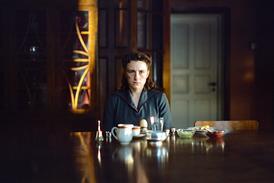

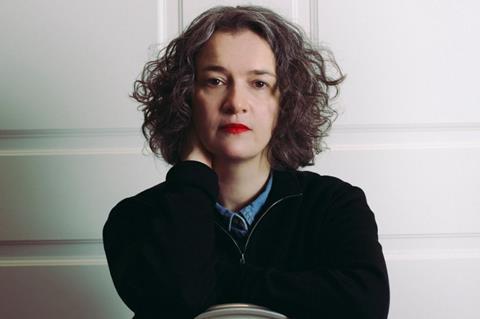
An incredible 3,700 films were submitted to international documentary festival Visions du Réel (VdR), which takes place in the Swiss town of Nyon on the shores of Lake Geneva from April 17-26.
The festival’s selection team, headed by artistic director Emilie Bujès, has whittled these down to a more manageable 164 films in the programme. Eighty-three are world premieres.
The sheer number of submissions belies the challenges facing documentary filmmakers, with traditional funders such as broadcasters cutting back investment in the genre and distribution becoming ever harder to secure on streamers and in cinemas.
Bujès believes the landscape is perhaps shifting, with filmmakers adapting and increasingly making personal projects under their own steam – often over many years while juggling other ways to earn money.
“I wonder if we are going back to films that are maybe more free, to some extent, that are being made in different conditions, with less pressure, than films that are made with more money and more people being involved in the decision-making process,” says Bujès.
With distribution so challenging, festival runs at events like VdR are now a crucial way for documentaries to be seen. The festival has “a very important role to play in terms of the diversity of the cinematic landscape, both here in Switzerland and beyond”, says Bujès, who steps down after nine editions following this year’s festival to take over as director of the Geneva International Film Festival from August.
Selection process
Programming is a major undertaking. The submitted films are first individually screened by the VdR selection committee, with each person watching around 500 films. They then gather in Nyon with Bujès for about five weeks, watching a shortlist of around 500-600 films together in the same room on a big TV screen. “Everybody is just eating films all day,” says Bujès, paying tribute to the selection team. “We work until very late at night and we cook together. It’s a huge piece of work.”
In this year’s selection, geopolitics is a key theme, says Bujès, with many films addressing conflict in Israel, Palestine and Ukraine. Family and identity are also big topics with docs about people leaving home and building a new identity elsewhere. There are many films on LGBTQ+ issues and other films borrow from video games and animation, or address tech topics such as artificial intelligence.
Bujès says her programming office has, in some cases, been in touch with filmmakers submitting documentaries to ask if and how they have used AI.
AI, of course, has sparked ethical concerns and worries about authenticity in documentary filmmaking. But the technology is increasingly used, whether to protect the identities of contributors, upgrade old footage, clean up audio or reconstruct historical scenes. It is hard to set clear boundaries, says Bujès, who adds that she is “fine with the use of AI, we all have to accept that it is part of the world.”
“Our point of reference is the filmmaker, the author. The question is, what is his or her truth? If they want to tell you about something that has happened to them, and the only way they have to tell it to you is through fiction, I’m fine with that.” She does, however, insist on a certain honesty” from the filmmaker about how AI has been used.
Cinematic focus
Asked how VdR pitches itself as a documentary festival in a crowded festival landscape, Bujès points to its size. “Because we are in a small town, we have physical constraints – there are only so many films you can select and guests you can welcome.”
Compared to larger festivals, this brings a certain artistic coherence to VdR, she says. Above all, the festival focuses on screening films with “a real cinematic value”.
“Our image is quite clear. We are fighting for cinema rather than fighting for topics, such as human rights… It is a matter of defending form before anything else – adventurous, original and singular voices.”
VdR’s key sections are the International Competition, which showcases classical narrative documentaries, while Burning Lights plays films that are slightly more adventurous in form.
Among anticipated films in international competition are Ross McCLean’s Northern Ireland-set Magilligan, a portrait of a man who has spent time in prison trying to break free from his past. G. Anthony Svatek’s Humboldt USA is billed as a playful love letter to pioneering 19th-century naturalist Alexander von Humboldt, while Marlene Edoyan’s A Fire There centres on three friends from a rural Armenian community in Georgia who plot their future.
Xisi Sofia Ye Chen’s From Dawn To Dawn is a portrait of the filmmaker’s brother, who becomes involved with the Chinese mafia in Spain, while Swiss documentary director Jacqeline Zund focuses on climate change with Heat, set in the Middle East where temperatures can regularly exceed 50°C.
Among the Burning Lights section, Ignacio Ceroi’s Don’t Tidy Or Clean My Room, I Like It As It Is sees the filmmaker track down a man whose daily life he has been following through films recorded on an old video camera. “If there is a lighter film that is good, I’m very keen on taking it,” says Bujès.
Burning Lights also premieres If Only The Year Had 364 Days, about the return of filmmaker Almourad Aldeeb to Syria after being imprisoned by the Assad regime, and Vietnamese director Nong Nhat Quant’s Baby Jackfruit Baby Guava, about trying to mend ruptured family bonds.
The VdR-Industry Days section, which runs April 19-22, will see project pitches from filmmakers including Swiss director Jean-Stéphane Bron, whose Le Chantier played out of competition last year at Locarno. He will present A Season In Europe, an in-depth look at the inner workings of European institutions. Meanwhile, Ljubomir Stefanov, the co-director of Oscar-nominated film Honeyland, will present The Vortex Of Extinction, based on scientific research about turtles.
The festival will open with Laura Poitras and Mark Obenhaus’ Cover-Up, about famed journalist Seymour Hersh. Poitras is one of several high-profile special guests this year, including US filmmaker Kelly Reichardt, Ukrainian director Sergei Loznitsa, and visual artist Meriem Bennani.



No comments yet