




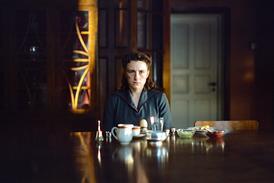

The UK actress has ascended to national treasure status, celebrated at this year’s British Independent Film Awards for her outstanding contribution
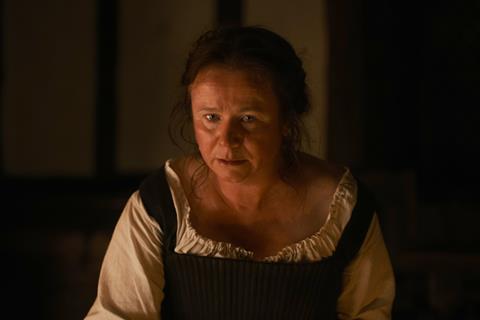
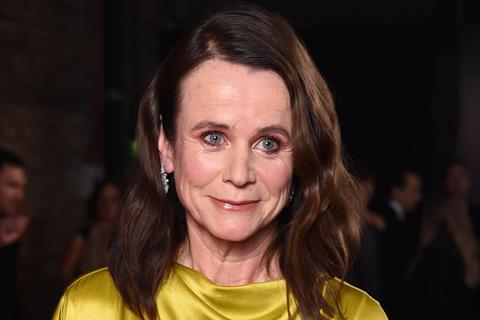
Emily Watson begins with an apology. “I’m afraid you find me the morning after the night before,” she says. “So if I look a little wild, that’s why.” The night in question was the British Independent Film Awards, where she received the Richard Harris Award for outstanding contribution by an actor to British film.
“It was amazing. They showed a reel of my work going back decades, and then Paul Mescal got up and made an amazing speech. It was a thrilling room to be in, because it’s full of hungry young filmmakers, all trying to do something interesting and different and angry.”
She smiles at the suggestion that many would look up to her as a guiding light. “Well, I have a feeling that some of them were, ‘Who’s that?’ A lot of the movies that I made my name in were before they were born.
“But yeah, I guess so. The theme of what I had to say was that this is a fragile ecosystem, and it depends on building relationships and helping the people coming behind you, because otherwise we’re going to all disappear up the algorithm’s backside. We have to keep fighting the fight.”
How does she manifest that support? “I tend to find myself on sets now surrounded by a lot of younger actors,” she says. “Particularly on things where it’s quite commercial, and it’s moving very quickly, I just try to help them find ways to protect themselves and do work that has meaning and integrity in that environment.
“It’s a skill you don’t acquire overnight,” continues Watson. “It’s about concentration, being able to enter something fully, profoundly, with all four feet in the trough, when circumstances are not ideal. And you learn in film and TV that the circumstances are never ideal. It’s rare that you walk onto a set and go, ‘Ah, this is perfect.’”
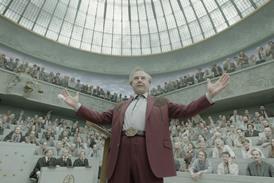
One such exception was Hamnet, Chloé Zhao’s adaptation of the Maggie O’Farrell novel, which imagines William Shakespeare’s scantily documented family life, notably the tragedy that led to him writing Hamlet. Mescal plays the playwright, with Watson as his mother Mary and Jessie Buckley centre stage as his wife Agnes.
“Walking on Chloé’s set was bliss,” recalls Watson, “because everything was conducive to going deep and living it. There’s [composer] Max Richter’s music playing quietly in the background, and everybody is in this pin-drop silence, with just a sense of reverence. It’s very difficult not to surrender.”
“A good fit”
Watson’s involvement in the project seems fated. She started her career with the Royal Shakespeare Company, where she met her husband, whose family has centuries-long roots in Stratford; she loved O’Farrell’s book; and she is friends with the two lead actors.
She had worked with both as their careers were taking off: Mescal in God’s Creatures (2022) and Buckley in miniseries Chernobyl (2019). In fact, she says it was Buckley who suggested Watson to Zhao as “a good fit” for Mary.
“My relationship with Jessie is one of my prized possessions as an actor,” says Watson. “It’s precious, because when she was young, she reached out to me – it was a mentoring thing at Bafta – we became friends and then we worked together on Chernobyl. We got to talk about what it is to navigate the whole package.
“I don’t think she’s ever needed any advice from me about actual acting, because she’s utterly brilliant and fearless,” adds Watson. “But trying to be that free, fearless person in the business and in the public eye is a challenge. I think she’s done it brilliantly.”
Watson has now played Mescal’s mother twice. “I am very fond of him,” she says. “And I’ve watched this meteoric, crazy rise, knowing that he’s a very, very good, bold, instinctive actor, but he also has incredible smarts.”
While Mary is initially hostile to her fiercely independent daughter-in-law, she eventually softens and becomes an essential support, particularly after tragedy strikes. In one way, Watson found life imitating art.
“I had all my big scenes with [Buckley], just being there for her, as an actor but also as the character. When I met Chloé, I said, ‘How are you going to look after Jessie?’ Did you see her in [stage musical] Cabaret? Which to me was like watching somebody give themselves open heart surgery in front of [hundreds of] people, eight shows a week. She doesn’t hold anything back. It’s very powerful when it works, but it also makes you vulnerable.
“I knew that it would be good for her to have somebody there who knew what that meant, what it costs.”
For her part, Buckley has credited the blistering authenticity of Watson’s first big-screen performance, in Lars von Trier’s Breaking The Waves in 1996, as the model for how she wanted to approach acting. Watson understands the connection.
“The experience of that film found something in me that I didn’t know was there,” she says. “I think that’s something other actors recognise, as having access to raw material. Some magic happens, and you don’t know why. That is what we crave, but it doesn’t happen all the time.”
Stellar resumé
Given the career accolade, it is appropriate to ask Watson which films remain most important to her. She offers Breaking The Waves, Punch-Drunk Love, Gosford Park, The Proposition, Small Things Like These and Hamnet. It is a strong list, whose directors – von Trier, Paul Thomas Anderson, Robert Altman, John Hillcoat, Tim Mielants and Zhao – speak to the high regard in which Watson is held, and the daring, independent bent of her sensibility. (Mielants also cast her in this year’s Steve, which has been attracting awards attention.)
Her acting has shown enormous versatility over the years, far beyond the wildness of Breaking The Waves’ Bess McNeill, and her second Oscar-nominated performance as Jacqueline du Pré in Hilary And Jackie (1998).
“I remember somebody saying once that I was the high priestess of the unhinged,” recalls Watson. “But you can’t do that all the time, you can’t do everything on instinct. I started acquiring the skill to properly place myself in different kinds of genres and situations, to navigate it all.”
Speaking of which, Watson must now head to the airport, and Jordan, where she is shooting season two of HBO series Dune Prophecy. So how does she find sci-fi?
“It’s kind of a blast. I spent a day last week running up and down metal stairs and twiddling knobs in a spaceship.”






No comments yet