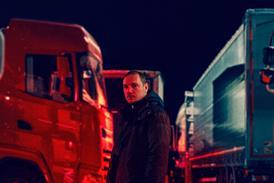
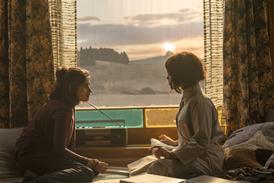
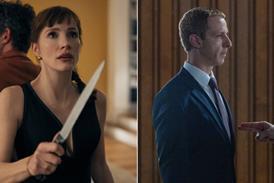
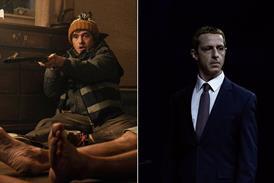
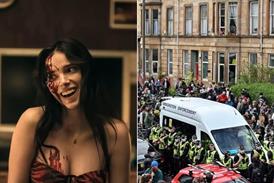
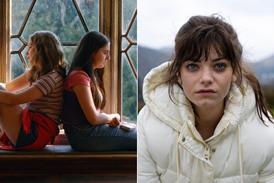
Ireland’s Galway Film Fleadh opens next week (July 7-12) with a robust lineup of Irish world premieres, including Frank Berry’s The Lost Children Of Tuam, Dallan Shovlin’s You’ll Never Believe Who’s Dead, a dark Christmas comedy from the producers of Kneecap, and opening night film, Northern Irish filmmaker Peter Young’s debut Our House.
Rebekah Fortune’s Galway-shot Learning To Breathe Under Water will make its Irish premiere after its launch at Karlovy Vary, while Edward Burns’ west coast of Ireland-filmed Finnegan’s Foursome will have its European premiere.
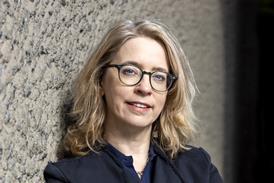
“I like to think the Irish industry has grown up alongside the Fleadh. We reflect it back in terms of growth and development,” says festival CEO and co-founder Miriam Allen.
This edition is the first for Charlene Lydon as festival programmer. The former director of Element’s Storyhouse Screenwriting Festival has taken over from programme director Maeve McGrath, who has returned to working as an actress and producer.

Alongside the Fleadh is the Film Fair, run by William Fitzgerald, which offers selected producers pre-scheduled meetings with Irish and international industry. This year, execs from companies including Altitude, Bankside, BBC Film, Calculus Capital, Curzon, Film4, Head Gear, IPR.VC, Lionsgate UK, LevelK, Films Boutique, WestEnd Films and Al Jazeera Media Network will be taking meetings.
Key talks in the industry programme include a keynote from Sundance senior programmer and director of strategy John Nein, an on-stage conversation with Element Pictures’ Ed Guiney and Andrew Rowe, plus a discussion on what the change from Creative Europe to AgoraEU might mean for Irish producers.
Allen and Lydon spoke to Screen about the challenges of achieving a gender-balanced lineup, the uncertain future of the Pálás festival hub and memorable Fleadh moments.
What trends have you noted in submissions this year?
Miriam Allen: Female filmmakers – that across features is definitely not where it should be. When it comes to features, female filmmakers seem to fall off a cliff edge. I don’t know what it’s down to – is it funding?
It’s worldwide – it’s not just in Ireland, it’s across the board.
What could the Fleadh do to help?
Charlene Lydon: Programming the ones we can, and working with people like Women In Film and Television to give space to discuss this issue at the Fleadh. [The industry programme includes a discussion on where the industry is after 10 years of the 50/50 gender equality campaign].
The Pálás cinema, a central venue for the Fleadh, closed as a commercial cinema last year. What is the latest with the cinema’s long-term future?
MA: We’re in the same position that we were in last year. We are once again reopening Pálás. We opened it last year for the Fleadh, and then it closed again, and then the comedy festival went into it in October for a couple of weeks, so it hasn’t actually been open since then. Believe it or not, we’ve been over there with scrubbing brushes and mops, sticking it back together.
There was a preferred bidder [Galway City Council owns the building]. It went to the stage that they were waiting for the ink on the contract, and [the bidder] pulled out. It would have been a good news story for everybody, including the Fleadh. It’s now gone back out to tender again.
The one thing people have realised, and I’m grateful for this, it is a purpose-built cinema and you can’t turn it into anything else. That message was a bit slow getting out there.
Would the Fleadh consider taking it over and running it?
MA: If we had all the money in the world, it would be on our wish list. There are lessons to be learned from the past from festivals that were running a year-round venue alongside a festival.
Charlene, you’ve only been in the role for a few months. What are your ambitions for the festival?
CL: My background is mostly in exhibition, where every week is a little bit crazy. With a festival, everything gets [increasingly] crazier and crazier. It’s about having a really structured approach to getting on top of submissions. Going forward, it’s about being able to structure that in a way that feels right. I am really thrilled with the films we have. I was spoiled, we could have done a 10-day festival.
And Miriam, you’ve had 38 years with the festival. What is your standout moment?
MA: I gave birth during one of them – it must’ve been the seventh. I drove myself to the hospital. I didn’t know I was in labour. I went in, said I was in a bit of pain, they popped me into the labour ward, and half an hour later he popped out. I was wearing my Fleadh t-shirt. That was on a Thursday, I left the hospital on the Saturday, and I presented the awards on the Sunday. It was the year Arthur Penn was at the Fleadh, for a screening of Bonnie And Clyde. It was one of the most thrilling moments, having Arthur Penn visit me in hospital.


No comments yet