













This year’s Sarajevo Film Festival’s CineLink Industry Days, running from August 14-21, will cover subjects ranging from what the emergence of microdrama means for producers and public broadcasters, whether European cinema is radical enough in its approach to championing female filmmakers, and the pressing need for modernisation of public film funds.
There will also be discussions exploring how film festivals respond to their roles as industry gatekeepers and AI as both a tool and a threat.
Maša Marković, Sarajevo’s head of industry, has a clear focus for the 2026 edition: “Find a new way to get the industry to collaborate, and how to get the new and older generation, established people, at the same table, because they are not often sitting at the same table.”
CineLink started in 2003, providing a meeting point for the local Southeast European and wider international industry. “Because of the trust we have built among professionals, people are keen to experiment with us,” notes Marković.
Speakers include Viola Fugen, Mubi’s Germany-based vice president of physical production, Mikael Fellenius, CEO of Sweden’s Film i Väst. Matthijs Wouter Knol, director of the European Film Academy Romanian producer Ada Solomon; French writer-director Celine Sciamma; and Nashen Moodley, director at Sydney Film Festival.
Returning programmes include the Co-Production Market, the work-in-progress strand, CineLink Drama for series development, documentary focus Docu Rough Cut Boutique and the CineLink Books Market.
Projects taking part in this year’s Co-production Market include Urška Djukić Lecamus’s Forbidden Fruit, a Slovenia-Greece co-production that follows her Berlin and Karlovy Vary 2025 selection Little Trouble Girls, and Iraqi filmmaker Ahmed Yassin Al-Darraji’s Madness And Honey Days. His 2022 debut feature Hanging Gardens was the first Iraqi film selected for Venice.
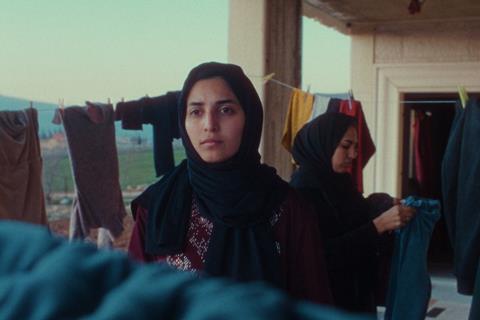
CineLink’s work-in-progress strand includes six fiction features and two documentaries, with new work from Kazakhstan’s Assel Aushakimova, Austria’s Nina Kusturica, Croatia’s Filip Mojzeš and Serbia’s Bojan Vuletić.
Projects to have previously been presented in CineLink’s work in progress strand that have gone on to festival acclaim include Palestinian filmmaker Rakan Mayasi’s Cannes Un Certain Regard 2026 premiere Yesterday The Eye Didn’t Sleep, and Berlin 2026 titles including North Macedonian Kosara Mitić’s 17, Israeli filmmaker Assaf Machnes’ Where To? and Bulgaria-born Ralitza Petrova’s Lust.
Two new CineLink awards have been introduced: a €10,000 award presented by the Kosovo Cinematography Centre for a project in the Co-Production Market, and a partnership with Cannes Critics’ Week’s international initiative Next Step Studio. The Next Step Studio Participation Award offers one emerging director from the CineLink selection the opportunity to join the next edition of the international programme.
There are also two new showcases. Several projects outside of southeastern Europe will be pitched with the aim of finding partners from the local region.
“This is something new we will try out for this year,” says Marković. “Every time we launch a call for projects, we always have people from all around the world asking, ‘Can we apply because our main character is from Albania?’ or, ‘We really want to shoot in Greece,’ but our [previous] eligibility criteria were kind of limited in a sense.”
The second presents female-led films recently supported by the Uniqa See Future Foundation that are already in production or post-production and are seeking partners to help with completion, positioning and international circulation.
Attendance
Around 1,000 industry delegates are set to attend, on a par with recent years. Last-minute accreditations are still being bought. “We really do not want to go beyond our usual threshold of around 1,200, because this sense of familiarity that you build at CineLink will would be lost,” says the industry head.
”Here at Sarajevo you can sit with the director of a film festival, or head of a film fund. It gives an intimate sense that in other markets, it’s very difficult to reach. In Sarajevo, the whole set-up we are building is a close and open approach and discussion among our guests.”
There will be around 60 countries represented, with Serbia, Croatia, Montenegro, Turkey and Romania active participants. Formal spotlights are on Czech Republic, Switzerland and Sweden.
“The Czech Republic is very important for us because last year, they established a new film law that enables the Czech Republic to co-produce more. We are focusing on co-production and international cooperation,” explains Marković.
“With Switzerland, there are a lot of filmmakers coming from Southeast Europe now working in Switzerland, or are second generation in Switzerland; there are very strong cultural ties, so we want to expand those connections.
“With Sweden it’s the third year we are building a partnership together,” she says. ”Sweden and the Nordics have become a region we look towards because their model of co-production is something we are keen to build in the region.”
Marković’s work does not end when the festival wraps up, with CineLink initiatives such as the Co-Production Market’s development programme running year-round. This year, a programme titled On Set Sustainability was launched to help alleviate the shortage of regionally based professionals able to put sustainability objectives into practice. Up to six participants will be selected each year, and the first cohort is set to complete the programme by the end of this year.
“It’s not just about exposure in August, it’s really about long-term investment in the industry,” says Marković.





No comments yet