









The second edition of Sweden’s Goteborg Film Festival under the leadership of artistic director Pia Lundberg, kicks off on Friday January 23.
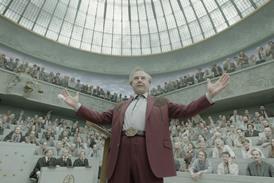
The line-up includes the world premiere of Alex Camilleri’s Malta-set drama Zejtune, the European premiere of Sundance premiere How To Divorce During The War by Andrius Blaževičiu, plus anticipated Nordic titles including Itonje Søimer Guttormsen’s Butterfly.
Industry speakers include Ruben Ostlund and former Focus Features CEO James Schamus, as part of the Nordic Film Market (January 28-30).
Goteborg is the Nordic region’s biggest festival, and Lundberg is proud of the international exposure it gives to the local industry: “The Nordic programme is a window to the world for Nordic filmmakers.”
She talks to Screen about the political challenges facing the region, navigating the crowded January festival landscape, and bringing children and dogs into the festival.
‘Truth’ has been selected as the focus for this year’s festival. Why?
It’s a very serious topic and an acute situation in the post-truth society we live in now. It creates an energy that aligns with the festival’s DNA. We’ll have lots of talks about truth with scientists, filmmakers and journalists.
But we also do some playful takes on truth – we have the lie detector for the audience [an interrogation room has been built with members of the public undergoing a polygraph examination conducted by a real-life specialist, with free festival tickets for those who pass the test], which has turned out to be incredibly popular in the first weekend we did it, and we will do it again next weekend [January 23-25].
What are some of the key challenges you are facing as a festival?
We’re always nervous to see if audiences will come back and buy tickets. We rely heavily on ticket sales [about 50% of the budget]. As for public funding, we’re very relieved because we got good news before Christmas about our funding for next year [which remains stable from Västra Götaland region and the Swedish Film Institute].
Swedish film is in a very weak position, and Swedish films are not doing very well at cinemas, with a very low box-office market share. It’s heavily under-financed. We’re far behind Norway and Denmark. We’ve had incredibly successful directors who have come out of a system that was better financed. The Swedish film industry is worried about that. This will be discussed quite a lot during the festival.
Perhaps the most surprising news last year was the minister of culture coming to the opening and doing her speech [Parisa Liljestrand was booed following a speech in which she said: “It is not my job to be the industry’s best friend. That is not the job of politics. Nor is it the job of politics to demand more and more tax money from citizens”]. We’ve known for a while that she won’t attend the festival [this year]. She didn’t come to the national film awards either [held on January 19], which is an unfortunate signal at this time.
It’s a wider question of [governments] perhaps not making culture as important as it used to be. That goes for many countries. We live in very worrying times with all countries having to invest more in defence and other areas, then culture steps back. That’s a dangerous thing.
How are you managing the proximity to Sundance (January 22-February 1) and Rotterdam (January 29-February 8)?
It is one of our greatest challenges on the programming side. Competition is harsh between festivals. Considering the circumstances, it’s turned out quite well. We’re trying to collaborate much more around that. We’ve been in close contact [with Sundance and Rotterdam] during the autumn, especially. We’re trying to share some titles and inherit titles. It hasn’t been a big problem with Sundance, it’s possible to programme the world premiere at Sundance and then the European premiere at Goteborg. As far as Rotterdam is concerned, it’s trickier as they have their first competition film on Friday night, and we have our awards ceremony on Saturday night.
But festivals today are more eager to look at what’s best for the film, and, of course, it’s good for Nordic films to play at Goteborg.
Have you considered moving the festival dates?
When I was brand new last year, that was my strong suggestion. However, there are, of course, international as well as national factors to look into.
We have such a dedicated audience, some of them always take the week off to attend the festival and are used to the dates. Also, the week after Sweden has a big sports holiday – all the schools are closed, and many Swedes go skiing in the mountains.
What kind of audience demographic engages with the festival?
We have a very devoted audience that has been going to the festival for many years. Many of them are getting older.
In recent years, we see in our ticket sales that more students are turning up. We’re working quite hard on that and have screenings for secondary school students.
We have a new concept called ‘bring the kids’. It’s the first year we’ve trialled it, where parents can bring their children to see [select] films that have been checked for a younger audience. We also have ‘bring your dog’ – it’s three screenings on the last Sunday. The dog cinema concept has been popular in the region.





No comments yet