Andrea Berentsen Ottmar and Maria Ekerhovd joined forces on Sentimental Value after separately producing the previous features from the film’s core creative duo. Screen learns about a meeting of minds.

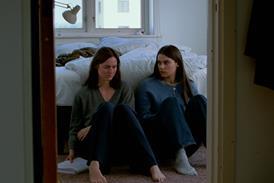
Norwegian producers Andrea Berentsen Ottmar and Maria Ekerhovd had never worked together before Sentimental Value, and it was, inevitably, a filmmaker that matched them: Eskil Vogt. Vogt is Joachim Trier’s longtime screenwriting partner and a director in his own right — Ekerhovd had produced his 2021 feature The Innocents, and Ottmar met Vogt as producer of Trier’s The Worst Person In The World (also 2021), which he had co-written.
“Eskil and Joachim had the idea that we could co-operate, make it a bigger joint venture for this film, which was a great idea. Sentimental Value was a very ambitious project from the get-go, and combined we could pull together the ideal production team,” says Ekerhovd. “Andrea had worked so closely with Joachim on Worst Person, and also she’s based in Oslo, and the whole shoot was going to take place in Oslo,” adds the producer, whose own company Mer Film is based in Bergen, Tromso and Oslo. “It seemed like a very natural fit — we can both use our strengths and experiences.”
Eye Eye Pictures’ Ottmar chimes in: “It was also a way to ensure some continuity from Worst Person, but we knew we had even higher ambitions, and wanted to bring in that extra experience that Maria has.”
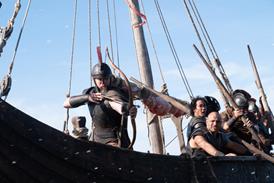
Ekerhovd has built Mer Film since 2011, winning the Eurimages co-production award for best European producer in 2021 and leading films such as Norway’s most expensive-ever production, War Sailor.

It is unusual that two producers from separate Norwegian production companies would join forces as joint lead producers on the same film, but Sentimental Value was set up from the start as an exceptional project. The film started its journey winning the grand prix in Cannes and has now made history for the Nordics region with its nine Oscar nominations and eight Bafta nods - with one win - as well as a notable PGA Awards nomination for the producer pair. Worldwide box office at press time was $26.9m.
Although they were “both involved in everything”, says Ekerhovd, the two producers have complementary skillsets, and she herself took the lead with dealmaking and financing. “I like to be in the room and do negotiations,” she explains. “It’s challenging but fun. I enjoy that kind of adrenaline rush.”
Ottmar says she prefers the “nitty-gritty” of being in the back office of preparation and production logistics. Ottmar led pre-production in Oslo — Ekerhovd was also finishing another shoot — and they were both hands-on during the filming period of 64 days.
“From the get-go we had really good chemistry,” says Ekerhovd. “We like to be together, and we have a lot of the same work ethics and ideas of why we’re making films. It’s all about supporting Joachim to make the best possible film he can.”
New tricks

As with any production, there were challenges along the way — and shooting in one house through various decades as well as seasons was especially tricky. “There was so much planning for all the different seasons and time periods we see in this house, from the 1890s to today,” says Ottmar. “There were all those beats to make the montages come alive and be authentic and rich. We had very high ambitions for the production design, and we redressed the house multiple times.
“We decided to do virtual production outside the windows, to see the environment change, because we needed to see different looks on the street and the period cars and for trees to grow,” she adds. “We built a replica of the first floor of the house in Gateway Studios in Drammen, outside Oslo. This was new for all of us.”
Looking back on the shoot, they praise Trier’s calm and collaborative manner on set. Dealing with cast at various levels of experience, not to mention fame, was not a problem. “One of Joachim’s core ideas is that everyone is treated the same, whether that’s a day player or Elle Fanning,” says Ekerhovd. “That leads to this family feeling on the set between everyone.”
After her collaboration with Vogt and Trier on Worst Person, Ottmar has enjoyed seeing them move into a new era of filmmaking with poignant family drama Sentimental Value. “Joachim’s family grew since [making Worst Person],” she says. “He and Eskil turned to some different topics and looked at the different pace of their own lives. This story feels more mature, but also more vulnerable. They wanted to make something very personal and truthful.”
The budget of Sentimental Value is not disclosed but the producers say it is close to double that of Worst Person. “It’s a huge co-production with many partners — it’s a Norwegian, Swedish, Danish, German, French co-production,” explains Ekerhovd. “Then we have BBC Film as a partner in the UK and Neon as a US partner. They were all in at the financing. It’s a complicated build. But everybody created a supportive producers group. It’s a high budget for a European film and it was a great collective effort to get there.”
Ottmar explains the aspect that had given her the most anxiety was the Oslo Opera House sequence early in the film, when actress Nora (Renate Reinsve) gets stage fright and keeps 750 audience members waiting before going on stage. “We decided to bring in all those extras and not create this with visual effects. So this was just a lot of pressure on everyone. We were all nervous, but it turned out great. The intensity of that period was quite high [laughs].”
Stripped-back approach

The main shoot had officially ended on a Friday in the studio set where Stellan Skarsgard’s director character Gustav is filming his daughter Nora. But they had a few pickup shots in the main family house on the Saturday, so Reinsve, Skarsgard and Inga Ibsdotter Lilleaas [who plays Nora’s sister Agnes] were there with a small crew. “That felt so right, that after this big machine was wrapped, it was back to the very core, and they had their moments in the house, and we said goodbye to the house and to one actor at a time. It was just very emotional,” says Ottmar.
There was no pausing for these two busy companies. Mer Film has launched Itonje Soimer Guttormsen’s Butterfly, starring Reinsve, in Göteborg and Rotterdam; and will reteam with Vogt on his next film as a director, which he is now writing. Ekerhovd is also developing a new slate of genre films, delivering one horror title per year over a decade. (Mer’s hit genre film The Ugly Stepsister is Oscar-nominated for make-up and hair.
Eye Eye, which Ottmar founded alongside Dyveke Bjorkly Graver in 2022, has Dara Van Dusen’s A Prayer For The Dying premiering at the Berlinale; the company is also co-producing Ruben Östlund’s The Entertainment System Is Down and Maria Martinez Bayona’s sci-fi feature The End Of It. Reinsve continues her collaboration with Eye Eye by starring opposite Sebastian Stan in Cristian Mungiu’s Fjord, now in post-production.
The producers say they would certainly join forces again on the right project. As Ottmar says, “It feels necessary right now, in this moment in time, to be agile and flexible and to support each other and team up.”


![[L-R]: Amanda Villavieja, Laia Casanovas, Yasmina Praderas](https://d1nslcd7m2225b.cloudfront.net/Pictures/274x183/6/4/1/1471641_pxl_20251224_103354743_618426_crop.jpg)
No comments yet