





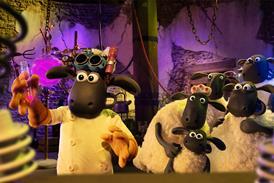





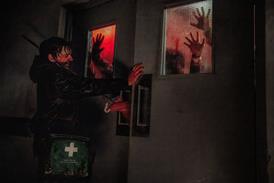





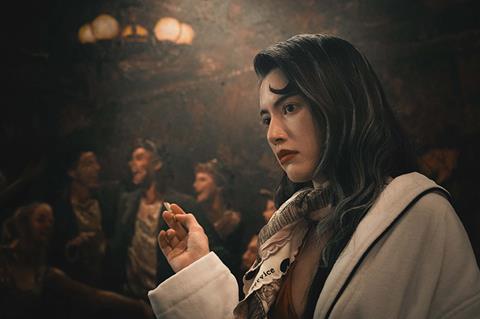
Horror and twisted thrillers have long been a dominant force in Thai cinema — even more so in recent years when a string of genre films emerged as the biggest local successes of all time and a much-needed lifeline for the post-pandemic theatrical business.
The Death Whisperer action horror trilogy (2023-25) collectively raked in nearly $60m (thb1.9bn) at the Thai box office, including $25m (thb825m) from the second instalment alone, making it the country’s biggest-ever local hit. Ghostly comedy drama The Undertaker emerged as a major sleeper hit, earning $24m (thb760m) in 2023, and its sequel added a further $10m (thb326m) to the franchise tally.
“Thai culture is steeped in beliefs around the supernatural,” says Banjong Pisanthanakun, one of Thailand’s leading filmmakers. “We have such a rich pool of material to draw from and reinterpret on screen. As a result, Thai horror has developed a unique identity over the past 20 years, building a loyal and steadily growing fanbase around the world.”
Banjong broke into the horror landscape in 2004 with his debut feature Shutter (co-directed by Parkpoom Wongpoom), which has been remade in several territories including the US. His further horror hits include 2013’s Pee Mak and 2021’s The Medium, produced by acclaimed South Korean filmmaker Na Hong-jin, whose Hope plays in Cannes Competition this year.
Striking a balance
With every project, Banjong finds himself asking what kind of story can draw audiences into theatres. “It has to strike a balance between being commercially engaging and artistically fulfilling,” he says. “That balance is tough, especially when audience behaviour has shifted so dramatically compared to when I made my first film over 20 years ago.
“The biggest challenge is making films that genuinely draw people back into cinemas. That’s become increasingly difficult, post-Covid. It comes down to strong ideas and solid scripts because not every horror film is guaranteed to succeed.”
Banjong recently wrapped his latest horror Inherit, reuniting him with Pee Mak star Davika Hoorne. It was produced by his close collaborators GDH 559, with South Korean sales company Barunson E&A on board for non-Asia sales. Next, he aims to bring into production psychological horror Tani, a Korea-Thailand collaboration with Seoul-based Lewis Pictures, by early next year.
“International partners are crucial,” he says. “When you make a film, you want it to travel as far as it can and reach the widest audience possible. The right partners can help. When you’re working with a strong team, they can push the film further and shape it in a better direction.”
M Studio, the production banner behind the hit Death Whisperer franchise, is also looking beyond Thai borders and has plans to collaborate with Japan’s Toei and South Korea’s Showbox on upcoming projects.
Thai cinema is equally well-known internationally for its martial-arts action films. Global breakout hits include the Ong Bak trilogy and Tom Yum Goong films, all starring Muay Thai fighter Tony Jaa and produced by Sahamongkolfilm International. The same production and sales company more recently delivered the hit Khun Pan action thriller trilogy (2016-23), all directed by Kongkiat Komesiri.
“Fewer action films are being made these days because of the genre’s high-budget nature,” says Jirasin Jarupornchai, director of distribution at Shinesaeng Ad.Venture. “The minimum budget for main studio titles would be at least $1m, excluding p&a. Quality action films will cost more.”
Shinesaeng Ad.Venture’s new production arm Common Ground has on its first slate Prasert, a $2m action film from Khun Pan director Kongkiat that is scheduled for release this November; and $1.5m action thriller All Forgotten Now, starring Ranee Campen from the hugely popular Love Destiny series and film adaptation.
“As Thai horror becomes increasingly popular and easier to produce, everyone is making it,” says Jirasin. “Two-thirds of Thai films lined up for this year and next are in the horror genre. An oversaturated market is the last thing our industry needs. That’s why we decided to make action-oriented films. It’s a risk we’re willing to take because we want to give audiences the option.”
Shinesaeng Ad.Venture is collaborating with TV production company Wan Dee Wan Dee Studio on All Forgotten Now, and with advertising agency Strippers Films on supernatural scam thriller No Caller ID. Both companies are new to the film industry.
“Our industry needs to grow, not just in the business sector, but also in the talent behind it,” says Jirasin. “We provide content creators the knowledge and know-how specific to the film industry. With this kind of collaboration, we believe the films they make will have a fresh take but still appeal to today’s audience.”
International collaboration
Shinesaeng Ad.Venture is actively seeking to collaborate internationally in a bid to expand beyond Southeast Asia. Korean sales company K-Movie Entertainment has taken world sales of Kongkiat’s horror Our House. Now Taipei-based 66cc Company (previously known as Distribution Workshop) has acquired world sales for Prasert, excluding Southeast Asia.
Thai films have gained significant momentum in theatres, drawing large audiences with Death Whisperer and The Undertaker taking a combined $55.8m (thb1.8bn) in 2023, and Death Whisperer 2 and How To Make Millions Before Grandma Dies taking $37.2m (thb1.2bn) in 2024.
However, last year’s box office was largely lacklustre, with only four local films surpassing the thb100m ($3.1m) milestone, compared with eight the previous year. Death Whisperer 3 led the box office with $14.4m (thb465m), followed by Our House ($4m/thb130m), while The Red Envelope and Kongkiat’s 4 Tigers trailed behind, and The Stone earned just below $3.1m.
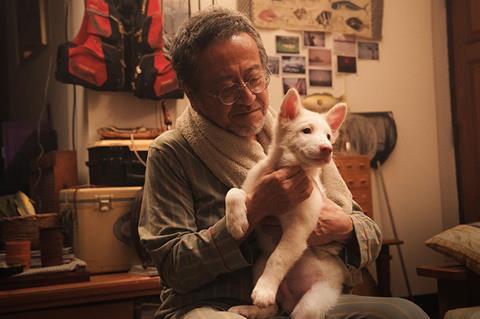
The Undertaker 2 is the biggest Thai film of 2026 to date on $10m (thb326m), while GDH 559’s heart-tugging canine tale Gohan, with Bad Genius filmmaker Baz Poonpiriya among its three directors, has reached $3.1m following the long Songkran holiday.
The industry was taken by surprise when the first Undertaker film became a sensation in 2023, spreading its popularity from the northeast region to capital city Bangkok. The film was made entirely in Isan, a language commonly used in the northeast but quite different from Central Thai language. Thai subtitles are required for audiences in other regions.
“The film is about death, which is universal,” says Supanut Namwong of Taibaan Studio, producer of the Undertaker franchise and several of the Thibaan The Series films. “All humans have similar feelings when we lose someone. The Isan language is not a barrier because the audience is more interested in what we want to tell in this film.”
Universal stories
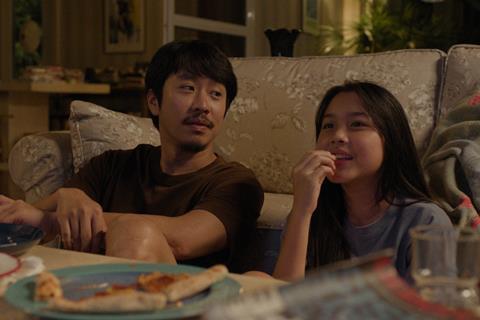
Supanut is one of the four founders of Taibaan Studio, along with Surasak Pongson, Awirut Akkabut and Boonchok Srikham. All were born in Sisakek Province and shared a common dream of making Isan films to tell their own stories. With the support of businessman Siripong Angkhasakulkiat, long before he became Thailand’s current deputy minister of transport, they received more than $100,000 (thb3.5m) to kickstart their projects and the first Thibaan The Series feature was released in 2017.
“Most Thai people think that Taibaan films are niche and are only for Isan people,” says Supanut. “What we are doing is finding a universal and interesting story that can be told through the point of view of Isan people. The audiences who like our works say they like our sincere storytelling and the mix between comedy and drama.”
Sahamongkolfilm International handles sales of both Undertaker films. The first film was released in around 10 Asian territories and was available on Netflix.
“We are attending film markets and festivals to learn about the international film scene,” adds Supanut, who attended Hong Kong Filmart in March and last year’s Cannes, alongside The Undertaker director Thiti Srinual. “We are trying to make films that are more universal, while keeping our identity and having the quality for international markets.”
Last year at Cannes, Ratchapoom Boonbunchachoke’s A Useful Ghost won the Critics’ Week grand prize. This year, Thailand is represented by Sompot Chidgasornpongse’s 9 Temples To Heaven in Directors’ Fortnight. Both films were supported by a new film fund launched by the Thailand Creative Culture Agency, which handed out $6.6m (thb220m) to 86 projects last year.
Further titles supported by the fund and aiming for release this year include Phuttiphong Aroonpheng’s The Burning Giants and Aditya Assarat’s The Thonglor Kids.






No comments yet